


Ever wondered if a heavy one-ton rover might share secrets from a far-off world? NASA’s Mars rover acts like a high-tech off-road car as it zooms across the red, dusty land. It collects clues that could show hints of life that existed long ago.
Its strong power system helps it push through rough dust storms while its helpful arms and tools work together to read Mars’ hidden story. This ongoing exploration stirs our curiosity about space, reminding us that every rock and sample might hold its own special chapter in our shared cosmic adventure.
NASA Mars Rover Missions: Purpose, Design, and Key Discoveries
Perseverance is a NASA Mars rover that touched down on February 18, 2021 to search for signs of ancient microscopic life. This mission builds on years of exploration, aiming to collect clues that Mars might have once been a home for life. The rover is a compact, six-wheeled machine weighing about one ton, kind of like a high-tech off-road car. It’s powered by nuclear energy, which helps it keep going even during those harsh Martian dust storms.
The rover is equipped with a drill and sealed tubes to gather samples from spots that could reveal Mars’ geological secrets. So far, it has collected 30 samples. One notable find, the 25th sample, was taken from reddish, clay-rich mudstones in Neretva Vallis. Scientists are excited about this area because these rocks might hold organic carbon and minerals, similar to the signs we see on Earth where tiny microbes have been active.
Inside Perseverance are several scientific instruments that really add to the thrill of the mission. Two Raman spectrometers (tools that analyze the makeup of materials) help researchers study the rock compositions. One of these, called SHERLOC, is mounted on the robotic arm, while another works as part of SuperCam. It’s like having two puzzle pieces that fit together to give a clearer picture of Mars’ secrets. Ever thought about reading a secret diary written in stone? That’s a bit like what these instruments let us do.
The mission also sent up a small helicopter named Ingenuity, showcasing a neat slice of innovative tech. This mini flyer gives us aerial views of the Martian landscape, deepening our understanding of this red planet. All these combined efforts keep fueling our wonder while pushing the boundaries of what we know about Mars.
Evolution of NASA Mars Rover Missions: Spirit, Curiosity, and Perseverance

Mars Exploration Rovers Spirit and Opportunity
Spirit and Opportunity made a big splash by uncovering traces of water on Mars. Their discoveries showed that liquid water once flowed on the red planet, hinting at a past where conditions might have supported life. These rovers far outlived their expected lifespans, gathering clues that reshaped our view of Mars’ history. For example, Spirit roamed around collecting data, while Opportunity took a long trek across the Martian sands, inspiring both scientists and the public with its findings.
Curiosity’s Search for Habitable Environments
Curiosity stepped up the exploration by looking for signs that Mars once had the right mix for life. Using its clever suite of tools, the rover uncovered hints that about 4 billion years ago, Mars had conditions gentle enough to nurture life. The chemical traces and textures in its rock samples painted a picture of an environment that could have been friendly for living things, setting the stage for even deeper investigations into our planetary neighbor.
Perseverance’s Enhanced Objectives and Design
Perseverance carries the legacy forward with smart upgrades designed to collect valuable samples. With state-of-the-art drills, sealed tube systems, and improved power management, it aims to bring back pieces that might reveal evidence of ancient microbial life. Every tool on Perseverance speaks of progress, marking a significant step in our continuing journey to unravel the mysteries of the cosmos.
Technical Innovations in NASA Mars Rover Design
Perseverance’s engineering work on Mars is truly fascinating. Its landing – often called the seven minutes of terror – kicks off with a supersonic parachute to quickly slow the descent. Next, a set of thrusters gives it a precise nudge, and nylon cords lower the rover gently onto the Martian soil. Think of it like a high-tech sky crane guiding a precious cargo down from an unruly leap of physics.
Once it touches down, the rover keeps impressing. Its six-wheeled design and smart movement system let it explore everything from soft sandy dunes to rough, rocky hills. It even sports an upgraded self-driving navigation system that can cover up to 200 meters a day without needing constant directions from Earth. Imagine a driverless car smoothly avoiding obstacles on a rugged trail – that’s the kind of clever mobility we’re talking about here.
A nuclear power source fuels the rover, ensuring it keeps on working even during the fiercest dust storms, marking a big upgrade from the solar-powered explorers of the past. Its built-in safety systems also help it steer clear of any potential hazards along its path.
- It uses a fast-acting supersonic parachute and thrusters for a secure landing.
- The six-wheeled design is perfect for tackling a variety of Martian landscapes.
- Advanced navigation and hazard avoidance systems let it explore Mars largely on its own.
These technical breakthroughs ensure that every step of the mission – from the nerve-wracking landing to the journey across the red planet – is driven by top-notch design and rock-solid reliability. It’s hard not to feel a sense of wonder as the rover steadily reveals the many secrets of Mars.
NASA Mars Rover’s Scientific Instruments and Experiments
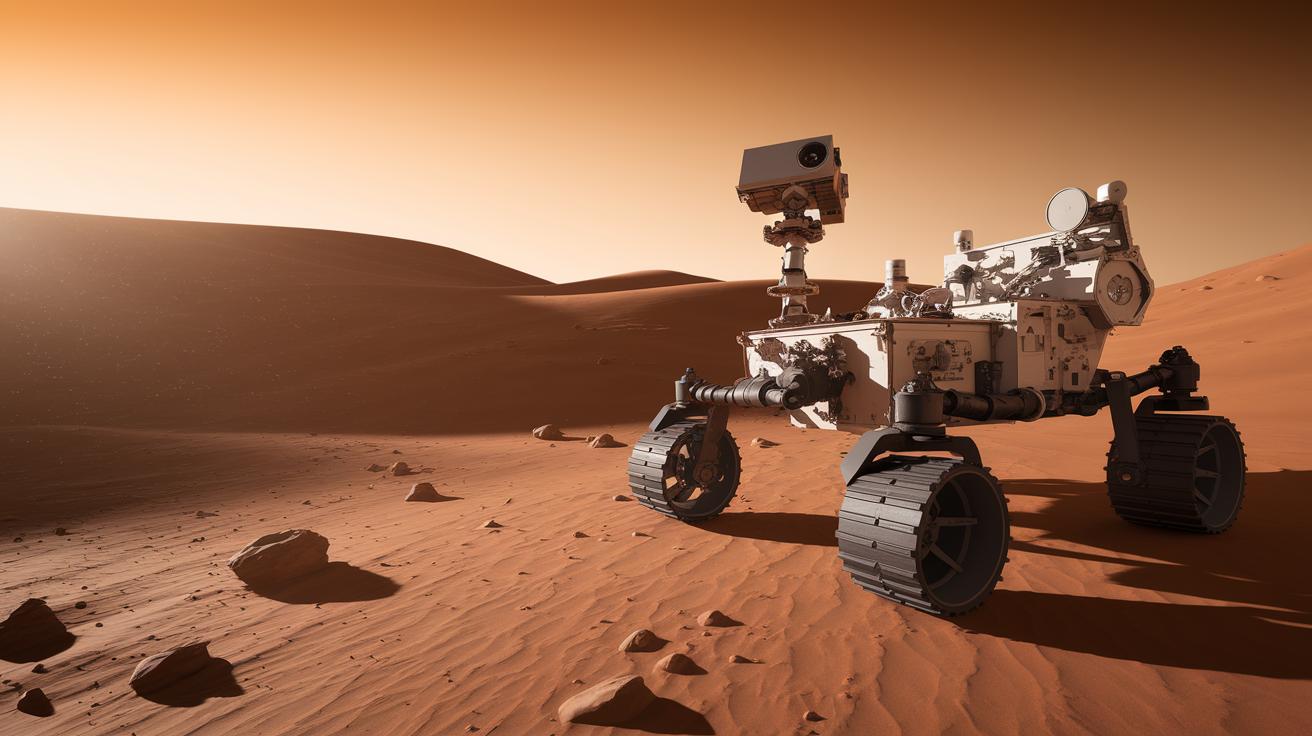
This rover is loaded with cool science tools that let us get up close with Mars’ mysteries. One of its stars, SHERLOC, is a Raman spectrometer (a tool that uses light to identify chemicals) on its robotic arm. Think of SHERLOC as a tiny detective that uncovers secret stories hidden in rocks. Then there’s SuperCam, mounted on the mast, which uses laser-induced breakdown spectroscopy (a method that breaks down rock material with light) to inspect rocks from a distance. It’s like having a friend who can examine a rock from the other side of the room, catching tiny clues your eyes might miss.
The rover even has a microphone attached to its body that captured Mars’ very first sounds, turning a quiet planet into one that whispers its past. These experiments work together like puzzle pieces to help scientists understand Mars’ environment and whether it once had places that could support life. Imagine hearing a gentle Mars breeze, each sound making you wonder about a long-forgotten history.
Other instruments onboard, like environmental sensors and thermal imagers, add even more detail by studying everything from chemical makeup to temperature changes. Together, these tools let us build a bigger picture of Mars’ rock formations and climate.
| Instrument | Function | Deployment Location |
|---|---|---|
| SHERLOC | Raman spectrometer for organics | Robotic arm |
| SuperCam | Laser spectroscopy and Raman analysis | Mast |
| Microphone | Audio recording on Mars | Chassis |
Sample Collection and Geochemical Analysis by NASA Mars Rover
Perseverance uses drills and sealed tubes to gather rock and soil samples from spots that look promising, like the Bright Angel area at Jezero Crater and regions in Neretva Vallis. Its 25th sample came from reddish, clay-rich mudstones that might hold organic carbon, giving scientists new clues about Mars.
Back on Earth, researchers study these samples in labs using techniques similar to those in local studies. They discovered organic carbon, iron phosphate, and iron sulfide, ingredients often linked to tiny life processes on our planet. This helps create a clear chemical picture of Mars and shapes how we search for signs of past life.
- Specialized tools on the rover help it pick out the best spots and collect precise samples.
- Combined geochemical analysis compares findings from Earth and Mars, sharpening our view of ancient environmental conditions.
- A total of 30 samples have been gathered, with plans to retrieve more in a future mission during the 2040s.
Each discovery builds on what we know, tying together lab techniques, Earth-based research, and big questions about the red planet’s history. Isn't it fascinating how each piece of data brings us one step closer to understanding Mars?
NASA Mars Rover and Ingenuity Helicopter: A Technology Partnership
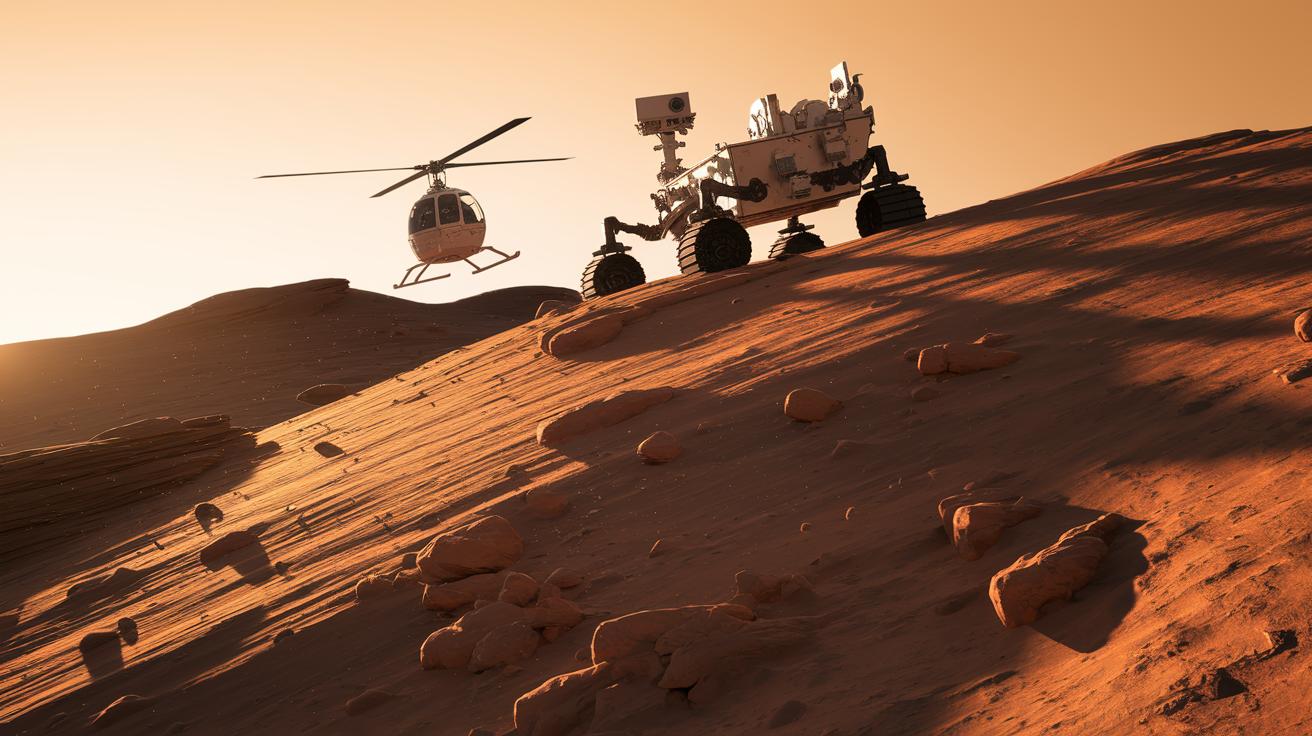
The Perseverance rover and its little helicopter buddy, Ingenuity, are teaming up to show us Mars in a whole new way. Ingenuity, a tiny flyer carried by Perseverance, managed 72 flights on Mars, with its last one on January 18, 2024. These flights prove that even in Mars’ thin air, controlled flight isn’t just a wild idea, it’s a practical tool for planning future missions.
Each flight not only gives us breathtaking views of the Martian surface but also sends back key information. Engineers use this data to tweak software updates and sharpen flight algorithms for both the rover and the helicopter. It’s a bit like a test drive that helps improve a high-tech car after each outing.
- Ingenuity shows us that small robots can handle even the harshest conditions.
- Its missions push the envelope on space robotics and spark innovative engineering ideas.
By combining ground exploration with an eye in the sky, this duo is opening fresh paths in space research and fueling our wonder about Mars. Have you ever thought about how such tiny machines can lead to giant leaps in our understanding of another planet?
Future Directions for NASA Mars Rover Missions
Sample Return Mission Planning
NASA is rethinking how to bring Martian samples back to Earth. Now, missions are looking at a return trip in the 2040s, backed by a new budget estimate of $11 billion. Originally, scientists hoped to collect samples as early as the 2030s, but they soon realized that putting all the pieces together on Mars and carrying out detailed tests is a tricky job. Researchers believe that once these samples are in hand, Earth labs, or perhaps a new set of instruments directly on Mars, will be needed for a thorough study. They’re also testing ideas that use local Mars resources (the planet’s own materials) to support future missions, and international teams might team up to fine-tune these plans.
Next-Generation Rotorcraft and Surface Systems
The success of Ingenuity has really livened things up, sparking fresh ideas for advanced flying machines and ground vehicles. For instance, NASA’s Dragonfly mission to Titan in the 2030s is set to try out rotorcraft in a very thin alien atmosphere, building on what we learned from both Perseverance and Ingenuity. New rover ideas are also on the table, with improvements like better movement, smarter sensors, and more independent operation. These next-gen designs might soon dare to do more than just scoop up samples, they could handle complex tasks on Mars all on their own. And by adding innovative rotorcraft, researchers hope to get a bird’s-eye view of Mars that complements ground explorations. Together with global collaboration, this fresh approach is setting the stage for even more exciting Mars missions ahead.
Final Words
In the action of exploring Mars, the nasa mars rover has pushed our understanding with new designs, smart instruments, and clever sample-collection tools. Each mission builds from past clues while driving innovation forward.
Bridging ground efforts with flight tests using Ingenuity, these missions showcase technical leaps and insightful research. Future plans promise exciting steps that will broaden our exploration and spark more wonder about our planetary neighbor.
FAQ
Q: What is the NASA Mars Rover LEGO?
A: The NASA Mars Rover LEGO represents the actual vehicle, offering a fun, hands-on way to explore and learn about the design and mission of Mars rovers.
Q: What does NASA Mars Rover live coverage involve?
A: NASA Mars Rover live coverage uses online streams and tracking tools to show the rover’s real-time activities and progress on Mars.
Q: What do Mars rover last words refer to?
A: Mars rover last words are the last transmissions from missions like Opportunity, marking the moment when communication ceased as the mission ended.
Q: What is the NASA Mars rover’s name?
A: NASA names its rovers such as Spirit, Opportunity, Curiosity, and Perseverance, each chosen to embody the spirit and goals of the respective mission.
Q: What is the NASA Mars rover tracker?
A: The NASA Mars rover tracker is an online tool that shows the rover’s location and travel path on Mars, letting enthusiasts follow its journey.
Q: Where can I find NASA Mars rover pictures?
A: NASA Mars rover pictures are available on NASA’s official website and social media, offering real snapshots of the rover’s work on the Martian surface.
Q: How many NASA rovers are on Mars?
A: There are currently active rovers like Perseverance and Curiosity on Mars, while past rovers such as Spirit and Opportunity have completed their missions.
Q: Is the NASA rover still active on Mars?
A: Yes, active rovers like Perseverance and Curiosity continue sending data and images from Mars, contributing to ongoing scientific research.
Q: Has NASA confirmed life on Mars?
A: NASA has not confirmed life on Mars; their missions focus on studying past conditions and searching for signs that the planet could have once supported life.
Q: When will NASA send humans to Mars?
A: NASA plans to send humans to Mars in the 2030s, with the timeline subject to successful testing and necessary budget approvals.
Q: What are the missions of Perseverance, Curiosity, Opportunity, and Mars Science Laboratory?
A: These rovers, including Perseverance (Mars 2020) and Curiosity (Mars Science Laboratory), were designed to study Mars’s geology, climate, and potential for habitability, each building on the discoveries of previous missions like Spirit and Opportunity.