


Have you ever thought that the Moon might be keeping secrets for our future space travel? Scientists are looking closely at its dusty surface, where everyday elements mix with rare water ice tucked away in dark crater corners. NASA’s Artemis mission reminds us that these lunar treasures could pave the way for safer, smarter space ventures. Researchers are carefully studying what they find, piecing together clues that might help build bases off Earth and even change the way we live here. It's an exciting journey, one that shows just how much the Moon has to offer.
Lunar Resources: Types and Distribution on the Moon
NASA’s Artemis program is bringing humans back to the Moon for the first time in over fifty years, sparking a new journey to explore and understand the Moon’s many resources. The surface is mostly covered by lunar regolith (a loose, dusty layer), which is packed with elements like silicon, aluminum, and iron. On the other hand, water ice is much rarer, hidden deep in the permanently dark craters near the lunar poles. Fun fact: even the tiniest dust particle on the Moon might hold key ingredients for future projects.
Recent missions have given us a much sharper view of these resources. For example, India’s Chandrayaan-3 landed successfully in August 2023, helping scientists map the Moon’s surface more clearly. High-resolution surveys from orbiters and rovers let researchers distinguish between different minerals and track important elements. They are also studying the underlying layers to check for moon-quake risks and to see if the land is stable enough for future bases.
Scientists have even started looking at the edges of craters because the special lighting and temperature differences there help improve our resource maps. These studies show not only where the dusty regolith covers most of the Moon but also point out the key spots where water ice exists. With all these efforts, researchers are slowly piecing together a complete picture of how the Moon’s diverse resources are spread out, paving the way for smarter and safer off-world exploration.
Lunar Resource Extraction Techniques: Models and Methods
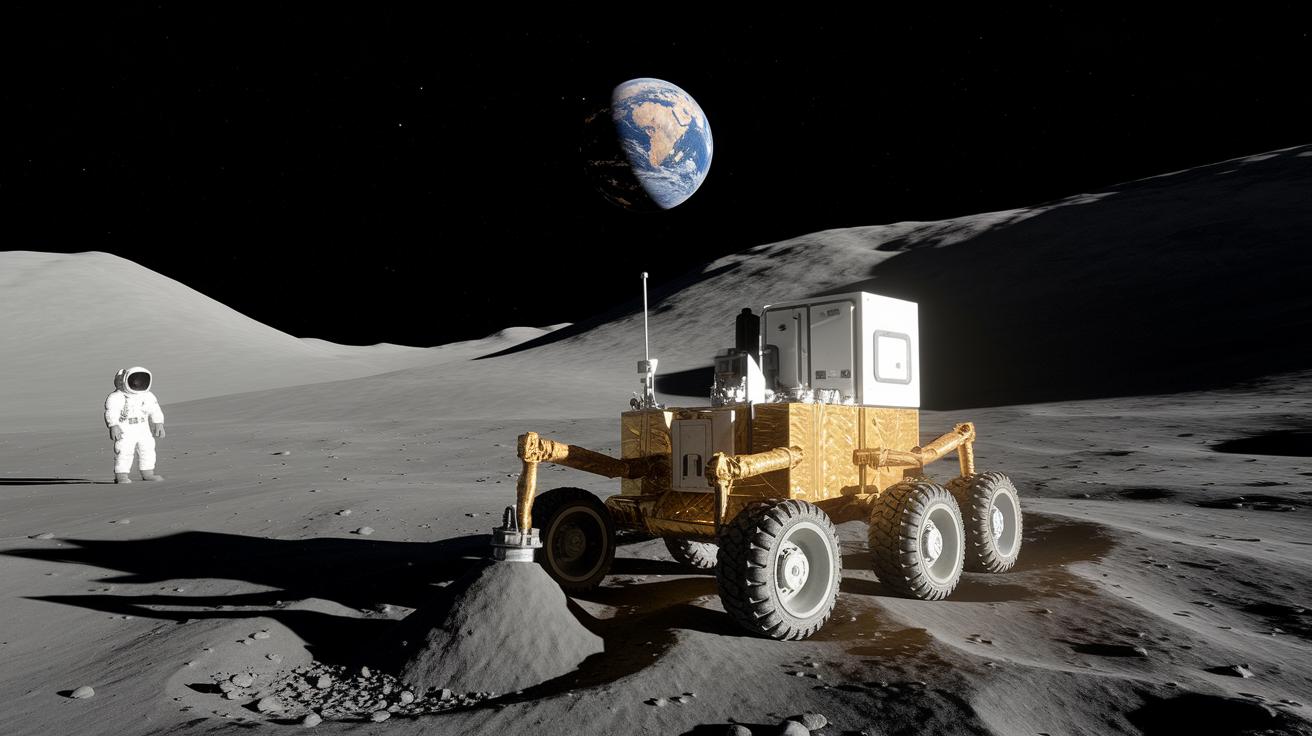
Long-duration lunar missions now lean on clever, weight-saving methods. Since launching just one kilogram costs around $2,000, every bit counts. That’s why using local materials (In-Situ Resource Utilization, or ISRU) is key. Mission teams are turning to Moon resources to lighten payloads and shrink equipment. For instance, 14 groups are competing for $800,000 to develop compact payload designs. Imagine a tiny robot scooping up moon dust as easily as you’d gather beach sand, pretty cool, right?
One exciting method is mechanical excavation, also known as the Selene excavation model. It uses small, precise machines to scoop up lunar soil even in the Moon’s low gravity. Then there’s the gravity leaching approach, which works like a natural sieve: it separates useful compounds using the Moon’s own pull, cutting down on heavy equipment needs. And don’t forget the thermal dust conversion technique, where prototypes heat the dust to trigger chemical changes, turning raw lunar material into ready-to-use building blocks.
Each method brings its own mix of benefits and challenges. The Selene model is like a miniature shovel, scooping up surface material with agility. The gravity-based approach acts much like a sieve, letting the natural force filter out what’s needed. And the dust conversion technique is a bit like cooking, carefully heating the dust until it transforms into something practical.
Plans for integrating these extraction tools are already in motion, as shown by trials on lunar modules. With each improvement, scientists get closer to safer and more affordable Moon missions. Have you ever wondered how we might one day build habitats on another world using materials found right there?
Processing Lunar Regolith: From Raw Soil to Usable Materials
Regolith is the fine, dusty blanket covering the Moon, but it’s far more exciting than it looks. It’s loaded with elements like silicon, aluminum, iron, and oxygen that could one day turn a barren lunar landscape into a thriving site for construction. Engineers are exploring clever ideas to sort and refine this dust into valuable building blocks, a process they call regolith beneficiation (which means cutting out the useful parts from the rest).
In labs and on test sites, scientists are trying out different methods. One promising approach uses a vacuum system to pull out unwanted bits from the regolith, and when combined with sintering (a way of fusing materials by heating them), it can form solid bricks strong enough to handle the Moon’s extreme environment. Picture a scenario where robotic arms carefully lay down these bricks to build habitats, almost as if a giant 3D printer were creating a structure layer by layer.
Researchers are also working on what they call stardust material synthesis. This means they mix regolith with other ingredients to create new alloys that behave a lot like Earth’s metals but are light enough for space travel. Early tests with robots on simulated lunar terrain have shown that these new materials could serve as a dependable resource for building projects on the Moon.
Progress keeps ramping up as teams adapt techniques originally used on Earth for making things. Each test helps improve the toolkit for future lunar missions, opening the door to everything from landing pads to full-blown habitats. Today’s experiments are laying the groundwork for a future lunar economy where every speck of regolith might help build a sustainable off-world presence.
Water Ice Mining in Lunar Polar Regions
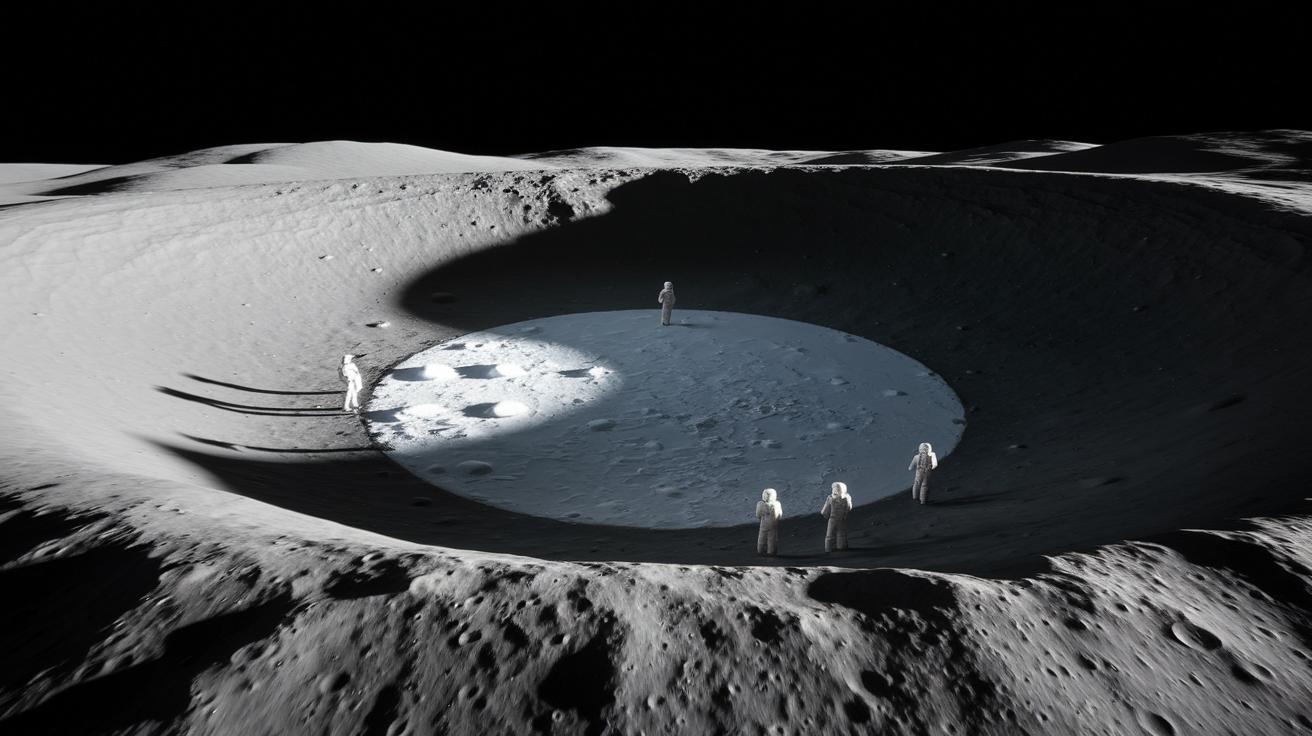
The Moon's polar regions hide a secret treasure: large water ice deposits tucked away in craters that never see the sun, like near Shackleton. Orbiting tools have picked up strong signals of hydrogen (a clear hint that ice is there), and scientists are excited because these cool, shadowy pockets could be key for future lunar missions.
Researchers are busy exploring ways to extract the ice. One idea is to gently heat the icy soil until it turns into vapor, then catch that vapor and cool it back into water. Think of it like warming a frozen treat just enough so it softens without melting all over, the precision is really important.
The Moon's polar rims offer another smart advantage. They get nearly constant sunlight and enjoy milder temperatures, making them ideal for powering equipment. This steady supply of energy can help keep the extraction tools running smoothly, even when the lunar surface conditions change unexpectedly.
All these efforts are not only improving our lunar resource maps but also paving the way for a more sustainable use of the Moon. With the development of smaller and more efficient extraction methods, the dream of a self-sufficient lunar base is coming a step closer to reality.
Lunar Resources and Economic Potential: Market Projections
Right now, experts say the lunar economy could hit around $100 billion soon. Launching materials into space costs roughly $2,000 per kilogram, so saving even a little weight means more funds for deep-space missions. Because these costs are steep, innovators are finding clever ways to work in low gravity and even make rocket fuel right on the Moon, cutting back on expensive trips from Earth. Imagine if just one extra kilogram saved could fund a groundbreaking experiment, that idea alone has many space investors buzzing.
The market is being driven by new ways to extract resources and manufacture products in low lunar gravity. These fresh techniques turn raw Moon materials into high-value products while dropping production costs. Investors who believe in the future are now favoring plans that build a cosmic supply chain, a system linking mining on the Moon with off-world hubs that support space commerce.
Getting a smooth off-world logistics network in place is key. This means connecting mining sites on the Moon with delivery systems that transport raw materials, partially finished products, and even completed goods to far-flung destinations. Both governments and private companies are already planning pilots and protocols, paving the way for a future where every advance in lunar resource extraction boosts the global space economy. Here’s a look at the main drivers powering these changes:
| Key Driver | Description |
|---|---|
| Launch Cost Reduction | Lower payload costs make resource missions more affordable. |
| Low-Gravity Production | Manufacturing methods that take advantage of the Moon’s lighter gravity. |
| Cosmic Supply Chain | A connected logistics network for driving deep-space trade. |
Policy, Governance, and Legal Frameworks for Lunar Resources

The 1967 Outer Space Treaty laid out the basic rules for how countries handle space, it told us that space is a shared frontier meant for peaceful exploration. But today, as nations and private companies scramble to claim lunar resources, those old guidelines can feel a bit out of date.
New ideas are popping up that aim to revamp these rules into a clear playbook. Think of it as drafting fresh guidelines that sort out who gets to mine what and how everyone can share the benefits. This new approach is meant to mix government rules with private interests in a way that keeps conflicts at bay.
Lawmakers are now deep in conversation about updating these space rules. They’re exploring options like independent oversight teams, new sharing protocols, and even panels to sort out disputes if things get messy. These steps are all about clearing up the legal fog while encouraging nations to work together as lunar missions ramp up.
In a nutshell, as competition heats up, it’s clear we need guidelines that are as flexible as they are fair. The goal is a balanced system that lets innovation thrive without stepping on anyone’s toes, ensuring the Moon’s treasures can benefit all.
Missions Mapping Lunar Resources: Current and Future Explorations
NASA's Artemis missions, India's Chandrayaan-3, and Russia's Luna-25 are leading a fresh wave of Moon exploration. They use special instruments on orbiters (think of them as flying labs) to scan the lunar surface for minerals and resource deposits. It’s a bit like following a color-coded treasure map that reveals hidden goodies beneath the surface.
Mapping the Moon's surface in detail is key to finding safe landing spots and stable bases for the future. Detailed maps let scientists pick spots that are less likely to shift or experience moon-quakes. In simple terms, these maps guide engineers to areas where resources can be gathered without a big risk of instability.
New high-frequency telemetry technology lets scientists get near real-time updates from the Moon. This means that even small changes in the lunar landscape are quickly sent back to Earth, giving researchers a dynamic look at how the surface evolves over time.
Even citizen scientists are stepping in to help. These enthusiastic folks and independent researchers suggest innovative ideas and new payload concepts that work hand in hand with high-tech instruments. This mix of professional and amateur input is helping everyone better understand the spread of lunar resources.
Overall, these missions are setting a new standard in Moon exploration. The detailed mapping not only boosts the scientific value of each mission but also helps pinpoint the most promising, resource-rich sites for the next phase of space exploration.
Final Words
In the action, we looked at recent space missions and how they shed light on the Moon's offerings. We examined methods for processing raw lunar soil, mining water ice, and evaluating economic potential through advanced mapping and extraction techniques.
Each section connected practical engineering with the latest science, giving us a clear picture of how lunar resources might power future off-world projects. The outlook is upbeat, and these insights inspire further exploration ahead.
FAQ
What is Lunar Resources, Inc?
Lunar Resources, Inc is a company specializing in exploring and mapping the Moon’s natural materials. It leverages data from recent space missions to study lunar raw materials for off-world research.
Where can I find a lunar resources map, list, or PDF?
Detailed maps, lists, and PDFs on lunar materials are available in space agency reports, research papers, and mission archives that summarize the Moon’s resource distribution.
What does Lunar Resources stock refer to?
Lunar Resources stock refers to publicly traded shares in companies focused on Moon-based exploration and resource development, with market data tracked on conventional financial platforms.
What is Elliot Carol Lunar Resources?
Elliot Carol Lunar Resources is linked to industry insights and investment strategies concerning lunar ventures, with details often featured in specialized publications and corporate updates.
What careers are available at Lunar Resources and where can I find them?
Careers at Lunar Resources typically involve roles in space engineering, research, and data analysis. Company websites and LinkedIn offer updated job postings for enthusiasts in lunar exploration.
What resources are on the Moon?
The Moon’s provisions include regolith rich in silicon, aluminum, iron, and oxygen, as well as water-ice deposits in permanently shadowed polar craters that support manufacturing and infrastructure.
Who is the CEO of Lunar Resources?
Information on the CEO of lunar resource companies changes over time. You can check the company’s official website or LinkedIn profile for the most current leadership details.
What is a lunar resource?
A lunar resource is any raw material on the Moon, such as water, minerals, or metals, that can be processed and used to support space missions and the construction of off-world systems.
Can you buy lunar rock legally?
Buying lunar rock legally is only possible through government-approved programs, with international treaties governing ownership and prohibiting private claims, ensuring strict regulation of transactions.