


Have you ever wondered if computers might work like magic? Remember when clunky vacuum tubes were replaced by modern chips? Today, scientists are swapping bits for qubits (tiny elements that can exist in more than one state at once). It might seem strange that machines needing super-cold conditions are built to solve problems our current systems can’t handle. Quantum computing is changing how we see technology, with experts fine-tuning the hardware that powers these powerful calculations. This article explores how these amazing components are setting the stage for exciting tech breakthroughs.
Fundamentals of Quantum Computing Hardware
Quantum computing hardware refers to the physical parts inside a quantum computer. Think back to the days when bulky vacuum tubes gave way to tiny transistors, kick-starting the personal computer revolution. Today, researchers are switching from ordinary bits to qubits, supercharged bits that can be on and off at the same time. While these machines are still mostly experimental and not used in everyday gadgets yet, they promise to solve problems that our current computers can’t.
The wonder of quantum computing comes from three big ideas. First, superposition lets qubits hold more than one state at once, kind of like having your cake and eating it too. Second, entanglement connects qubits so that a change in one instantly affects the other, almost like a secret handshake between them. And third, interference is the process that mixes these states together to decide the final answer. Inside these systems, quantum registers store and work with the qubits, while Quantum Processing Units (QPUs, think of them as the super-fast brains of the system) do the heavy number-crunching.
Making these advanced machines isn’t simple, it calls for experts in physics, cryogenics (working with materials at near freezing temperatures), materials science, electronics, and computer engineering. Fun fact: early experiments showed these systems were so delicate that they only worked near absolute zero temperatures. Imagine building something that needs conditions as cold as outer space just to function!
Key Qubit Technologies in Quantum Computing Hardware

Picking the best qubit tech is key because it shapes how fast, precise, and scalable a quantum computer can be. Different qubit types offer unique perks and hurdles, from handling errors to fitting the whole system together.
-
superconducting qubit circuits: These qubits are pretty advanced, with tech readiness levels around 7 or 8 (that means they’re almost ready for full use). Big companies have refined these designs by using familiar semiconductor methods, making them a strong choice for building powerful quantum processors.
-
trapped ion hardware: Using very precise lasers, trapped ion systems manage individual ions with high accuracy. This careful control makes them a top pick when precision is the main goal.
-
photonic quantum devices: With these, qubits are encoded into single particles of light (photons). One great benefit is that they can work at room temperature, which might simplify the design and work well with today’s optical tech.
-
neutral atom quantum computing: In these systems, lasers trap neutral atoms into arrays that naturally resist errors and are easier to scale up. This technique could lead to bigger, more straightforward quantum computers.
Overall, these qubit approaches cover a wide spectrum from near-ready to emerging potential. While superconducting and trapped ion methods are rapidly moving toward everyday use, photonic and neutral atom systems are unveiling fascinating opportunities in more niche areas.
Core Components of Quantum Computing Hardware
Quantum computing hardware is a unique mix of parts working together to manage qubits with amazing accuracy. These systems keep everything at incredibly low temperatures and send out carefully timed energy bursts, turning fragile quantum states into solid, useful information.
Cryogenic Quantum Systems
Dilution refrigerators are like the ultimate freezers, cooling quantum devices down to just 10–20 mK, way colder than outer space! This extreme chill cuts down on random heat signals (think of it as background noise) and helps keep qubits balanced and stable.
Quantum Control Electronics
Tiny digital controllers send precise microwave pulses and laser beams to the qubits. It’s a bit like setting a fast, finely tuned rhythm for each qubit, ensuring every operation happens right on cue, even in less than a microsecond!
Readout and Measurement Systems
Readout systems act like translators that turn fleeting quantum states into the clear-cut bits that classical computers can understand. They use methods like dispersive readout and single-photon detection to catch that exact moment when quantum information becomes a solid result.
Quantum Interconnect Technologies
Technologies like cryo-CMOS chips help link together groups of qubits by managing all the complex wiring. They minimize delays and tidy up the connections, making it easier to build and scale up quantum computers in the future.
Performance Considerations and Hardware Challenges
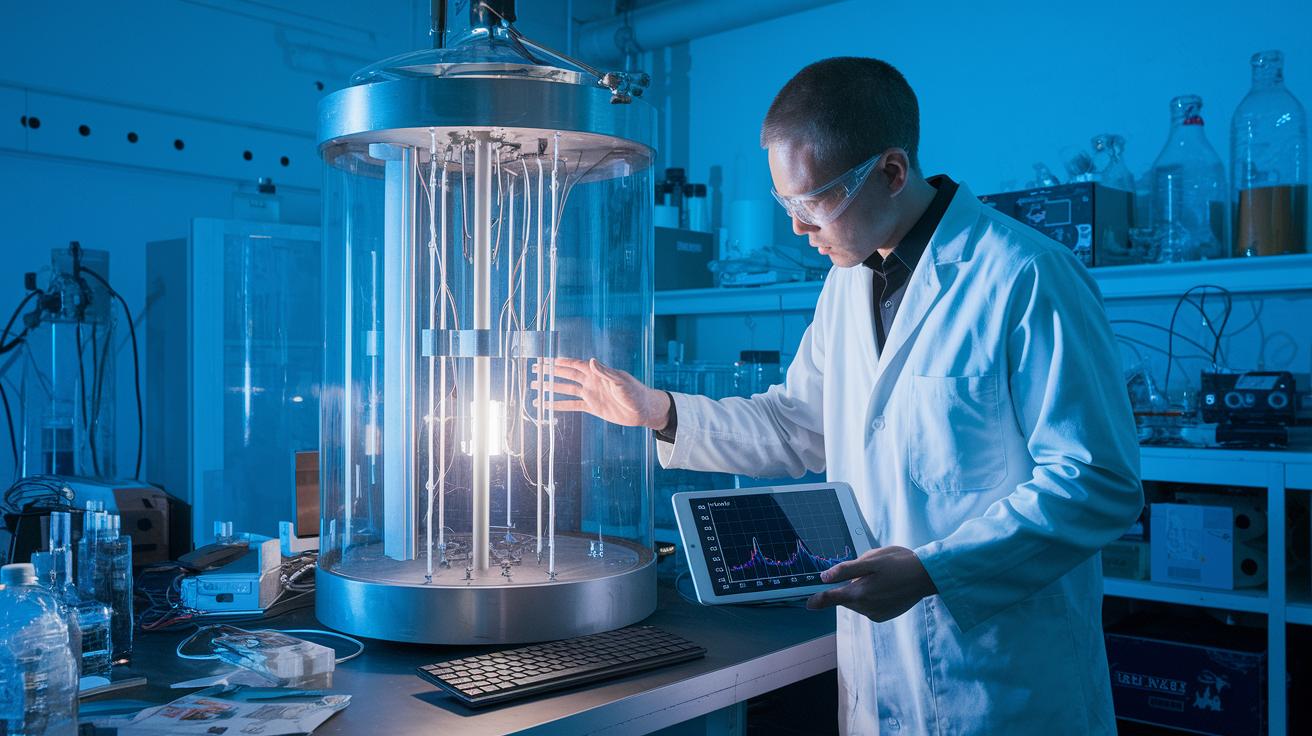
Quantum computing systems often struggle to keep their qubits steady. These tiny components can easily lose their state because of disturbances like environmental noise and random events. It’s important to protect the qubits with well-planned strategies since even a small mistake can change the outcome. Think of it like trying to tune your radio during a heavy storm, every bit of interference matters.
Managing the cold temperatures needed for these systems is no small task either. They often require big, heavy cryostats to keep things at temperatures near absolute zero, which makes the setup more complicated and expensive. In addition, signals can sometimes mix in unwanted ways (known as cross-talk) between the qubits and their wiring, which also makes it harder to scale up the system effectively.
Each type of qubit has its own quirks, showing different error rates and how long they stay stable. This means that researchers need to design specific solutions for each technology they work with. There is constant progress in developing new techniques to control qubit behavior and manage the tricky thermal issues in quantum circuits, making the systems more reliable and cost-effective over time.
| Qubit Type | Coherence Time | Operating Temperature | Error Rate |
|---|---|---|---|
| Superconducting | Microseconds to milliseconds | 10-20 mK | Relatively high |
| Trapped Ion | Milliseconds to seconds | Room temperature/controlled | Very low |
| Photonic | Variable | Near room temperature | Medium |
| Neutral-Atom | Milliseconds | Room temperature/controlled | Low |
The relationship between error rates, how long qubits hold their state, and the rules for keeping everything cool plays a big role in how well these systems can grow and how much they cost to run. As the field of quantum hardware improves, better techniques for reducing noise and stabilizing temperature will help make large-scale systems a real possibility, even when faced with challenges like wiring issues and unwanted interference.
Industry Trends and Research Developments in Quantum Computing Hardware
Big names like Google, IBM, and Honeywell are teaming up with an energetic group of 31 startups, including AegiQ, Alpine Quantum, and Alice&Bob, to push quantum computing hardware to new limits. It’s like watching seasoned experts and fresh innovators share the same stage, sparking creative breakthroughs that really light up the field. This exciting mix of talent is speeding up research and setting the stage for a future full of promise.
Academic spin-offs are also in the mix, blending trusted university expertise with hands-on engineering. Groups like IQM from Aalto University and VTT, along with ORCA Computing in London, PhotoInc in Vancouver, and Quandela in France, are perfect examples. Take Alice&Bob, for instance, they raised $3.3 million in May 2024. Moments like these show how research and smart investments can give quantum hardware a big boost, pushing us closer to scalable and efficient devices.
New hardware approaches are also turning heads. Silicon circuits, seen in projects by Quantum Motion, might simplify how we control these systems, while electron-on-helium techniques led by EeroQ promise improved sensitivity. It’s a creative leap that opens doors for uses ranging from secure communication (cryptography) to realistic material simulations. Every new idea brings us nearer to quantum systems that are not only cutting-edge but ready to make their mark in the real world.
Integration and Scalability Strategies for Quantum Computing Hardware

When it comes to growing quantum computers, clever design is key. Instead of trying to build one giant processor, engineers break the system into smaller, easier-to-manage modules. Think of it like building with blocks, each small group of qubits (the basic units of quantum information) is easier to control and tune. And by sometimes mixing different types of qubits or even combining quantum cores with regular control systems, these hybrid designs can work more efficiently, making the whole setup more reliable.
Even the way we connect all these parts matters a lot. Cutting-edge tools, like cryo-CMOS chips and tightly packed, high-density connections, are being developed to work right at the super-cold temperatures needed for quantum systems. This close pairing of control electronics with the quantum hardware cuts down on delays and messy wiring. In the end, these innovations aim to overcome current challenges, paving the way for large-scale quantum devices that operate precisely and efficiently.
Future Outlook for Next-Generation Quantum Computing Hardware
Material and design breakthroughs are paving the way for the next wave of quantum computers. Engineers are trying out cryo-CMOS control chips that position key electronics really close to the heart of the quantum system. They’re also looking into new superconducting alloys (special metals that work best when really cold) to boost durability. And there’s a lot of buzz around topological qubits, which naturally ward off errors. All these innovations are shaping a future where quantum systems become more reliable without cutting corners on performance at super-small scales.
These advances could change the game in many fields. Imagine drug developers speeding up new treatments with more precise simulations. Think about how cryptography might get a serious upgrade with tougher security measures. Even materials science could jump forward by discovering custom compounds, and financial experts might crunch huge, complex data sets faster than ever before. This fresh mix of quantum materials and smart design ideas is set to bring real, high-impact changes to everyday industries.
Scaling up these systems is still a big challenge on the road to large-scale, error-free quantum computers. Researchers are making progress toward quantum processors that might house millions of logical qubits (the tiny bits that hold quantum information) and are even mixing classic computer parts with quantum ones. Yet, there are still hurdles like keeping those qubit groups error-free and making sure everything works well outside the lab. So while the outlook is really exciting, there’s still plenty of work ahead in bringing this next generation of quantum hardware to life.
Final Words
In the action of discussing quantum computing hardware, this post broke down its basics, qubit types, and core components. It also touched on performance challenges, industry trends, and strategies for scaling these devices.
We rounded out our exploration with a look toward the future, highlighting exciting innovations and practical applications. The advances in quantum computing hardware are setting the stage for more breakthroughs, making the next steps in tech progress truly promising.
FAQ
Frequently Asked Questions
What hardware is used for quantum computing?
The hardware used for quantum computing consists of quantum processing units, cryogenic systems for cooling, control electronics for operating gates, and measurement devices that convert quantum information into classical signals.
What are the 5 main components of quantum computing hardware?
The five main components include quantum registers (storing qubits), quantum processing units for executing operations, cryogenic systems for maintaining ultracold conditions, control electronics for signal delivery, and readout systems to capture outcomes.
How powerful is 1,000,000 qubits in quantum computing?
The scale of 1,000,000 qubits suggests massive parallel processing and exponential speed improvements, though real-world power depends on error correction and system stability methods still under development.
What companies build hardware for quantum computers?
Leading companies such as IBM, Google, and Honeywell, along with various startups, are developing quantum computing hardware by designing advanced systems that operate on quantum mechanical principles.
Where can I find educational resources for quantum computing hardware?
Educational resources, including detailed PDFs, courses, and books, are available to explain the fundamentals and components of quantum computing hardware in clear, practical language.