


Have you ever pictured yourself working among the stars? NASA is like a team of bold explorers, and joining them means you get to help shape history. Their legendary missions and current projects spark real cosmic curiosity. A career at NASA isn’t just a job, it’s a chance to dive into a world of exciting challenges and groundbreaking work. Imagine using your skills to unlock space’s secrets, one experiment at a time. Ready to launch the future of your dreams?
nasa careers Launch Your Dream Future
Since its start in 1958, NASA has been the leader in exploring space and aviation. They’ve taken bold leaps with missions like the Apollo Moon landings, Space Shuttle journeys, and even sending out the Hubble Telescope, all of which built a rich legacy of adventure. Today, NASA is hard at work on projects like the International Space Station and the Artemis program, which is getting ready to bring people back to the Moon and maybe even take us farther into the cosmos.
NASA offers a wide range of career paths. Whether you’re drawn to science, engineering, or managing complex projects, there’s a place for you at this space agency. Imagine a job where your ideas help craft innovative spacecraft or where you sift through cosmic data that could spark totally new theories about our universe.
Here’s a fun fact: Before NASA sent astronauts to the Moon, engineers solved huge challenges with very limited technology but boundless creativity. This goes to show that passion and ingenuity can really push the limits of what’s possible.
At NASA, government jobs cover it all. You might work hands-on as an avionics technician, making sure every instrument is ready for a mission, or lead intricate projects as a program manager. Plus, internships here offer real-world experience in a friendly, collaborative setting. With roles in research, technical support, and management, NASA is looking for curious minds ready to turn exploration into groundbreaking achievements that will shape our future in space.
Navigating NASA Job Openings and Application Process
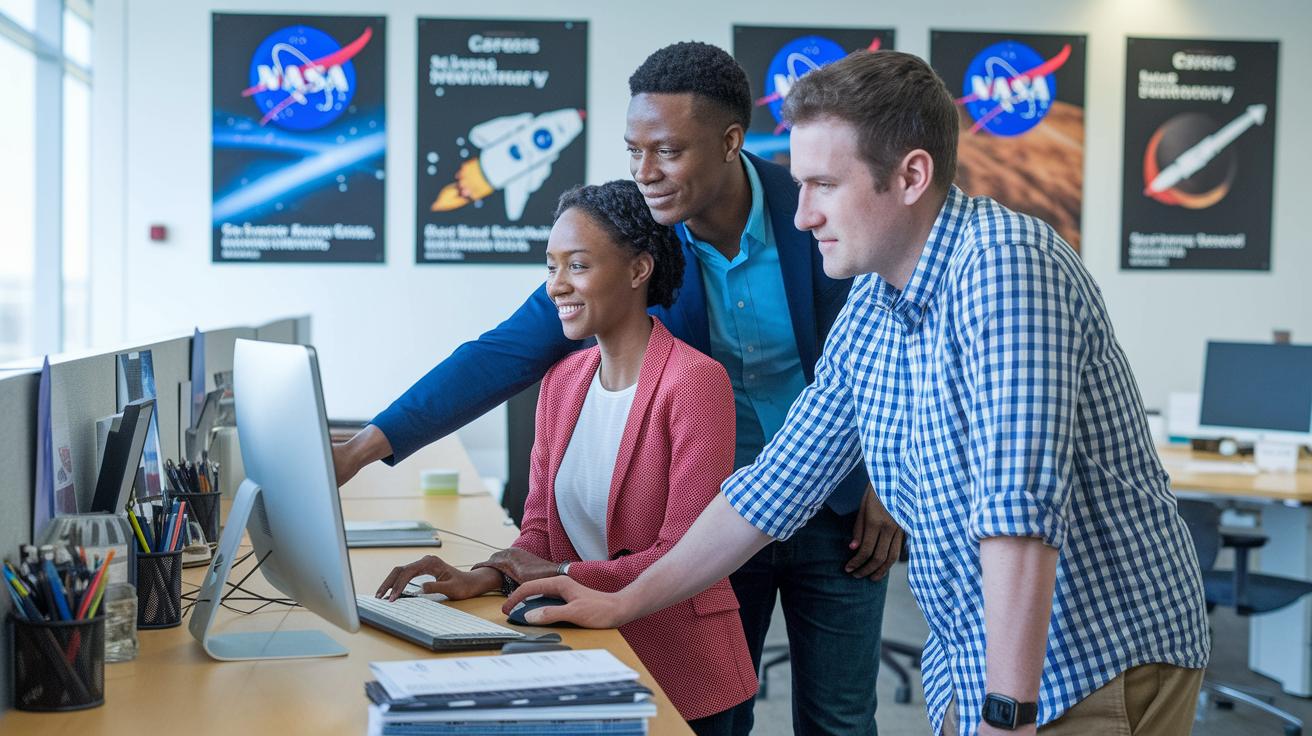
At NASA, you’ll find job listings on their official Careers page as well as the USAJOBS portal. It’s like having a gateway to a treasure trove of space-related roles, where you can easily search by keywords, location, or job type. Think of it as browsing a special catalog that brings you one step closer to a world where curiosity and science meet.
NASA offers opportunities across more than 40 job categories, from hands-on technical work to leadership roles. Usually, the application journey starts with a quick phone call. After that, if things look promising, you’ll move on to in-person or group interviews where your experience and skills get matched up to the job tasks. Here are some tips to help you along the way:
- Use keyword searches to narrow down roles that fit your experience.
- Adjust your resume to spotlight projects and hands-on work that matters.
- Practice explaining your achievements using clear, measurable results (think of methods like STAR).
When you’re looking through NASA job listings, it pays to have a clear plan at every stage. Build your application package to shine a light on your enthusiasm for space exploration and your readiness for a competitive process. Picture this: you log in, spot that perfect job, and send off an application that clearly shows you’re the right fit for NASA’s quest for extraordinary talent. This approach can truly set you apart in a field full of passionate explorers.
NASA Internship Programs and Student Opportunities
NASA has a bunch of hands-on programs run by its Office of STEM Engagement. They offer paid summer internships for both high school and college students, giving you a real chance to work on cool projects in science, technology, aeronautics, and space exploration. Picture yourself helping out on a project that looks into how microgravity (the near absence of gravity) changes materials. One high school intern even said, "I was amazed when I got to help test materials in space conditions!"
There’s more than just summer internships, though. NASA also has Pathways programs for recent graduates and fellowships focusing on orbital science. These programs aren’t just about gaining work experience; they’re a great way to build connections with experts across various NASA centers in the country. It’s all about sharpening your skills, diving into innovative research, and boosting your resume as you take your first steps towards a career in space and tech.
If you’re interested, here’s what you need to do:
- Check the NASA careers page often for new internship opportunities and updated deadlines.
- Put together an application that shows off your projects, academic wins, and any hands-on experience you have.
- Customize your resume and cover letter to highlight your passion for science along with your team spirit.
These opportunities are a solid stepping stone for anyone eager to turn their love for science into a real-life adventure at NASA. It’s where curiosity meets opportunity, launching you into a future of exciting careers in space and technology.
Essential Qualifications and Skills for NASA Careers

When you're thinking about joining NASA, it's all about mixing top-notch technical skills with a friendly, team-oriented spirit. NASA values safety, integrity, teamwork, excellence, and inclusion. They love seeing applicants who not only have a strong background in science or engineering but also know how to work well with others.
Most roles at NASA need a solid STEM degree, whether that's in engineering, scientific research, IT, or program management. This strong academic foundation helps you jump right into exciting projects that push the boundaries of space exploration. And let's be honest, who doesn't love the idea of working on cutting-edge space technology?
Experience matters too. If you're dreaming about becoming an astronaut, be ready to show off advanced degrees, flight experience, and meeting tough fitness standards. For engineering and technical roles, having hands-on experience in challenging projects and a knack for creative problem-solving is key.
To help you grow, there are handy training courses available. For instance, APPEL Knowledge Services offers classes in project management, leadership, team building, and communication. These courses not only sharpen your technical skills but also boost the interpersonal skills that make NASA professionals stand out.
Don't forget to back up your application with concrete examples from your past work. Showing specific projects, certifications, and measurable results can really convince them you're ready to take on space exploration challenges. By building your skills and meeting these qualifications, you'll be well on your way to becoming an important part of NASA’s groundbreaking missions.
NASA Careers: Benefits, Compensation, and Work Culture
At NASA, pay follows federal guidelines, which means your salary is set by government standards. For instance, a Human Resources Specialist earns around $45,149 per year. And you'll get a solid benefits package, with health insurance, retirement plans, and paid time off to help you balance life and work.
The team environment at NASA is all about collaboration and fresh ideas. Walk into any center, like the buzzing Johnson Space Center in Houston, and you'll see that everyone’s input is valued and ideas flow freely. It feels like being part of a community where sharing thoughts isn’t just welcomed, it’s expected.
Some of the standout perks include:
- Pay based on federal scales, ensuring fairness
- Comprehensive health coverage and retirement support
- Generous paid leave and flexible work schedules
Working at NASA is more than just a job with good pay. It’s about joining a team that respects diverse viewpoints and encourages creative thinking. That friendly, supportive atmosphere, combined with great benefits, makes it a place where you can truly thrive while pushing the boundaries of space exploration and innovation.
NASA Careers: Professional Growth and Advancement Paths

At NASA, you’ll find a workplace that turns real-world experiences into learning moments. They offer hands-on training and job-based learning that feels like stepping right into a live mission. You might join APPEL seminars, a series of interactive sessions where you can dive into technical topics and pick up leadership skills. Imagine being in a room working on problem-solving exercises that prepare you for the headlining challenges of space missions.
There are also plenty of internal events to help you move up the ladder. For example, someone who starts in an entry-level role might later grab a leadership position on projects like Artemis or the International Space Station. It’s really all about structured career planning and the chance to work in different centers, kind of like moving from one exciting part of a space lab to another.
Plus, NASA puts a lot of emphasis on mentorship. You could be paired with a seasoned professional who shares insights and personal tips on navigating the busy world of space exploration while nurturing your leadership skills.
- Take part in on-the-job training sessions
- Join APPEL seminars for hands-on leadership development
- Benefit from formal mentorship opportunities
Each of these avenues is designed to support continuous learning and growth, setting the stage for long-term success at NASA.
NASA Careers: Specialized Engineering, Science, and Technical Roles
At NASA, specialized jobs in engineering, science, and technical fields turn creative ideas into real breakthroughs in space exploration. Engineers work on everything from powering up rocket engines to making sure every part of a spacecraft runs perfectly. Imagine being on the team that designs the robot arms moving satellites, or tweaking instruments so they chat with each other in space.
Scientists at NASA get to explore the stars, watch Earth from a fresh angle, or run vital experiments on the International Space Station. These roles, even projects linked to the NASA Mars Rover, offer a hands-on chance to collect data that might change how we understand our universe.
Technical positions are just as exciting, especially for those who love managing projects. Program integration managers, for example, juggle budgets, timelines, and risks while making sure all parts of a complex mission work together perfectly, like a well-oiled machine guiding a spacecraft into orbit.
You can find these cool opportunities at top hubs like JPL, the Marshall Space Flight Center, and even on the ISS. In these centers, professionals blend practical skills with innovative research, working side by side to fuel the next giant leap in space exploration.
Tips and Strategies for a Competitive NASA Careers Application

Have you ever thought about what makes a NASA application truly stand out? Start by crafting a resume that highlights your projects, internships, and clear results. Show off your hands-on work in science or engineering and mention any leadership roles you’ve taken on. For example, if you boosted efficiency by 20% or helped cut project costs, say so in clear, everyday terms.
When it comes to interviews, try the STAR method. This means you explain the Situation you faced, the Task you had, the Action you took, and the Result that followed. It’s a simple way to connect your experiences to NASA’s values. Also, spend some time learning about NASA’s programs so you understand the missions you might help drive. This extra research helps you align your application with their focus on innovation, teamwork, and excellence.
Networking is just as important. Attend events like the Center for Space Education fair or join NASA STEM initiatives to build connections in the field. Here’s a quick checklist to keep you on track:
| Checklist Item |
|---|
| Craft a resume with clear, measurable achievements |
| Practice the STAR interview method |
| Attend industry events and networking opportunities |
| Customize your application to mirror NASA’s core values |
Taking these steps can really help your application shine among a field of passionate, space-loving talent.
Final Words
In the action, we examined nasa careers by breaking down job opportunities, student internships, required qualifications, and specialized roles. Each section shed light on concrete pathways to start and grow professionally at NASA. The overview makes it easy to understand everything from finding openings to nailing the application process. With clear examples and real-life details, this discussion leaves us eager to see how science and technology can keep moving forward on such exciting paths.
FAQ
Frequently Asked Questions
Q: What does USAJobs NASA refer to?
A: USAJobs NASA refers to how NASA advertises job openings on USAJobs.gov, the official federal employment website, where detailed listings of available roles and requirements are provided.
Q: What are entry level NASA jobs and qualifications?
A: Entry level NASA jobs target new professionals with STEM degrees. Basic qualifications include a relevant degree, some hands-on experience, and a strong commitment to teamwork and safety.
Q: What is known about NASA jobs salary?
A: NASA job salaries follow federal pay scales and depend on role and experience. Starting positions offer competitive ranges, with increases as employees gain more experience and take on greater responsibilities.
Q: How do I access NASA Careers login?
A: NASA Careers login refers to the secure portal where candidates can manage applications and view positions. Candidates create accounts on the NASA or USAJobs website to track their application progress.
Q: Are there NASA Careers for non-U.S. citizens?
A: NASA Careers for non-U.S. citizens are limited because many roles require U.S. citizenship per federal guidelines. Some internship opportunities may be available under special conditions.
Q: What internship opportunities does NASA offer for students?
A: NASA internships offer paid summer positions for high school and college students, providing hands-on experience in science and technology fields that build vital skills and professional networks.
Q: Is it hard to get a NASA job, and how can I get one?
A: The difficulty in securing a NASA job stems from strong competition. Applicants boost their chances by highlighting relevant skills, engaging in internships, tailoring resumes, and preparing well for interviews.
Q: What is NASA’s highest paying job?
A: NASA’s highest paying jobs are often specialized engineering or management roles, requiring advanced technical skills, considerable experience, and leadership abilities that justify their elevated compensation.