


Have you ever thought about controlling things so small you can barely see them? Scientists are turning that idea into reality by working with materials a billionth of a meter in size. Labs are busy perfecting ways to measure and move these tiny bits with incredible precision.
This breakthrough isn’t just about designing smaller systems, it’s paving the way for smarter, faster technology in our daily lives. Each new step in nanotech research could reshape our future in ways that feel almost magical, one minuscule particle at a time.
Cutting-Edge Milestones in Nanotechnology Breakthrough Research
Over the past five years, researchers in nanotechnology have made some really impressive strides that could totally change the way we handle tiny systems. Think about it: scientists from MIT, Stanford, and Caltech have been hard at work, pushing the limits of what we can do with things that measure in billionths of a meter.
For example, back in 2019, a team at MIT wowed everyone by developing a method that achieved precision at just 5 nanometers, that’s like being able to measure something so small it’s almost hard to imagine. Then, in 2021, Stanford researchers ramped up chemical reactions by making them work 10 times faster through clever tweaks (basically fine-tuning how reactions happen). And more recently, in 2023, Caltech introduced some serious advances by refining the way atoms are assembled one by one. Did you know that one study even showed controlled submicroscopic synthesis that might pave the way for components in quantum computing?
| Year | Lead Institution | Headline Metric |
|---|---|---|
| 2019 | MIT | 5 nm precision |
| 2021 | Stanford University | 10× catalytic gain |
| 2023 | Caltech | Enhanced ultrascale innovation |
These breakthroughs aren’t just cool science experiments, they show how system optimization is creating real-world applications. Every new discovery lays the groundwork for even more precise control in submicroscopic synthesis, moving both academic and practical fields forward. It’s exciting to think about how these innovations might shape the future of technology!
Molecular Engineering and Atomic Assembly Advances in Nanotechnology Breakthrough Research

Recent studies in molecular engineering have shown that working with individual molecules and atoms is no longer just a wild idea from science fiction. Scientists are now arranging molecules to create tiny, working structures using a process that lets them sort themselves out, much like pieces of a living puzzle that automatically fit together when given the right clues.
Researchers can now control these assemblies at an unbelievably small scale, just 1 to 5 angstroms (an angstrom is one ten-billionth of a meter). This kind of precision means they can build structures with exact dimensions, which is key for making better nanosensors and nanoelectronics. For instance, one team managed to place atoms with just 2 angstroms of error, creating paths that could help devices use energy more efficiently.
Another exciting part of this research is interface tailoring. This means scientists work on the boundaries between different tiny structures so they connect smoothly. Studies show that when these connections are fine-tuned, the tiny parts fit into larger systems much better, leading to faster and more reliable devices, from smarter wearable tech to energy systems that work a lot better.
All in all, combining molecular engineering with precise atomic assembly is changing the way we think about building materials from scratch. It’s a big step forward in creating advanced devices, turning ideas that once only existed in theory into real technologies we might soon see in everyday life.
Advanced Material Characterization and Imaging Techniques in Nanotechnology Breakthrough Research
Scientists now use a variety of tools to check the tiny properties of nanomaterials. One amazing tool is aberration-corrected TEM (transmission electron microscopy), which lets researchers see details within crystals at scales smaller than an atom. It’s kind of like having a super-powered microscope that shows every single atom in perfect clarity. Atomic-force microscopy, another cool method, feels the surface of materials to measure textures, while X-ray diffraction tells us about the repeating structure inside the material. Picture reading tiny bumps like braille, that’s how precise these techniques can be.
New ways to study materials, like Raman spectral analysis, add even more detail by quickly picking out the types of chemical bonds and molecules present. In some setups, scientists can check hundreds of samples every hour, which really speeds up the search for the best material properties. These advances let researchers look at both the smallest details and the big picture of how nanomaterials behave, which is key for building high-performance devices and understanding new material features at the tiniest scales.
Nanofabrication Methods: Plasma Etching, Deposition, and Minuscule Fabrication in Breakthrough Research
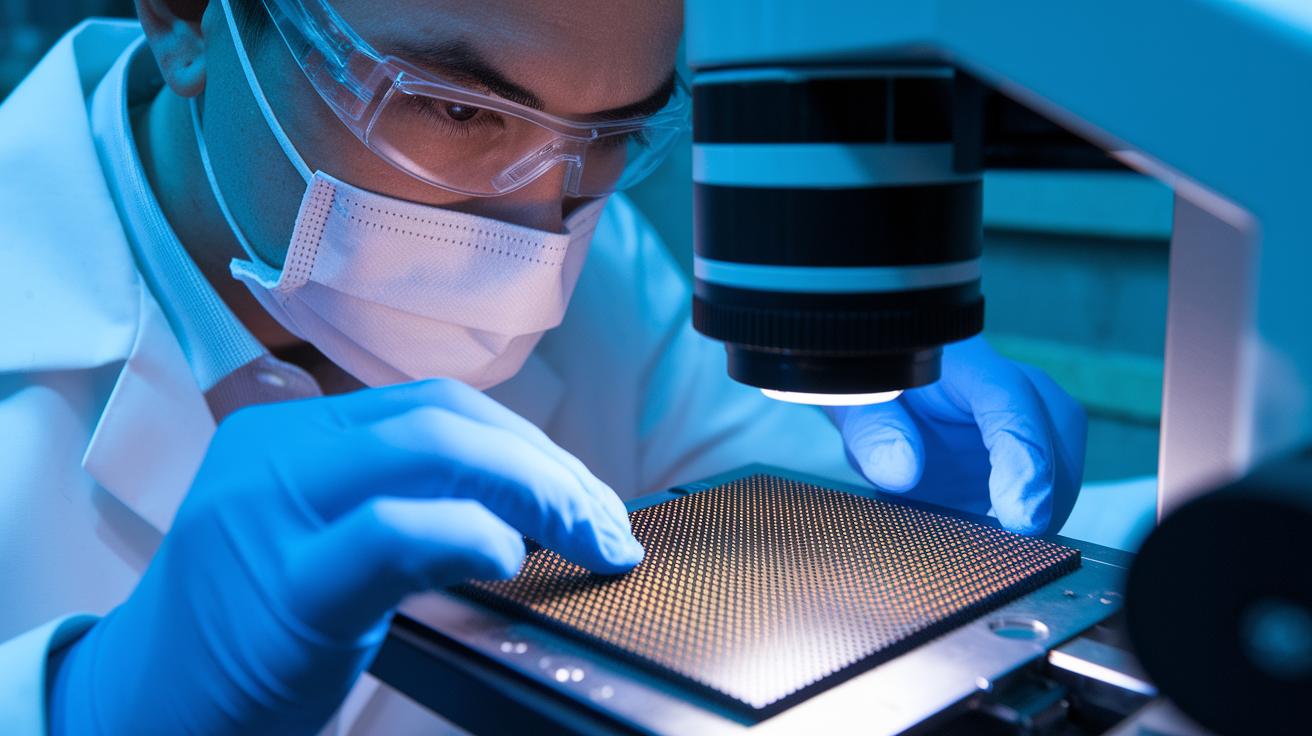
Scientists have worked hard to perfect methods that shape materials at scales smaller than 10 nanometers. They use techniques like atomic layer deposition, reactive ion etching, and laser annealing to build or cut materials with amazing precision. In atomic layer deposition, materials are made one tiny layer at a time. This process runs at temperatures around 250–350°C and pressures of 1–5 Torr, ensuring that every new layer fits in almost perfectly. One study even achieved results that were 95% on target compared to the expected models.
Reactive ion etching takes a different approach. It uses ionized gases in a controlled plasma, imagine a mini lightning storm at low pressures (about 5–10 mTorr), to carefully shape materials. This method is popular because it works fast, often removing material at rates measured in nanometers per minute. One team even described the process as if they were sculpting a detailed masterpiece, with each pulse refining the final look.
Laser annealing is another exciting technique in this field. Here, focused laser pulses, with power densities up to several MW/cm², quickly heat and cool the materials. This rapid cycle improves the tiny crystals in the materials, boosting the overall performance of the final device. Some experiments have shown that this method can raise the material yield by up to 20% during fabrication.
| Technique | Key Parameters | Notable Yield |
|---|---|---|
| Atomic Layer Deposition | 250–350°C, 1–5 Torr | About 95% accuracy |
| Reactive Ion Etching | 5–10 mTorr plasma pressure | Rapid etch rates |
| Laser Annealing | Power density up to several MW/cm² | 20% increase in yield |
Precision Medicine and Targeted Delivery Innovations in Nanotechnology Breakthrough Research
Nanoparticle systems are shaking up precision medicine by making drug delivery more exact. Scientists have come up with tiny drug carriers, like little bubbles and polymer-based vehicles, that transport medicine with almost surgical precision. One study even found that these polymer carriers hit tumors over 80% of the time, a big win for making sure treatments go right where they’re needed. Picture a mini mail carrier dropping off a package directly at a tumor, cutting down side effects while boosting how well the drug works.
These nanocarriers are specially designed to lock in medicine (a process called encapsulation) with up to 90% efficiency in some tests. In plain language, almost every bit of the active drug stays snug inside its carrier until it reaches the target spot. Early human trials have shown that these systems can keep the drug at its destination up to 50% longer, meaning the treatment works more effectively and you might not need to take it as often.
What makes these carriers really smart is their built-in release triggers. They only let go of the medicine when they detect specific signals, like changes in pH, temperature, or enzyme activity, almost like having a sensor built right in. Vaccine carriers that use this trick not only ignite a stronger immune response but also keep the important components stable along the way. With these advancements, scientists can now mix different treatments into one tiny carrier, opening the door to even more tailored therapies.
By fine-tuning the properties of these tiny particles, ideas from nanomedicine are quickly turning into real solutions for many health challenges. Early human trials hint that these innovative systems could soon pave the way for highly customized treatments, transforming the world of precision medicine and targeted delivery.
Sensor Development and Wearable Nanodevices from Breakthrough Research

Recent progress in sensor technology is changing the way we keep track of our health and surroundings. Imagine a tiny graphene biosensor that can pick up even the smallest traces of chemicals, down to levels as minute as one part in a quadrillion (that’s what femtomolar means). It’s almost like having a high-speed camera that instantly snaps every little change in your blood sugar.
Graphene-based biosensors now detect things at about 1 fM and react in less than one second. These super-fast devices are beginning to transform how we spot germs and run health tests. However, fitting them into wearable gadgets is no walk in the park. Scientists are working on making sure these sensors stay tough during everyday movement, manage their power well, and connect reliably with our phones or other portable devices.
Wearable tech like flexible patches for continuous glucose monitoring is gaining ground in clinical settings. These smart, nanotech-enabled patches not only offer nearly instant feedback but also aim to present data in a way that’s simple and user-friendly, no need for bulky lab setups. Researchers are still fine-tuning the balance between making these sensors very sensitive and ensuring they work well over long periods.
| Sensor Type | Detection Limit | Response Time | Challenge |
|---|---|---|---|
| Graphene Biosensor | ~1 fM | < 1 sec | Flexible integration |
| Flexible Glucose Patch | N/A | ~5 sec | Continuous stability |
Computational Modeling, Simulation Frameworks, and System Optimization Driving Nanotechnology Breakthrough Research
Advanced computer methods are changing the game in nanotechnology research. Tools like molecular dynamics (a way to simulate how molecules move) and density functional theory (a method for modeling atom interactions) let scientists look at how tiny particles behave at the atomic level. Researchers can now simulate systems with over 100,000 atoms, giving them a clear picture of how these particles come together and react.
AI and pattern recognition are making these simulations even smarter by quickly sorting through huge amounts of data to find important patterns. When these algorithms run on cloud computing platforms (powerful online networks), they can boost performance by more than 40 times compared to older CPU methods. This means that tasks which used to take hours are now wrapping up in just minutes, speeding up breakthroughs in nanofabrication and chemical processing.
Simulation frameworks are also getting a serious upgrade. Using robust data algorithms, researchers can now zero in on the right process details with impressive accuracy. Some developers have even shown that GPU-accelerated simulations (using graphics cards to speed up computing) turn days of work into just hours. This leap in system optimization not only speeds up research but also makes predictions about nano-scale behavior much more reliable.
These advances in computational modeling are turning theoretical concepts into real progress, helping bridge the gap between ideas on paper and actual nanotech applications through faster, more accurate simulations.
Sustainability, Scaling Challenges, and Economic Feasibility in Nanotechnology Breakthrough Research
Recent studies in nanomanufacturing show us just how important it is to use eco-friendly ways when making tiny materials. Researchers are now using life-cycle studies (looking at the impact from start to finish) to figure out how moving from small lab experiments to larger pilot systems can really cut costs. One example has researchers comparing regular lab setups with bigger pilot systems and seeing costs get as low as about $8 per gram when things are scaled up just right. This drop in cost is a big deal when we think about the market value of these innovative materials.
Pilot studies are also giving us encouraging signals. By reducing waste and leaning on green chemistry techniques (methods that use less harmful substances), industries are not only doing their part for the planet but also meeting tough regulations. Some forecasts even suggest that emerging nanotech applications could hit market sizes near $12 billion by the early 2030s. Plus, clear steps for following new guidelines mean that companies might only need 18 to 24 months to adjust to these new methods.
Efforts in sustainable manufacturing are backed by careful life-cycle analyses, which track environmental outcomes while ensuring that scaling up doesn’t compromise the material’s quality. By combining industrial scale-up with solid eco-friendly practices, the field of nanomaterials is set for a smart and ethical growth spurt. This balancing act between reducing waste, controlling costs, and meeting regulations is laying down a promising path for the future of nanotech innovations.
| Parameter | Estimated Value | Note |
|---|---|---|
| Cost per Gram | $8 | Based on pilot-scale production |
| Market Potential | $12 billion | Projected by early 2030s |
| Compliance Timeline | 18–24 months | For new eco-friendly processes |
Future Horizons and Interdisciplinary Collaboration in Nanotechnology Breakthrough Research
Researchers are exploring a new idea: mixing quantum nanotech (tiny tech that works on nature’s smallest scales) with light-based circuits (tech that uses light to send signals). Picture a quantum chip chatting with optical fibers as softly and smoothly as a whisper. This mix aims to make devices both smaller and quicker. At the same time, scientists are testing new safety rules to make sure these gadgets work reliably, especially in places like hospitals and during environmental checks.
Many teams from top universities are joining forces, sharing ideas from physics, engineering, and life sciences. Labs around the world are working together to fine-tune those light-based circuits for faster data flow. These partnerships are also drawing private investments, with big groups and consortia offering funds to support the most promising projects.
A recent study even described a meeting where inventors and policy experts teamed up to design fresh guidelines that keep up with rapid tech changes. Meetings like the upcoming Nanotech International Summit are already sparking friendly debates on what’s next. It shows that combining different areas of expertise is really key to making the breakthroughs of tomorrow.
Final Words
In the action, we explored the top breakthroughs in nanotechnology breakthrough research. We reviewed progress in molecular engineering, atomic assembly, and advanced imaging techniques. We also examined new insights into nanofabrication methods, precise drug delivery systems, and real-time sensor technology. Clear examples of computational modeling and sustainable manufacturing added depth. Every section reminded us how innovative research is reshaping our world. The momentum is strong, and the future is bright with tiny innovations making a big impact.
FAQ
Q: What are the cutting-edge milestones in nanotechnology breakthrough research?
A: The cutting-edge milestones article highlights recent studies with key achievements like 5 nm precision and 10× gains in reaction rates, showcasing studies from leading research institutions.
Q: How do molecular engineering and atomic assembly contribute to nanotechnology?
A: Molecular engineering and atomic assembly shape nanotech by controlling individual molecules for programmable self-assembly and precise interface tailoring, leading to innovative and functional nanostructures.
Q: What advanced imaging techniques are used to characterize nanomaterials?
A: Advanced imaging methods include aberration-corrected TEM, atomic-force microscopy, and Raman spectral evaluation, offering high resolution and throughput to accurately measure and verify nanomaterial properties.
Q: What nanofabrication methods are key in breakthrough research?
A: Key nanofabrication techniques feature atomic layer deposition, reactive ion etching, and laser annealing, which enable sub-10 nm patterning through careful control of process parameters like temperature and pressure.
Q: How has nanotechnology influenced precision medicine and targeted drug delivery?
A: Nanotechnology enhances precision medicine by using drug-loaded liposomes and polymeric nanocarriers that improve tumor targeting and enable responsive, controlled release, backed by promising early human-trial results.
Q: What innovations have emerged in sensor development and wearable nanodevices?
A: Sensor development has advanced with graphene-based biosensors that reach femtomolar sensitivity and wearable devices like flexible patches for real-time monitoring, improving rapid and accurate clinical screenings.
Q: How do computational modeling and simulation frameworks drive nanotechnology research?
A: Computational modeling through molecular dynamics, density functional theory, and AI-driven simulations predicts nanoparticle behavior and optimizes processes, accelerating research with faster, more accurate system tuning.
Q: What sustainability and economic challenges are addressed in nanotechnology manufacturing?
A: Economic and sustainability challenges focus on scaling manufacturing, minimizing waste, and meeting regulatory standards, guiding life-cycle analyses and cost projections that make nano processes more eco-friendly.
Q: What future directions are anticipated in nanotechnology research?
A: Future horizons in nanotech research point to integrating quantum techniques, developing photonic circuits, and boosting interdisciplinary collaboration through international partnerships and increased private investments.