


Ever thought one space mission might change everything we know about the Moon? NASA’s Lunar Trailblazer did just that by capturing crystal-clear maps of water ice. This little orbiter was built like a space detective, designed to pick up even the tiniest details to help plan future lunar missions.
Even though contact was lost early on, its short journey got scientists talking and questioning the best ways to explore our closest neighbor. It’s amazing how even a brief mission can spark such big ideas about the future of space travel.
Lunar Trailblazer Mission Overview: Objectives and Context
The Lunar Trailblazer orbiter lifted off on February 26, 2025, marking a brave step forward in our journey to explore the Moon. This mission, part of NASA’s SIMPLEx program, sent a next-generation, lightweight orbiter (210 kilograms or about 463 pounds) into space to capture high-definition maps of the Moon’s water ice.
It was built to pick up the tiniest details, showing not just where ice exists but also telling the difference between loose ice crystals and water that’s locked with minerals (imagine spotting the difference between scattered snowflakes and water mixed with dust). This kind of data is key for planning future explorations, including the Artemis campaign and setting up the lunar gateway.
The orbiter’s main goal was to understand how water moves across the Moon’s surface by comparing bright, sunlit areas with regions that always stay in shadow. Early plans even had it working alongside Chandrayaan-2 to give scientists a wider view of how water travels on a body without an atmosphere.
After taking off, the orbiter lost contact not long into its mission, and NASA officially ended the mission on July 31, 2025. Even though the communication was cut short, the plan to map lunar water was clearly laid out, and the mission’s data was geared to help plan future human landings.
The high-resolution maps were meant to serve as a guide for choosing where to land and how to use local resources, making the orbiter a cornerstone of modern lunar exploration. Its fresh approach has sparked exciting debates in the scientific community about finding new ways to study the Moon’s hidden water and refine techniques for using space resources.
In essence, Lunar Trailblazer signaled a whole new way of thinking about harnessing the Moon’s water for long-term exploration and habitation.
Lunar Trailblazer Timeline: Launch Sequence and Milestones
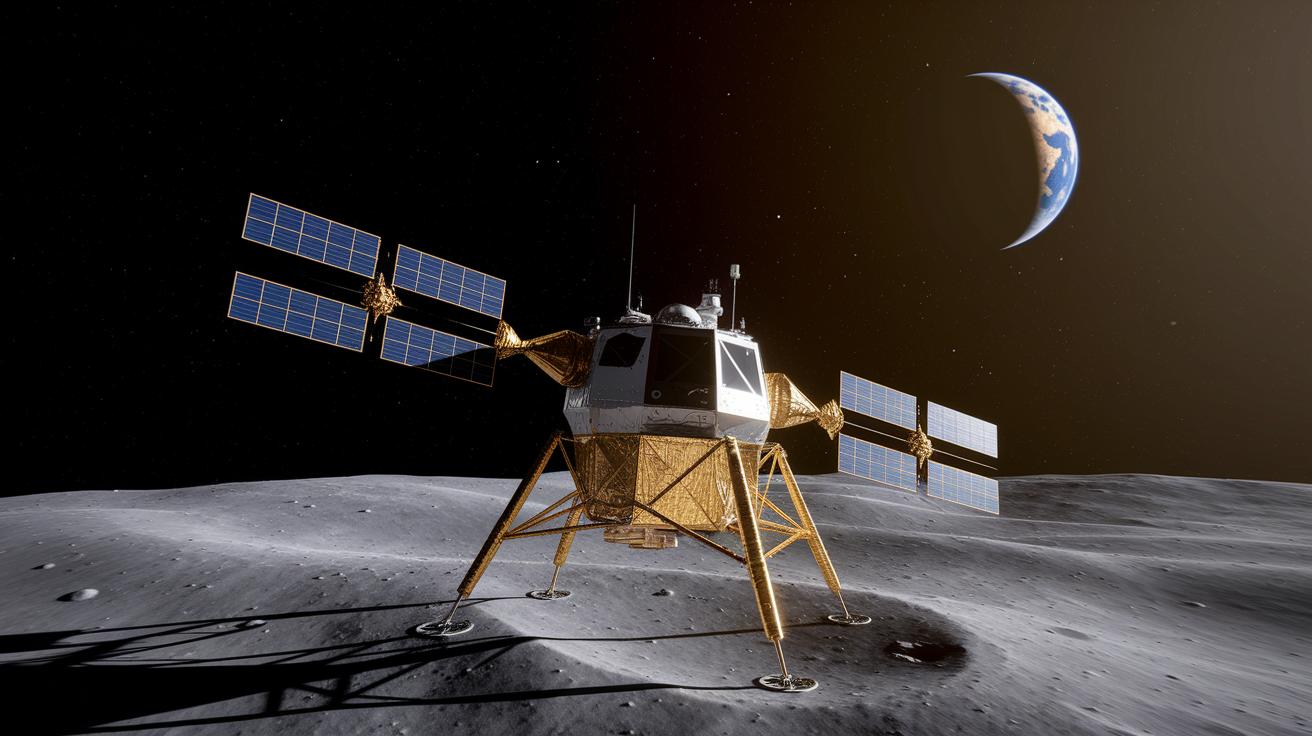
In 2019, NASA kicked off Lunar Trailblazer as a proud part of the SIMPLEx program. It was a bold step right from the start, setting the stage for an exciting journey.
On February 26, 2025, the spacecraft soared aboard a SpaceX Falcon 9 from Cape Canaveral. When the countdown reached zero, scientists everywhere held their breath, excited for history to be made.
By early March 2025, the spacecraft had smoothly entered orbit and passed its instrument checks, confirming that everything was set on its path.
June 2025 brought a major win as Lunar Trailblazer captured the first high-resolution images of the Moon's polar regions, revealing detailed views of lunar water deposits.
In July 2025, the mission started tracking water signals during lunar days, which gave us new insights into how the Moon responds to changes in temperature throughout its day.
Then on July 31, 2025, mission contact was unexpectedly lost, and the operation had to be ended, reminding us that even the boldest missions can face tough challenges.
These milestones show how each phase helped us learn more about the Moon’s water and the ups and downs of exploring space.
Lunar Trailblazer Spacecraft Design and Technical Specifications
Lunar Trailblazer weighs 210 kilograms and rides on Lockheed Martin’s first flight model built around the Curio bus. This design marks a shift toward smaller, more cost-effective spacecraft built for today’s lunar missions. It was crafted for compact efficiency, but one crucial detail was left out, keep-alive solar panels on every side. Without those panels, the spacecraft ran into low-power issues that made operations more challenging.
Every component of the spacecraft was put through its paces to build confidence in its durability. Engineers at Lockheed Martin tested the bus with intense shaking, vibrations, and thermal vacuum cycles. These tests mimic the wild stresses of launch and space travel, ensuring that the spacecraft can tough it out in extreme conditions.
The spacecraft gets its power from two deployable solar arrays that capture and beam energy to key systems like communications and data handling instruments. It also features an onboard autonomous attitude control system, developed with input from teams at Caltech and Pasadena City College. This system helps keep the spacecraft correctly oriented, even if it spins a little faster than planned.
From the bus design to the integration of smart, automated systems, every part of Lunar Trailblazer shows a careful balance between innovation and real-world challenges. Think of it like a puzzle where one missing piece can change the whole picture, the missing solar panels were that one missing piece. Overall, these technical details reveal how modern engineering pushes boundaries while also navigating the risks that come with space exploration.
Lunar Trailblazer Science Instruments and Data Objectives
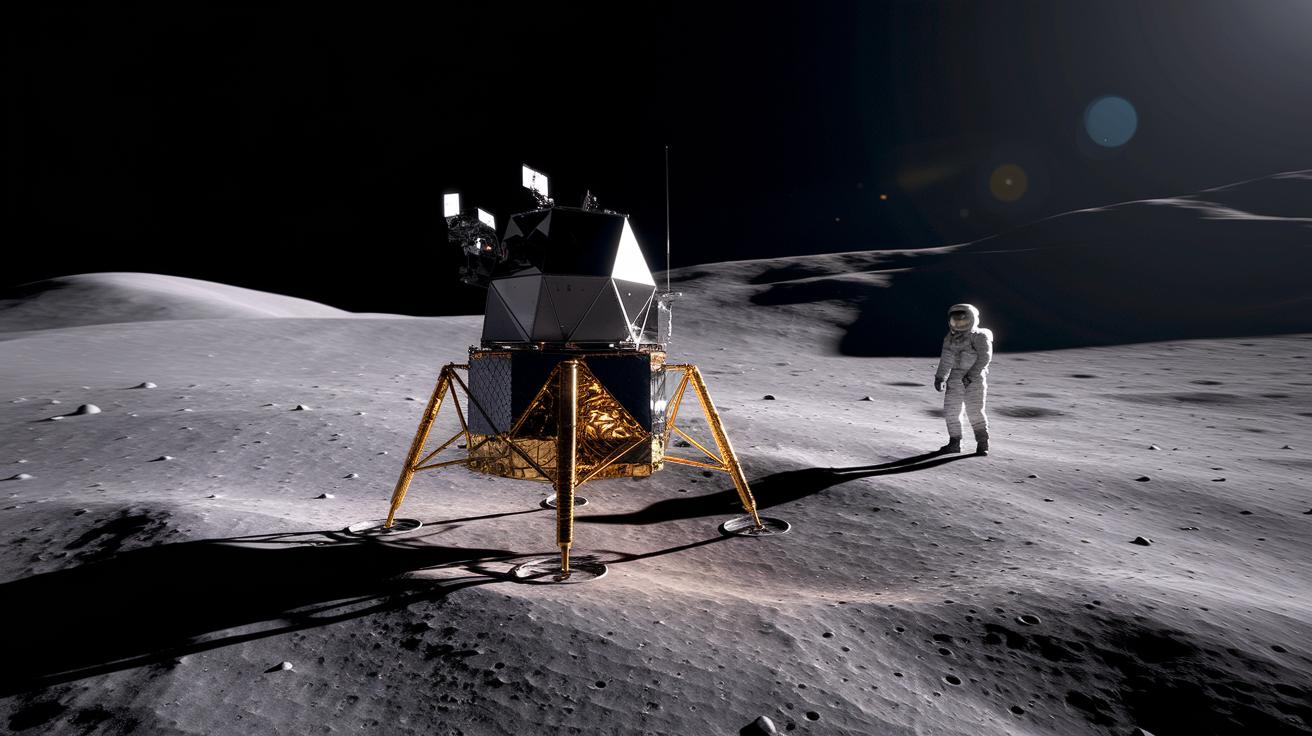
Lunar Trailblazer came equipped with two standout instruments that joined forces to uncover the Moon’s hidden water secrets. One of these, the High-resolution Volatiles and Minerals Moon Mapper (HVM3) from the Jet Propulsion Laboratory, worked a lot like a super-detailed camera. It snapped images that let you feel like you're really looking at the Moon’s icy spots with amazing clarity, down to less than 50 meters.
Then there’s the Lunar Thermal Mapper (LTM) from the University of Oxford. Think of it as a heat-sensitive detective, watching the Moon’s surface temperatures like a hawk. It tracked how water moves around as the Moon’s surface warms up and cools down during its long day.
| Instrument | Provider | Objective |
|---|---|---|
| High-resolution Volatiles and Minerals Moon Mapper (HVM3) | Jet Propulsion Laboratory | Map ice crystals vs. mineral-bound water with less than 50 m spatial resolution |
| Lunar Thermal Mapper (LTM) | University of Oxford | Monitor surface temperatures and thermal signatures to track water movement over the lunar day |
Together, the data from these instruments paints a detailed picture of the Moon’s geology and opens up new paths for exciting research discoveries.
Lunar Trailblazer Anomaly Analysis: Power and Attitude Challenges
Not long after liftoff, the Lunar Trailblazer orbiter started spinning wildly out of control, which made its balance unstable. Instead of going back to check power issues, mission control quickly zeroed in on fine-tuning the attitude controls. They focused on managing the spin by tweaking control settings and carefully watching the thermal conditions.
The team adjusted the controls to counteract the orbiter’s momentum while keeping a close watch on the temperature. Think of it like a spinning top that suddenly wobbles, you need small, precise adjustments to steady it again. They even compared the process to that familiar feeling when something out of balance demands a careful nudge to set things right.
| Adjustment Technique | Thermal Analysis Focus |
|---|---|
| Rapid Attitude Correction | Real-time temperature tracking |
| Momentum Dampening | Monitoring thermal gradients |
| Stabilization Parameter Tuning | Simulated thermal performance |
By blending sharp control adjustments with detailed thermal checks, the team worked hard to bring the orbiter back to a steady state. Their hands-on approach not only helped stabilize the current mission but also set the stage for handling similar challenges in future space adventures.
Lunar Trailblazer Collaborations: Agencies, Labs, and Universities

NASA led the Lunar Trailblazer mission through its SIMPLEx program, building a strong base for teamwork. Lockheed Martin, known for its solid engineering expertise, crafted and assembled the Curio bus that launched the spacecraft into orbit. Picture a group of experts fitting together pieces of a puzzle, each part perfectly aligning to reveal the Moon’s hidden details.
JPL contributed by providing the sharp HVM3 instrument, which gave us a close-up view needed to tell ice crystals apart from water trapped in minerals. At the same time, the University of Oxford lent their Lunar Thermal Mapper, a tool as sensitive as a thermometer, tracking the Moon’s temperature changes.
Mission operations and data processing were handled by dedicated teams at Caltech’s Infrared Processing and Analysis Center and Pasadena City College. They approached every detail with care, much like a chef who carefully samples each ingredient to perfect a recipe.
This mission shows how well public, private, and academic partners can work together, making lunar research easier to access and more budget-friendly for future projects.
Lunar Trailblazer Legacy: Influence on Future Lunar Exploration
Trailblazer’s discoveries have paved the way for the next big steps in exploring our lunar neighbor. The spacecraft collected data to help guide Artemis crewed landers by mapping water-ice spots and outlining how to use local resources right on the Moon. Think of it like handing pilots a detailed map to find a hidden cooling station, this mission gave us that kind of clarity.
The mission used a low-cost SIMPLEx design that not only gathered scientific insights but also taught us a lot about building spacecraft. Even though the Curio bus had its hiccups, it’s now a model for upcoming small-satellite lunar missions. Future engineers can take these lessons to toughen spacecraft and sharpen risk management during lunar journeys.
Learning more about how water behaves on the Moon has opened up fresh research opportunities. Scientists are now set to create detailed maps of resources and predict how water might freeze, melt, or unexpectedly shift on the lunar surface. This knowledge is key for planning the next generation of Moon bases, like the proposed lunar outpost, by showing us how to harvest resources sustainably and build sturdy habitats.
These technical breakthroughs not only push the limits of our space exploration news but also spark new ideas in mission planning. Researchers can now rethink how to explore and manage resources in future missions, lighting the path toward a more informed and exciting lunar future.
Final Words
In the action, this article highlights key milestones and challenges encountered by the lunar trailblazer mission. It paints a clear picture of the mission’s objectives, technical design, and collaborative spirit.
Each section unraveled the exciting details around the launch, spacecraft innovations, scientific instruments, and anomaly analysis. The lessons learned are paving the way for future lunar research and more resilient exploration.
Stay curious as each new breakthrough builds on these promising steps forward.
FAQ
What happened to the Lunar Trailblazer and why did it fail?
The Lunar Trailblazer experienced a mission-ending failure when it entered a low-power state with an uncontrolled spin shortly after launch, leading to lost contact and concluding the mission on July 31, 2025.
What is the Lunar Trailblazer mission and what are its objectives?
The Lunar Trailblazer is an unmanned lunar orbiter designed to map and monitor water ice distribution on the Moon. Its primary goal was to support the Artemis campaign by providing high-resolution water mapping data.
When did the Lunar Trailblazer launch and what were the key milestones?
The Lunar Trailblazer launched on February 26, 2025, aboard a SpaceX Falcon 9. It achieved orbital insertion, completed instrument checkouts in early March, and began water mapping over the lunar regions in June 2025.
How much did the Lunar Trailblazer cost?
The Lunar Trailblazer’s precise cost has not been publicly detailed. Official mission briefs do not include specific budget figures, leaving the actual cost undisclosed.
What are the Lunar Trailblazer’s size and technical specifications?
The Lunar Trailblazer weighs 210 kg (463 lb) and rides on Lockheed Martin’s Curio bus. It features deployable solar arrays for power and underwent extensive testing to validate its design and functionality.
How did the Lunar Trailblazer operate in orbit and is a tracker available?
The Lunar Trailblazer operated in a lunar orbit, gathering detailed water ice data. While real-time tracking details remain limited, mission updates provided insights into its orbital behavior before the loss of contact.
What is the connection between Lunar Trailblazer and Hearthstone?
The inquiry about Lunar Trailblazer Hearthstone appears to mix mission details with unrelated topics; there is no official link between the NASA mission and the popular game.
What are Reddit users saying about the Lunar Trailblazer?
Reddit discussions focus on the mission’s technical challenges and failure, with community members sharing analyses, speculations, and lessons learned from the orbiter’s performance.
Who are the astronauts going to the Moon in 2026?
The Lunar Trailblazer mission was unmanned; astronaut selections for upcoming lunar missions, such as those under NASA’s Artemis program, are determined separately and have not been linked to this orbiter.