


Have you ever wondered how something built for defense ends up as a part of our everyday lives? It might seem odd, but dual use technology takes ideas from secure military projects and turns them into the devices we use daily, like how GPS replaced paper maps by guiding us through smart phones.
This smart blend of ideas not only makes life a bit easier but also helps push our economy forward and boost safety. It’s like getting the best of both worlds, where one idea creates progress in more than one way.
In this post, we’ll take a closer look at how these innovations keep breaking new ground. It just goes to show that when technology starts with one purpose, it can grow into something that benefits every one of us in surprising and useful ways.
Understanding Dual Use Technology: Definition, Applications, and Impacts
Dual use technology means innovations made for both defense and everyday use. Take GPS, for instance, it started as a military tool back in 1978, and by 1983, it was a gadget in everyone’s pocket. Think about it: before GPS, you needed a paper map to get around, but now, your phone does all the guiding for you. Many technologies make a similar jump from secure military projects to useful everyday tools.
Several international rules help manage these innovations. There's the Wassenaar Arrangement, which kicked off in July 1996 with 42 countries working together to control sensitive materials. Then, there's the EU Dual-Use Regulation (EU) 2019/492, active since September 27, 2019, that covers roughly 1,100 items to keep trade safe. In the US, the Export Administration Regulations, managed by the Bureau of Industry and Security, sort items into nine different groups on the Commerce Control List. All these rules show that policymakers are trying to strike a balance between pushing technology forward and keeping it safe.
Dual use technology offers big benefits by driving progress in both the economy and security. For example, unmanned aerial vehicles (UAVs) started out for military use in the 90s but now fuel a commercial drone market that's expected to top $60 billion by 2025. Similarly, CRISPR gene editing, discovered in 2012, holds huge promise for improving health and biosecurity. Still, depending on these technologies also means there’s a risk of misuse or accidental harm. That’s why it's important to keep reviewing and fine-tuning the rules, ensuring we enjoy the benefits of these innovations without falling prey to the potential downsides.
Cross-Sector Technology Transfer and Innovation Taxonomy in Dual Use Tech
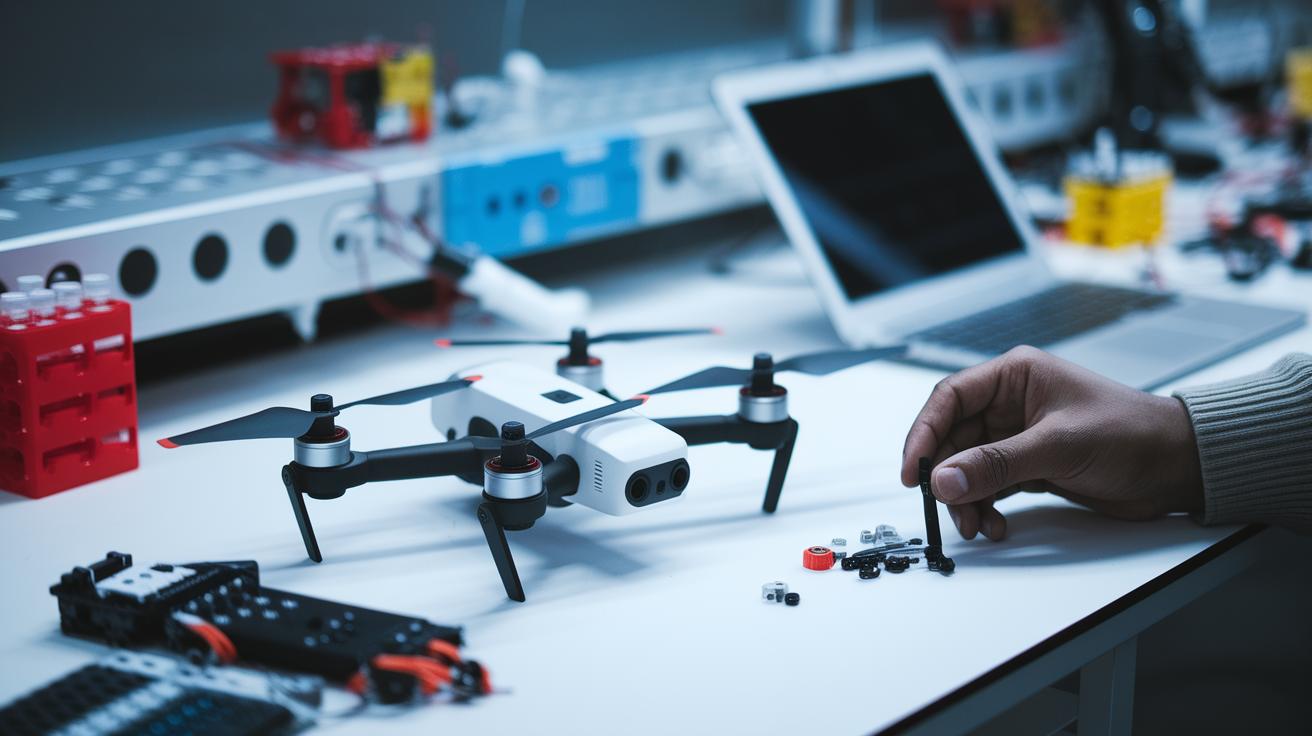
Dual use tech easily finds new places to work its magic. For example, did you know NASA spin-offs have sparked over 2,000 patents since 1976? Around 30% of space technology now surprisingly benefits the medical and industrial sectors. It’s a neat reminder that technology built for one purpose can light up unexpected areas.
We can group this kind of innovation into a simple system. First, Category A covers basic parts like sensors (tiny devices that pick up signals), which serve as the building blocks of larger systems. Next, Category B brings together integrated systems, like UAV platforms (drone-like tools that work as one smooth unit). Finally, Category C represents full-scale products, such as satellites that are ready-made for use.
There are two ways technology makes its journey. Horizontal transfer is when tech jumps across different industries, while vertical transfer happens when a breakthrough moves from early research to a market-ready product. This clear way of sorting things helps companies and decision-makers spot new opportunities.
Below is a quick table that sums up the taxonomy:
| Category | Example |
|---|---|
| A | Sensors |
| B | UAV Platforms |
| C | Satellites |
This model shows how versatile innovation can blend into the civilian tech market, opening up fresh, creative uses along the way.
Regulatory Frameworks and Export Controls for Sensitive Dual Use Innovations
Licensing reviews are handled step by step, ensuring every detail is checked. Before any export gets the green light, officials dig into the recipient’s background and how the technology will be used. They carefully review documents, cross-check risk databases (just like a tech background check), and sometimes ask for extra verification. For example, officials might ask, “Who is getting this tech and what will they do with it?” This helps make sure sensitive innovations end up only in the right hands.
These controls come with tough penalties. If any rules are broken, fines can be as high as $1 million per violation, and criminal cases might even lead to up to 20 years behind bars. The table below lays out the key enforcement measures:
| Enforcement Measure | Details |
|---|---|
| Licensing Review | Thorough check of recipient credentials, intended use, and compliance history |
| Civil Penalties | Fines up to $1M per violation |
| Criminal Sanctions | Up to 20 years in prison for severe breaches |
Real-world examples show how these practices work in everyday business. When companies face fines, they often update their internal policies, which proves that strict export controls really do have an impact.
Risk Assessment and Security Compliance in Dual Use Technology
We begin with a simple, step-by-step method to check for risks using ISO 31000 (a global standard for managing risks). This clear system lets experts break down the process into manageable parts. First, we spot any potential dangers, like unauthorized transfers, tech falling into the wrong hands (for example, non-state actors), or insider threats. Next, the risks are sorted by how much they might affect the technology.
| Step | Description |
|---|---|
| Identification | Find risks before they turn into big problems |
| Classification | Group the risks based on their impact |
| Mitigation | Put measures in place to lower the risks |
| Continuous Monitoring | Keep an eye on new threats or changing conditions |
Once we've mapped out and understood the risks, we shift our focus to making sure everything meets strict security standards. This means doing regular internal audits (basically, double-checking our own work) and seeking third-party certifications like SOC 2, which offer an unbiased review of our practices. Companies also screen both users and the end use to ensure that the tech doesn’t get misused.
By combining careful risk assessment with ongoing security checks, we create a reliable safety net. This approach not only builds industry confidence but also ensures that technology moves safely from research labs into everyday life.
Case Studies of Mixed-Use Innovation: Aerospace, Biotechnology, and Cybersecurity
Mixed-use innovations are pretty cool because they let the same tech do different jobs. Take tactical UAVs: they were first built for military scouting but now help firefighters spot wildfires early. Imagine a drone that not only helps save lives by finding a wildfire quickly but also gathers tactical data for defense, it's a smart blend of everyday utility and high-tech defense.
Over in biotechnology, CRISPR diagnostics started as a tool to read genetic info with high precision (like checking a DNA blueprint). Today, it’s used for routine health checks and can even spot potential biothreats. This shows how a breakthrough in biotech can handle both wellness and security at once.
Cybersecurity also shines in dual-use tech. RSA encryption keeps our personal messages safe while also protecting national intelligence. In other words, this technology supports both our regular, everyday communications and important defense operations.
| Sector | Technology | Dual-Use Application |
|---|---|---|
| Aerospace | Tactical UAV | Wildfire spotting & military reconnaissance |
| Biotechnology | CRISPR diagnostics | Health screening & biothreat detection |
| Cybersecurity | RSA encryption | Everyday secure comms & intelligence protection |
Ethical and Policy Debates Surrounding Dual Use Technology

Innovation brings a lot of excitement, but it also raises tricky questions because some technologies can be used for both good and harm. A report from the National Academies in 2017 looked into problems with CRISPR (a gene-editing tool), and it made a lot of us stop and think about how science could be used in the wrong way.
In 2020, the European Union asked people what they thought about rules for exporting technology that can serve two purposes. They received about 400 responses, showing that many different voices want clearer limits and more accountability.
Over in the US, a law passed in 2019 (NDAA Sec. 1244) set out new rules for AI research that might be used for military purposes. This sparked a lively discussion on how much the government should keep an eye on tech innovations.
Then there’s the 2019 G7 Leaders’ Declaration, where world leaders agreed that we need common standards for new technologies. These talks have helped build international support for rules that balance keeping our nations safe with letting technology keep moving forward.
Today, experts, regulators, and industry leaders are joining forces across borders to create guidelines that protect society while still encouraging innovation. Critics often ask, “How do we stop misuse without stifling creativity?” This is a big, open-ended question that challenges us to think about who gets to decide the future path of technology.
Final Words
In the action, we broke down dual use technology, exploring how it serves both defense and civilian sectors. The article walked through its clear definition, varied applications, and the structured steps of risk assessment.
We looked at technology moving across industries, guided by careful regulations and noteworthy case studies. This layered view shows that when research meets smart controls, the result is innovation built to benefit everyday lives. Today's tech insights leave us optimistic about a future where dual use technology sparks positive change.
FAQ
What is dual use technology?
The dual use technology refers to innovations that serve both defense and civilian needs, such as GPS and UAV platforms, by providing benefits across sectors while also posing unique management challenges.
What are the primary defense and civilian applications of dual use technology?
The dual use technology applies to areas like military systems and health diagnostics, where platforms such as UAVs help with both surveillance and commercial operations, enhancing overall functionality.
How do export controls and regulations affect dual use technology?
The dual use technology is governed by international and national frameworks like the Wassenaar Arrangement and US EAR, which require licensing for transfers to sensitive countries and set clear penalties for violations.
What steps are involved in risk assessment and security compliance for dual use technology?
The dual use technology risk management process includes identifying, classifying, mitigating, and monitoring risks, using measures such as periodic audits and third-party certifications to prevent unauthorized transfers.
How does dual use technology support cross-sector innovation and market integration?
The dual use technology promotes cross-sector transfer by moving from research to commercialization through structured categories, making it easier for innovations like sensor applications to serve both industrial and defense sectors.
What ethical and policy debates are associated with dual use technology?
The dual use technology raises ethical questions about national security and public safety, prompting discussions among policymakers and experts on balancing broad innovation benefits with strict oversight measures.