


Have you ever wondered if the rules of gravity could be bending like a fun magic trick? Recent studies show that black holes and the leftovers of stars are acting in ways that make us scratch our heads about space. It even looks like dark energy (the mysterious force making our universe expand) might be losing its spark, which only leaves us with more questions than answers. And then there are gamma rays, once thought to hit energy levels we could only dream of, that are challenging everything we know about nature. All of these discoveries fill us with excitement and invite us to take another look at the great mysteries of the cosmos.
Key Astronomy Breakthrough Discoveries and Their Significance
Astronomy is bursting with new surprises that change how we see our universe. For example, when two black holes merge, the final black hole’s surface area always ends up being as big as or even bigger than the sum of the two originals. This tells us that even in the wildest cosmic events, the rules of gravity stick to their promise.
High-tech surveys have also shed fresh light on dark energy. In one study, the DESI team found super strong evidence, earning a five-sigma result (that’s like a gold standard in science), which suggests that dark energy might be losing its punch over time. This raises big questions about how fast our universe is stretching out.
Astronomers also pushed the envelope by detecting gamma rays with energies soaring up to 20 TeV from the Vela pulsar in 2023. Imagine catching a burst of light with energy levels that defy what we thought possible! These ultra-high-energy gamma rays, emerging from the remnants of exploded stars, are making us rethink how particles get accelerated in space.
Then there’s the discovery of the universe’s brightest explosion ever recorded, a burst so intense that it outshines regular supernovae by ten times! This dazzling event came from a galaxy whose light has been traveling for 8 billion years to reach us. At almost the very same time, scientists also captured the farthest fast radio burst yet, a signal that journeyed through space for nearly 8 billion years before being detected.
On top of that, researchers picked up the 21 cm hydrogen line from a galaxy as it appeared 8.8 billion years ago. Every one of these breakthroughs shows how the marriage of sharp, cutting-edge technology and bold new ideas is driving our understanding of the cosmos to new heights.
See also: science breakthroughs 2025
Black Hole Research Updates in Astronomy Breakthrough Discoveries
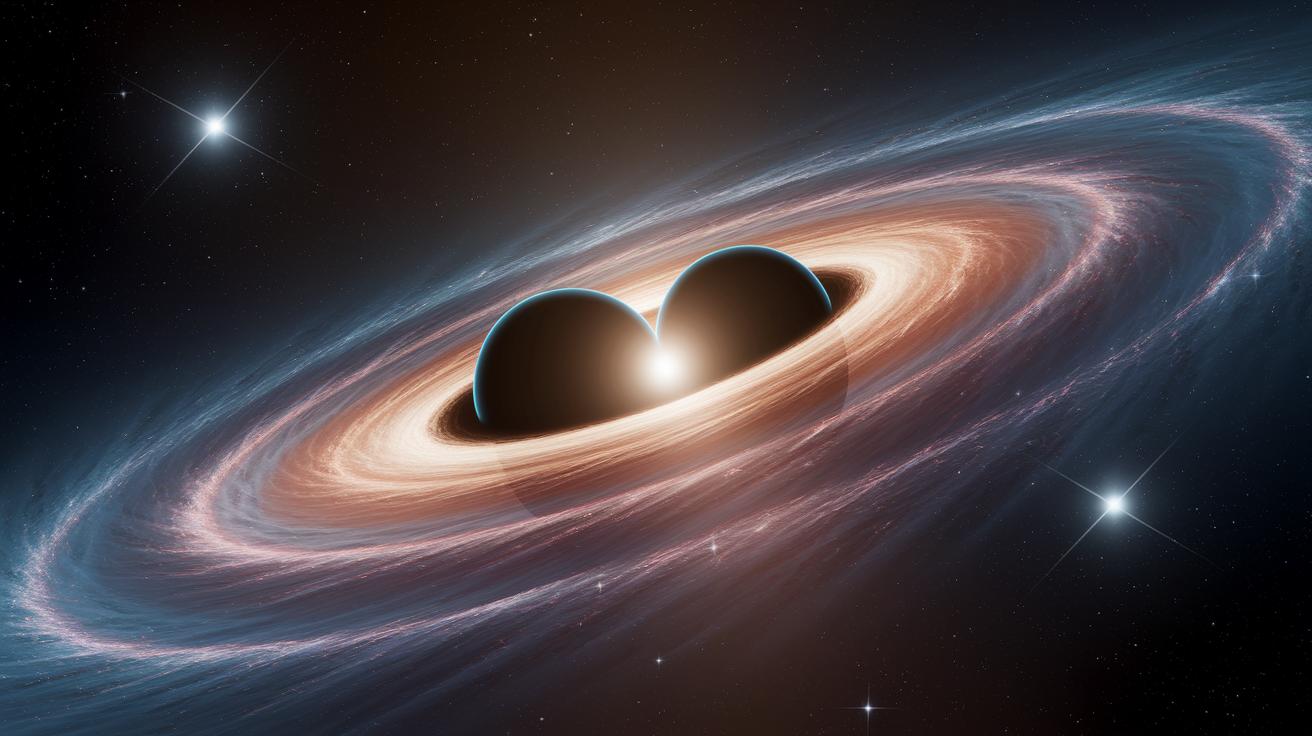
Scientists have recently found that when black holes come together, the edge around them (called the event horizon) actually grows instead of shrinking. Imagine two water droplets that join together to create a bigger splash, that’s exactly what happens here! This neat observation gives us solid proof of the area theorem and makes us even more confident in how Einstein’s theory of relativity works in super strong gravitational fields.
In another study, researchers took a close look at 12 promising cosmic objects in small galaxies using the Chandra and Hubble telescopes. They discovered that in three of these galaxies, the black holes weren’t hanging out at the very center but were off on their own little adventures. This unexpected behavior raises interesting questions about how black holes settle down in lighter galaxies, nudging scientists to rethink what they know about galaxy dynamics.
Further tests of general relativity in places with intense gravity have backed up these exciting findings. By studying the details from recent black hole mergers, astronomers spotted tiny wobbles in gravity that offer fresh clues on how extreme environments affect space. These discoveries not only reinforce our trusted theories but also open the door to exploring surprising new behaviors of black holes.
Supernova and Stellar Evolution Milestones in Astronomy Breakthrough Discoveries
Have you ever wondered how stars live and explode in our universe? Astronomers are now getting clearer pictures of how stars are born, live, and then burst into brilliant explosions. Just one day after a supernova was spotted, the Very Large Telescope captured its shape perfectly. Imagine drawing a firework at the moment it lights up, that’s how vivid and crucial these early images are for understanding star explosions.
Scientists have also looked closely at the light from Type Ia supernovae. They discovered that a supernova’s brightness might be linked to the age of the galaxy it lives in. For example, older galaxies often show dimmer supernovae, suggesting that a star’s blast might be shaped by its cosmic neighborhood. This new twist is even challenging how we use these explosions as “standard candles” (simple tools to measure cosmic distances).
In a truly landmark finding, researchers detected the universe’s brightest explosion ever, a blast that was ten times brighter than any known before and had traveled 8 billion years to reach us. By using clever computer models (advanced methods that turn complex ideas into clear predictions), scientists are fine-tuning our ideas about how stars evolve and how we measure distances in space.
All these discoveries give us a fresh, exciting glimpse into the life cycles of stars and the wild energy of cosmic explosions. It’s like catching a secret glimpse behind the scenes of our incredible universe.
Exoplanet Exploration Milestones in Astronomy Breakthrough Discoveries
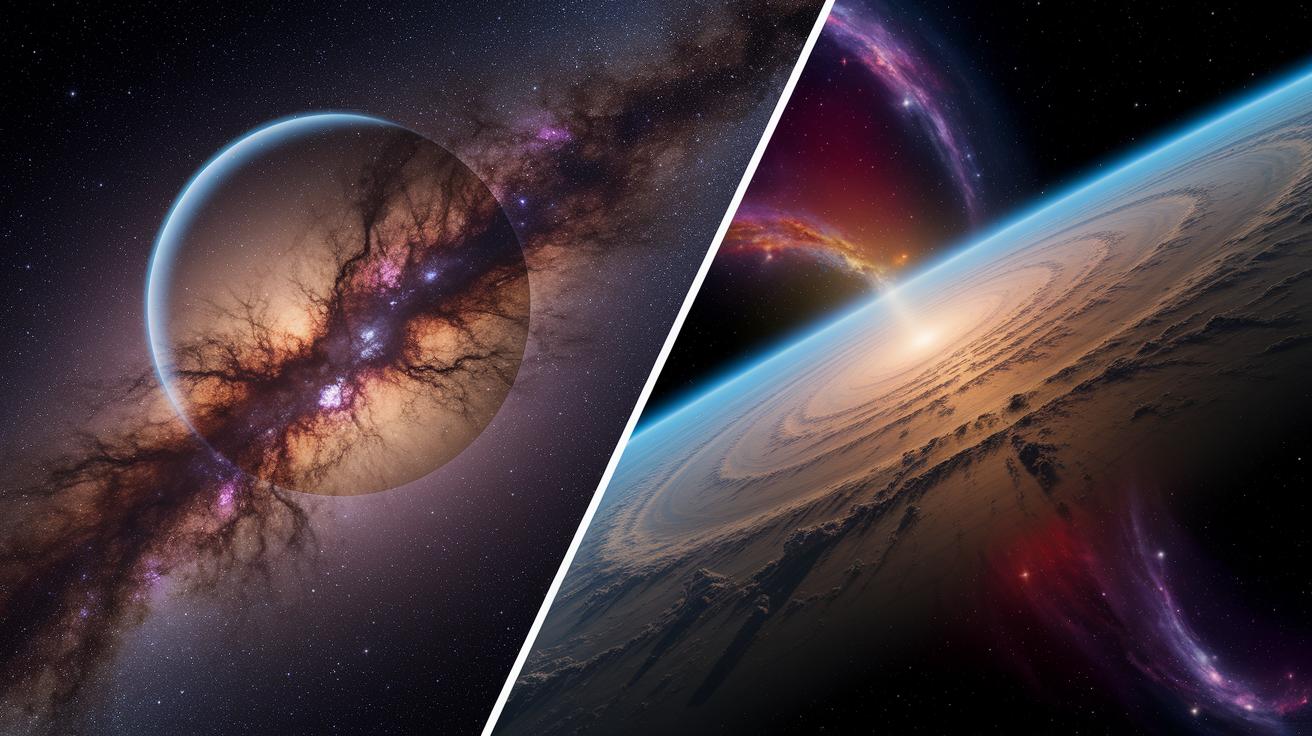
Recent studies are uncovering some neat surprises about exoplanets orbiting all kinds of galaxies. Scientists are now comparing the atmospheres of these far-off worlds, like those around tiny, leftover dwarf galaxies, with the rich mix found in our own Milky Way, which hosts over 6,000 confirmed exoplanets. This side-by-side look helps researchers see how different cosmic neighborhoods can shape a planet’s air and surface. For example, one study checked for special gases in various star-filled areas, kind of like tasting dishes from different kitchens to notice the unique flavors.
Radio observations of the K2-18 system bring another cool angle into the mix. Researchers found that the quiet star in this system doesn’t blast out disruptive signals, which means the planet nearby is less likely to lose its atmosphere. It’s like finding a peaceful spot in the middle of a busy city, making it an intriguing candidate for habitability studies.
Plus, the discovery of three Earth-sized exoplanets orbiting a tight binary star system is really shaking things up. Their presence in a snug multi-star setup makes us rethink what conditions can support a planet. This breakthrough challenges old ideas about how planets are born and thrive, prompting fresh questions about the many ways life-friendly worlds might form in our vast universe.
Advanced Observational Techniques Driving Astronomy Breakthrough Discoveries
New tools and technology are completely changing how we explore space. Recently, DESI's multi-object spectrograph found very strong evidence (five-sigma means it's extremely reliable) that dark energy is changing over time using redshift surveys (measuring shifts in light). Imagine it like checking millions of tiny, cosmic fingerprints to uncover the secrets behind the universe's growth. For example, by watching millions of galaxies at once, scientists see tiny shifts in their light that reveal clues about the mysterious force pushing space apart.
Machine learning is also making a big splash in space research by finding hidden patterns in huge piles of data. Clever computer programs have discovered seven new quasar lens systems, more than doubling what we knew before. It’s a bit like sorting through a giant jigsaw puzzle where each piece of light, some billions of years old, suddenly fits together to show an amazing picture.
The Gaia satellite has been a real game changer too. It has spotted the fastest runaway stars in our galaxy, which gives us precious clues about past gravitational interactions and star collisions. This data helps astronomers fine-tune their models and better understand how our galaxy is evolving.
Then there’s the James Webb Space Telescope, which is in super high demand because of its incredible infrared imaging power. It can see faint, distant light from the early universe, sparking a fresh wave of breakthroughs in cosmic research.
Planetary Defense and Solar Monitoring Advances in Astronomy Breakthrough Discoveries
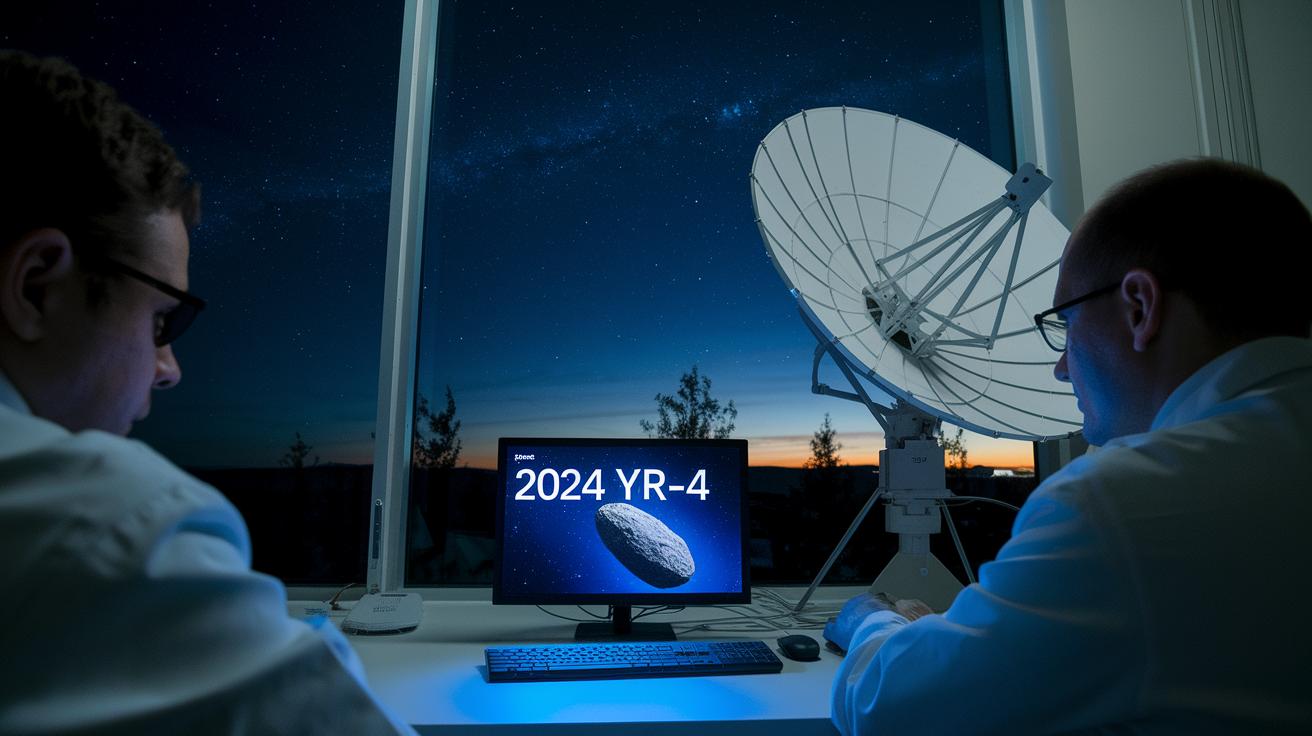
ESA’s Near Earth Object Coordination Centre recently watched asteroid 2024 YR4 during Earth’s first real-life safety drill. Think of it like a friendly night guard, always keeping an eye out for trouble coming from space.
Imagine you install a smoke detector at home. In a similar way, scientists have set up satellite systems to spot any incoming space visitors early. These clever measures show how our technology is boosting our planet’s defense.
On another note, researchers discovered a huge crater, about 900 meters wide, in southern China. This is the biggest mark left by a meteor in modern times and makes scientists wonder just how often space debris might bump into Earth. Over on the Moon, tiny space rocks called micrometeoroids are whizzing by at speeds up to 70 km/s (that’s really fast!) with around 23,000 hits recorded each year at the Artemis south-pole landing site.
Moreover, special detectors have caught solar gamma rays with energies up to 20 TeV (a unit that measures huge amounts of energy). This burst is the most powerful light from our sun ever seen, giving us fresh clues about the wild, high-energy events happening right in our own star.
Final Words
In the action, this article covered a range of astronomy breakthrough discoveries from black hole behavior and supernova mysteries to exoplanet insights and stellar observations. Every segment offered a snapshot of how cutting-edge techniques and new data are reshaping our view of space.
Clear examples brought us closer to understanding cosmic phenomena. Today's discussion leaves us feeling inspired and ready to see what comes next in the field of astronomy breakthrough discoveries.
FAQ
Frequently Asked Questions
Q: What are the top 10 astronomy breakthrough discoveries, including Hubble telescope highlights?
A: This question highlights collections of key breakthroughs, including Hubble findings and other major discoveries that have redefined our view of the cosmos.
Q: What are the latest astronomy and space discoveries of 2025, including new findings from the James Webb telescope?
A: This question refers to fresh results from 2025, where James Webb and other observatories have provided new insights into cosmic phenomena and our universe’s secrets.
Q: What is the biggest or latest discovery in astronomy?
A: This question covers standout findings—often involving black holes, dark energy, or unusual cosmic events—that push our understanding of space further than before.
Q: What are the 5 terrifying discoveries of the James Webb telescope?
A: This question points to unsettling findings from the James Webb telescope that reveal unexpected and dramatic details, challenging traditional views of how the cosmos works.
Q: Which planet has a 99.7% chance of hosting life?
A: This question spotlights research on a planet with high potential for life, identifying conditions that appear remarkably suitable for sustaining living organisms.