


Have you ever imagined a surgeon with a digital guide right before their eyes? Augmented reality in surgery gives doctors a clear, live view of what’s happening inside the patient, all in one glance. Instead of flipping between different scans, surgeons see real-time images overlaid on their direct view of the patient. This smart technology works like a personal assistant during the operation, making complex tasks simpler and procedures more exact. In the end, it leads to safer care and better outcomes for patients.
How Augmented Reality Enhances Surgical Procedures

Augmented reality is changing the way surgeries are done. It mixes digital images right onto what surgeons see live, giving them clear views of a patient’s heart, eyes, knee joints, and more in both 2D and 3D. Have you ever wondered how much easier it would be if all the necessary details were in one place? Before AR, surgeons had to mentally piece together images from various scans. Now, they have a real-time digital helper right in front of them, letting them focus better without constantly shifting their gaze between monitors.
By blending careful pre-op planning with detailed 3D models, AR really boosts a surgeon’s readiness. Imagine being able to rehearse a procedure with a digital model that mirrors the patient exactly, this cuts down on guesswork when it counts. Some systems even come with gloves that let trainees feel what it’s like to handle surgical tools. These gloves even simulate the resistance of cutting bone or the gentle buzz of a drill, making training feel almost like the real deal.
On top of that, AR pulls together all sorts of patient data, from ultrasound snapshots to vital signs, onto one screen. This clear, live map of the patient means every move is tracked and every tool is monitored closely. The result? Greater precision, better preparation, and a seamless mix of physical and digital help in the operating room, pushing surgical procedures towards higher efficiency and improved patient care.
AR-Assisted Surgical Workflows and Visualization Tools

At Stanford Medicine, doctors now use AR glasses that mix ultrasound, X-ray, and vital signs into a single view during heart procedures (like cardiac ablation, which fixes abnormal heart rhythms). This means they no longer juggle different screens but see a live, complete picture of a patient’s condition right in front of them. It’s as if all the information is painted on a digital canvas, with surgical tools mapped onto a 3D model that helps with hand-eye coordination.
This technology doesn’t just give a better view, it smooths out the whole operating room workflow. Surgeons can plan and even rehearse using detailed 3D models, so they feel more prepared and confident when it matters. This makes setting up the room quicker and transitions during surgery more seamless.
| Workflow Enhancement |
|---|
| Preoperative 3D planning and rehearsal |
| Real-time tracking of surgical tools |
| Shorter operating room setup times |
| Better spatial orientation of anatomy |
| Live integration of data from multiple sources |
| Stronger coordination within the surgical team |
By blending various data into one digital overlay, AR really changes how surgical teams plan and work. It cuts down delays and keeps everyone on the same page, making care more precise and efficient.
Clinical Outcomes and Case Studies of AR-Assisted Surgery

When Dr. Alexander Perino, a heart specialist, used AR overlays during an ablation, he could see a real‑time, accurate view of the patient’s heart. This meant he didn’t have to stop and check different screens as often. Early results from similar AR procedures suggest that surgeons can keep their focus more on the surgery and less on juggling separate images.
Another interesting case comes from UC Davis Health’s MXR Research Group. Surgeons in fields like ENT, neurosurgery, and orthopedics are now using AR goggles in their tougher procedures. Using these digital overlays not only gives them a clearer look at the precise area they’re working on but also helps trainees learn by mixing live surgery with 3D models. In one instance, AR planning shaved 15–20 minutes off an already challenging bone realignment, hinting at better efficiency and simpler recovery for patients.
Many surgeons have shared positive feedback compared to traditional methods. They appreciate how combining live images with ready-made 3D displays cuts down on the usual screen-switching interruptions. This smoother data flow means more focus on patient care and a more relaxed workflow.
Here are some of the key outcomes seen in these studies:
| Key Outcome | Impact |
|---|---|
| Fewer Imaging Pauses | Surgeons stay better focused during procedures |
| Enhanced Trainee Learning | Residents and students grasp complex operations more easily |
| Reduced Operating Room Time | Shorter surgeries can lead to faster patient recovery |
Integrating Augmented Reality Systems into Operating Rooms
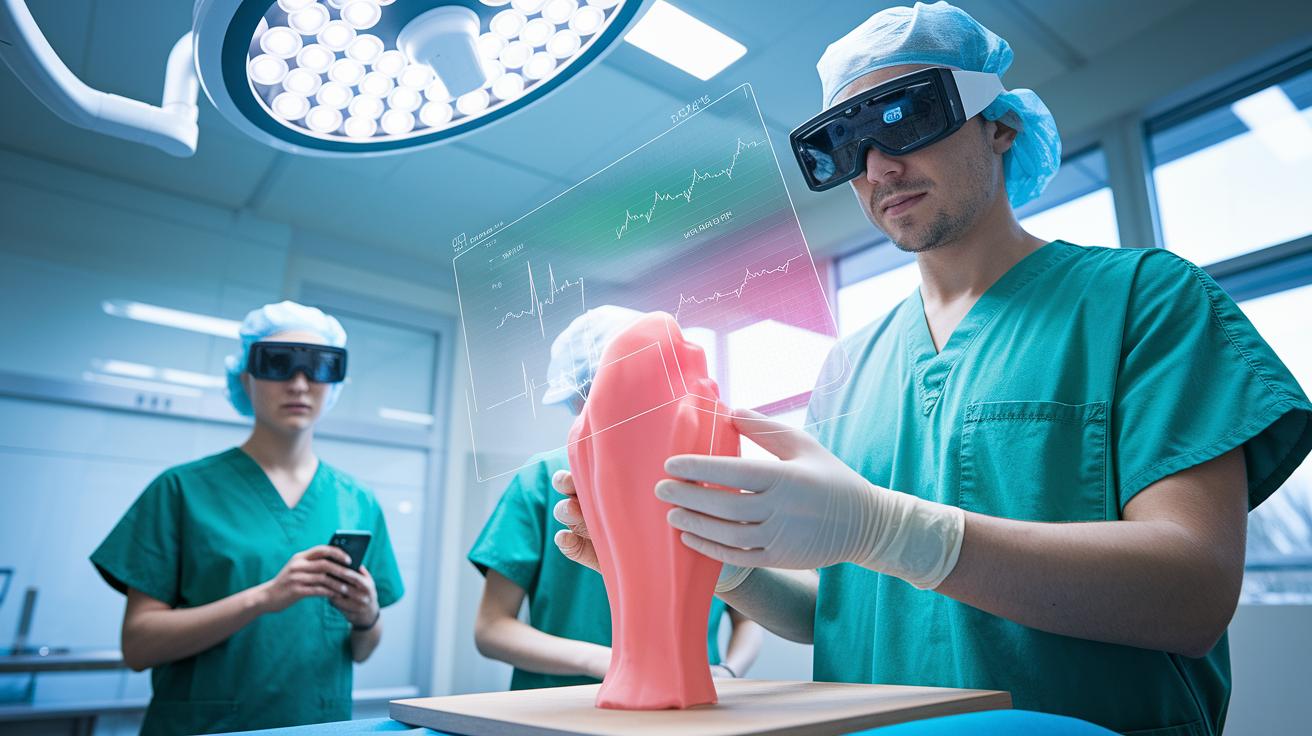
Surgery rooms are getting a cool digital upgrade that makes procedures both safer and easier. At UC Davis Health, teams in the 3D Printing & Visualization Lab and the MXR group mix AR goggles with 3D-printed models. They use this neat combo to help patients understand their treatments and let trainees practice hands-on. It’s like having a wearable tool that brings digital images right where the action happens. Meanwhile, Aggie Square is teaming up with Biomedical Engineering and surgical experts to drive XR research. Their trusted partnerships with new medical technology have cleared the way for smoother setup of both hardware and software.
AR Headsets
Modern headsets, similar to the Microsoft HoloLens, project clear digital overlays that match a patient’s anatomy in real time. They’re designed to show high-resolution visuals right when surgeons need them, boosting accuracy during tricky operations.
Navigation Platforms
These platforms blend live images with pre-surgery scans, giving precise guidance like a digital map for instruments. By lining up digital data with what’s actually on the operating table, they help steer tools with a real sense of exactness.
Remote Collaboration Tools
Thanks to cloud-based AR systems, remote experts can add notes to live video feeds during surgery. This real-time connection not only improves teamwork but also means surgeons can get instant advice when it’s needed most.
| System Name | Application | Institution | Key Feature |
|---|---|---|---|
| HoloLens | Surgical Overlay | UC Davis Health | Mixed-reality visualization |
| VisionNav | Real-time Scan Fusion | Stanford Medicine | Precise instrument guidance |
| CollabAR | Remote Oversight | Aggie Square | Cloud-based annotations |
| SurgiGuide | Procedure Rehearsal | Aggie Square | Integrated 3D models |
Risks and Limitations of Digital Overlays in Surgical Operations

Digital overlays in operating rooms are a cool new tool, but they bring along some hurdles. Today’s AR systems (augmented reality, which means adding digital images on real views) are tested carefully to ensure they work as well as or better than the old multi-monitor setups. One challenge is the higher cost, which can push budgets to their limits, and there’s a learning curve for the surgical teams. Training is key here, so everyone feels at home with the new digital setup, even if it means changing familiar routines for a while.
Sometimes, the virtual view of anatomy doesn’t line up perfectly with the real thing. This slight misalignment can lead to confusion during critical moments, and even tiny inaccuracies might mean that the team has to switch back to traditional methods for a bit. Plus, combining different sources of patient data into one AR screen raises some worries about keeping that data secure. That’s why these systems are constantly checked to make sure they protect patient privacy and safety.
Regular risk checks in these tech-driven setups also push for frequent updates, making sure digital overlays never weaken the integrity of the surgery. Surgeons and hospital managers have to weigh the benefits of sharper images and smoother workflows against possible tech hiccups. In the real world, these trade-offs show why ongoing system reviews and thorough staff training are essential to keeping patient care top-notch while we embrace new technology.
Emerging Trends and Future Directions for Augmented Reality in Surgical Care

Surgeons are now exploring a future where operating rooms feel like interactive, high-tech playgrounds. In these next-generation spaces, touchless AR screens work with floor-mounted projectors to create a 360° view of every part of the surgical field. Picture a room where digital images of organs and tissues wrap around you, offering a full, detailed look at the patient’s anatomy. Simply put, this technology means that doctors can get a much clearer view during surgery, helping them catch every important detail.
Mixed-Reality Operating Theaters
Mixed-reality operating theaters mix AR headsets with room-sized imagery to give a real-time, 3D guide during surgery. Imagine walking into an OR that feels like a live simulation, every angle of the patient’s body is shown as the operation unfolds. It’s almost as if digital overlays fill the entire space, boosting a surgeon’s spatial awareness and precision. This setup not only makes planning before surgery easier but also helps with hand-eye coordination and provides continuous updated images while the operation is underway.
AI-Driven AR Tools
AI-driven AR tools are being developed to automatically highlight crucial anatomical features and even warn about issues like blood loss before they become serious. Think of it like having a smart assistant that offers timely alerts and decision support. Meanwhile, telemedicine projects are experimenting with AR-enhanced video feeds that let remote experts offer real-time guidance. All these innovations blend surgical know-how with cutting-edge technology trends, paving the way for smarter, more connected operating rooms.
Final Words
In the action, we traced how AR overlays provide live impressions of anatomy, guide tool tracking, and streamline preoperative planning. The article addressed real-world examples and emerging tech that integrate digital imaging into surgical workflows.
We saw how real-time data and enhanced visualization are making procedures more efficient and patient care more focused. With ongoing upgrades and smart innovations, augmented reality in surgery continues to brighten the horizon for safer, more precise operations.
FAQ
What is surgical AR and how is it used in surgery?
Surgical AR refers to systems that overlay digital images onto the real-world view during operations. It helps surgeons see precise anatomical details, improving focus and reducing the need to check multiple monitors.
How can AR assist in surgical planning for complex procedures?
AR provides immersive 3D renderings of patient anatomy, allowing surgeons to rehearse operations virtually. This leads to better preparation and smoother execution during complex procedures.
What type of AR displays are used in surgery for real-time data?
AR displays in surgery often include wearable headsets that project vital patient data and imaging overlays directly into the surgeon’s field of view, consolidating information efficiently in one place.
How does AR improve surgical training and intraoperative guidance?
AR enhances training through realistic simulations and 3D anatomical overlays, while in the operating room it improves instrument tracking and spatial awareness, facilitating precise, guided procedures.
What aspects of augmented reality in surgery are covered in presentations and reviews?
Presentations and reviews typically cover AR’s integration into surgical workflows, its clinical outcomes, and potential challenges such as equipment costs and alignment issues, offering a broad view of its benefits.
How do virtual reality and augmented reality differ in surgical applications?
Virtual reality creates fully simulated environments for training, whereas augmented reality overlays digital information on real-life views to assist surgeons during actual procedures.
Which companies are developing innovative AR solutions for surgery?
Several companies are creating AR tools for surgery, offering advanced headsets and software that integrate live imaging data with digital overlays to enhance visualization and team coordination.
How is AR applied in colon surgery and other specific procedures?
In colon surgery, AR provides detailed anatomical maps to guide interventions. It’s also used in other procedures to enhance preoperative planning and improve overall surgical accuracy.
What benefits do wearable AR devices provide during surgery?
Wearable AR devices offer hands-free access to real-time imaging and patient data, reducing cognitive load and ensuring that surgeons can maintain focus on the operative field for better decision making.