


Ever wondered if nature might be the best problem-solver around? In our fast-changing world, nature has hints that could lead us to smarter and greener technology. This article dives into biomimicry (when we copy nature’s clever ideas) and shows how natural blueprints can spark better designs. Think about a bird soaring effortlessly or a fish moving smoothly, these examples help engineers create innovations that fit perfectly with our world. Ready to see nature’s genius in action?
what is biomimicry in science: Fascinating Innovation
Biomimicry is all about learning from nature’s long journey of evolution. It means looking at how plants and animals solve problems and then using those ideas to tackle challenges we face. Imagine nature as that wise friend who’s been perfecting tricks for billions of years, offering us blueprints for smart, sustainable solutions.
At its heart, biomimicry is about watching how living things adapt and then borrowing those clever tactics for our own designs. Think about how Leonardo da Vinci was inspired by birds in flight and how that eventually helped shape the first motor-operated airplane by the Wright brothers. It’s a reminder that nature’s simple solutions can spark amazing breakthroughs in our modern world.
We can see biomimicry in three main ways. First, form and shape biomimicry focuses on physical designs, like how the sleek body of a fish can guide the design of cars or airplanes. Next, process biomimicry deals with natural methods, such as how slime molds move which has inspired smarter ways to route networks. Finally, ecosystem-level biomimicry studies how natural systems work together without wasting resources, giving us strategies for a balanced, efficient world.
By mimicking natural models, engineers and designers are creating systems that are eco-friendly, efficient, and tough enough to handle change. It’s a cool way to honor the wisdom of nature while pushing the limits of what technology can do for us today. Nature isn’t just something pretty to look at, it’s a trusted mentor in the ongoing quest for innovation.
Fundamental Principles of Biomimicry in Science

Form and Shape Biomimicry
Nature offers amazing blueprints for new technology. Think about the twist of a whirlpool, it’s inspired engineers to build mixers that move fluids smoothly and save energy. Or consider the gentle curve of a nautilus shell, which cuts down resistance (drag) and strengthens the structure. Engineers even explored how these shells work to design shapes that slice through air or water with ease. Nature also gives us examples through seashells and fish scales, perfect models for creating streamlined, efficient designs.
Process Biomimicry
Living systems have some pretty clever tricks up their sleeves. Take slime molds: they form smart, efficient networks to capture food even though they don’t have a brain. This simple behavior has sparked ideas for improving public transit and optimizing data flow in computer networks. And when you look at how plants cool their surroundings through evapotranspiration (a process where water evaporates from leaves to cool the air), you get great insights on creating natural, energy-efficient cooling for buildings.
Ecosystem-Level Biomimicry
Ecosystems are masters at reusing every resource available. Forests, for example, continuously recycle materials, showing us how to make manufacturing more sustainable and reduce waste. By studying these natural cycles, scientists are designing systems that loop resources back into production, a smart strategy for sustainable manufacturing.
Landmark Case Studies in Biomimicry Science
Nature’s clever ideas are making their way into our labs and products. For instance, the Finsulate® antifouling coating takes inspiration from sea urchins. The spiky defense of these creatures stops barnacles and unwanted organisms from sticking to boat hulls. This smart design means fewer toxic chemicals in our oceans, keeping marine life safer while still getting the job done.
Take winter clothing insulation next. Birds stay warm with their light, fluffy feathers, and engineers have copied this trick. By mimicking how down feathers lock in heat, they’ve developed clothing that feels cozy without being bulky. It’s a neat way of borrowing nature’s way to stay warm while saving energy.
Then there’s the inspiring story of termite mounds. Architects noticed that these structures naturally keep a cool temperature without modern air-conditioning. By copying this design, new buildings can use a passive climate control system that cuts down on energy use. It’s a simple reminder of how nature can guide us to greener solutions.
Wind energy has also gotten a boost thanks to humpback whales. These whales have unique bumps on their fins that change the way water flows and help improve lift. Engineers have redesigned wind turbine blades using this concept, and some tests even show a 40% increase in efficiency. It’s amazing how a small natural tweak can lead to big improvements.
Finally, observe the Namib desert beetle. This little creature gathers water by condensing fog, and its method has led to innovative fog-collection systems. In dry areas, this technique offers a steady, sustainable source of water by simply emulating nature’s own strategy.
| Example | Natural Model | Innovation | Benefit |
|---|---|---|---|
| Finsulate® antifouling coating | Sea urchin spine defenses | Prevents barnacle attachment | Reduces marine pollution |
| Down feather insulation | Bird down structure | Lightweight thermal insulation | Improved energy efficiency |
| Termite mound design | Termite mound cooling | Passive climate control systems | Saves energy in buildings |
| Humpback whale turbine blades | Whale fin tubercles | Optimized wind turbine blades | Up to 40% efficiency boost |
| Namib beetle fog collection | Beetle water-harvesting | Fog-collection systems | Sustainable water gathering |
Biomimicry in Science: Technology Applications
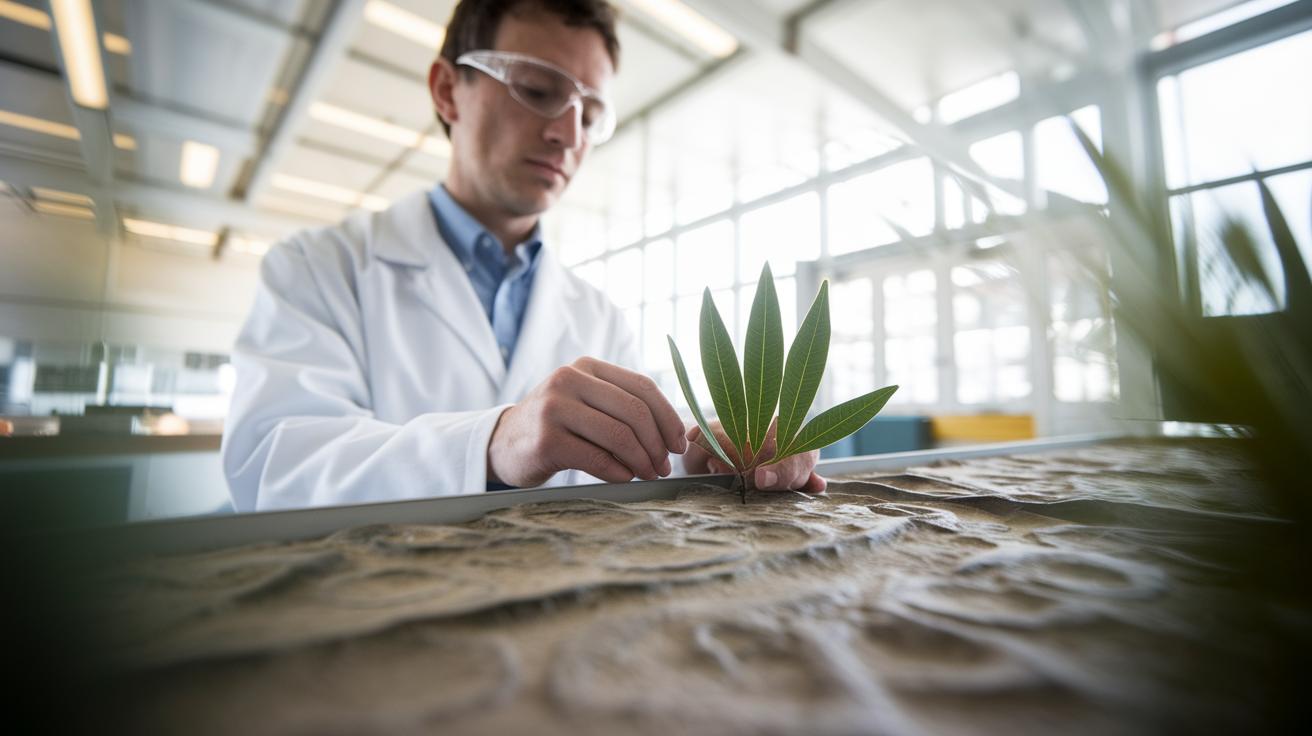
Biomimicry is all about learning from nature’s clever designs. Scientists observe plants and animals to inspire solutions that work great and are gentle on the planet.
-
Velcro is a neat example. A Swiss engineer once noticed burrs sticking to his clothes, and that observation led him to invent Velcro, a fastener made of tiny hooks and loops that stick and release easily.
-
Sharkskin-inspired designs borrow from the tiny tooth-like scales on a shark’s skin. This idea helps lower drag, which means swimsuits and other surfaces that face moving fluids perform better.
-
Self-healing bio-concrete includes Bacillus bacteria (tiny living cells) that fix cracks as soon as they appear. Imagine concrete that repairs itself, just like a living thing!
-
Mussel-inspired adhesives take a cue from how mussels stick underwater using their special bonding chemicals. These glues are super useful, especially in marine restoration and repair projects.
-
Gecko-inspired adhesives mimic the microscopic hairs on gecko feet. This approach creates a non-toxic, reusable grip that’s perfect for precise tasks.
Emerging Trends and Future Directions in Biomimicry Science
Biomimicry is sparking fresh ideas that help us design things with nature in mind. Scientists are exploring fungal mycelium (the soft network inside mushrooms) to create insulation that naturally breaks down, offering a greener option than traditional materials. Imagine walls that, when it's time to retire them, quietly decompose without leaving a harmful trace.
Researchers are also learning from anhydrobiotic organisms, tiny creatures that thrive even when there's no water, to develop new ways of storing vaccines without the need for icy cold chains. Plus, digital tools that mimic the smart, efficient routes of slime molds are now being used to streamline complex logistics. Nature, it turns out, has mastered the art of efficiency!
Engineers are getting creative by testing 3D-printed materials inspired by chameleons. These materials change color with their surroundings, almost like a natural mood ring. And taking a cue from coral, new methods in cement production are capturing carbon emissions, which could lead to much greener construction practices.
All these bio-inspired trends point toward a future where nature’s own brilliant blueprints lead us to innovative and sustainable solutions in technology and building.
Final Words
In the action of exploring what is biomimicry in science, we saw how nature’s time-tested techniques fuel smart innovations. The discussion broke down nature-inspired designs, from shapes and processes to ecosystem mimicry.
We also looked at impressive examples like nature-inspired coatings and adhesives, plus futuristic trends shaping tomorrow’s green tech. The blog post shared human stories behind these breakthroughs, leaving us inspired and more aware of nature’s potential to boost our lives.
FAQ
What is biomimicry in science in simple words?
The biomimicry in science means learning from nature’s long-evolved strategies to solve human challenges. It offers nature-inspired innovation that creates sustainable solutions by mimicking natural designs and processes.
What are some examples of biomimicry in science, including architecture and inventions?
The biomimicry examples span Velcro inspired by burr hooks, humpback whale fin designs improving wind turbines, termite mound ventilation systems, and architectural elements mimicking natural forms for efficient structures.
Why is biomimicry important in science?
The biomimicry importance lies in using nature’s refined strategies to create efficient, sustainable solutions. This approach leads to innovative designs that benefit our environment and improve everyday technology.
What are the three types or essential elements of biomimicry?
The biomimicry types include form and shape (physical structures), process (dynamic functions), and ecosystem (natural cycles). These categories guide problem solving by applying nature’s proven methods to human challenges.
How do you pronounce biomimicry?
The biomimicry pronunciation sounds like “bye-oh-MIM-ih-kree.” It brings together “bio” (life) and “mimicry” (imitation), highlighting the practice of copying nature’s designs.
What degree might one pursue in biomimicry?
The biomimicry degree trains students in interdisciplinary skills blending biology, engineering, and design. It prepares learners to develop sustainable innovations by studying and applying nature’s time-tested tactics.