


Ever wondered how a tough situation can lead to hope? Take the space shuttle Challenger, for example. It pushed us to think bigger and opened new frontiers. Challenger's missions brought exciting firsts, like welcoming brave astronauts and even handling repairs while in space. Even though technical challenges and a heartbreaking end remind us of the risks, its story still inspires us today. In this blog, we share five memorable moments that show how courage and smart ideas can grow from hardship.
Space Shuttle Challenger Missions Timeline and 1986 Disaster Overview
Challenger was NASA’s second orbiter, built starting in November 1975, with safety tests kicking off on April 2, 1978. Its first flight was planned for January 20, 1983 to launch the Tracking and Data Relay Satellite (TDRS, a helper satellite that communicates with other space missions). However, technical glitches and bad weather forced delays, reminding everyone that early space travel had its share of challenges.
Challenger quickly carved out a place in history with a series of breakthrough missions. In June 1983, the STS-7 flight carried America’s first female astronaut into space. Just a couple of months later, in August 1983, the STS-8 mission marked another milestone by taking the first Black astronaut aboard. Then in April 1984, during mission STS-41C, the orbiter became the first to repair a satellite while it was still in orbit.
| Mission | Date | Milestone |
|---|---|---|
| TDRS Mission | January 20, 1983 | Planned first flight for TDRS deployment |
| STS-7 | June 1983 | Carried first American female astronaut |
| STS-8 | August 1983 | Carried first Black astronaut |
| STS-41C | April 1984 | Conducted first on-orbit satellite repair |
| STS-51L | January 28, 1986 | Final mission ended in explosion |
Looking back at Challenger’s timeline, you can see both its amazing achievements and the technical hurdles that foreshadowed a tragic end. Every mission pushed human space travel forward, paving the way for better designs and safer flights down the road. This timeline helps us remember the highs and the heartbreak that unfolded on that unforgettable day, a legacy that still lives on.
Then came Challenger’s final mission, STS-51L, which took off on January 28, 1986 at 11:38 a.m. EST from Cape Canaveral. The flight had already been delayed by six days starting on January 23 because of stormy weather and mechanical problems. Sadly, just moments after liftoff in the cold, a failure in the booster O-ring seals caused the external fuel tank to break apart, triggering a devastating explosion that took all seven crew members with it. This tragic event became a turning point in space travel, sparking a full review of technical issues and a redesign of safety protocols for all missions that followed.
Challenger Crew Profiles: Teacher in Space and Astronaut Team
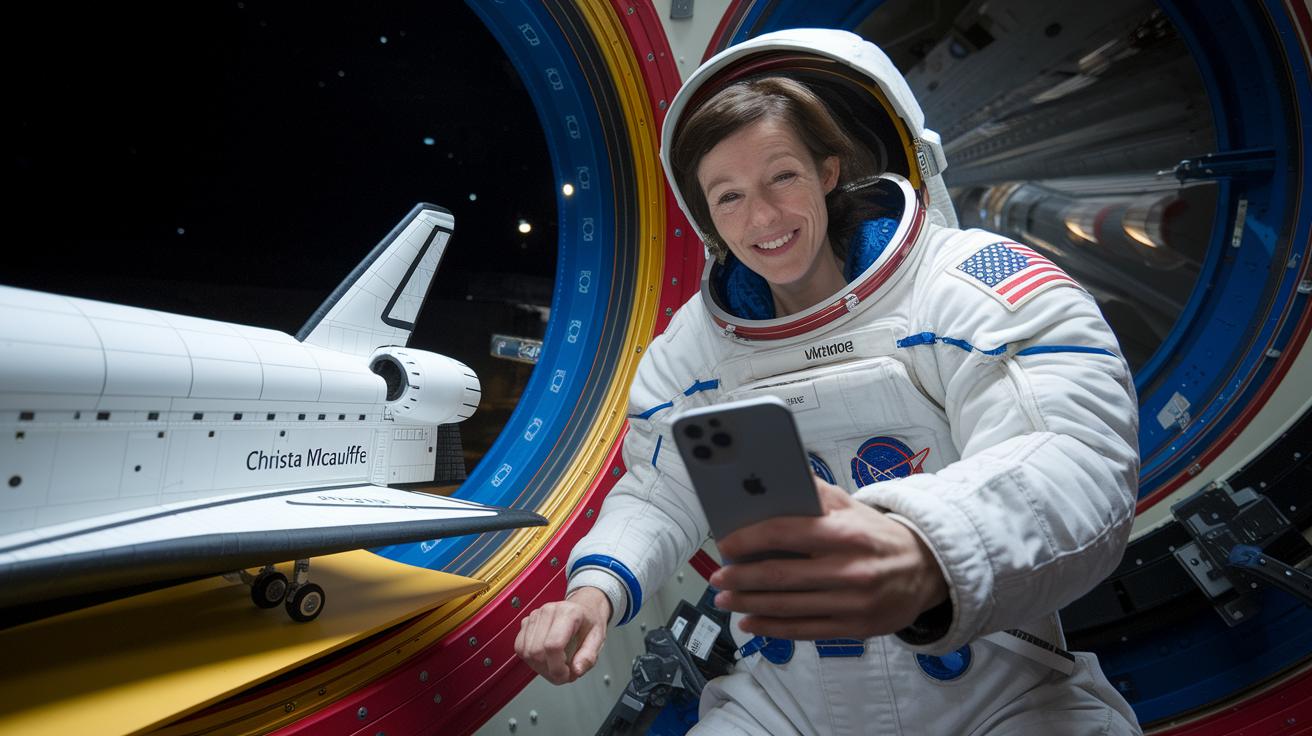
Christa McAuliffe captured everyone's attention as the teacher who reached for the stars. Chosen from thousands in NASA’s Teacher in Space contest, this 37-year-old New Hampshire educator spent months in rigorous shuttle training. Her unwavering determination and love for teaching lit a spark in countless students and families back on Earth.
The Challenger crew was a tight-knit team of seven brave astronauts, each selected for their unique talents and deep commitment to exploring space. Together, they set out on a mission that brought the wonders of space right into our everyday lives. It felt a bit like joining a family adventure into the unknown.
Their last moments remind us of both the exciting possibilities and the real dangers of space travel. While Christa’s journey gave hope to classrooms everywhere, the team’s sacrifices remind us that pursuing knowledge always comes with risks. It’s a bittersweet memory that blends dreams with the hard truths of exploration, imagine a teacher guiding her class on a cosmic field trip. Their legacy continues to inspire new generations to learn more about our vast universe, keeping the spirit of discovery alive for all.
Technical Failure Analysis of the Challenger Explosion
On the launch day, the bitter cold really took a toll on one of the shuttle’s key parts. The solid rocket boosters depended on O-ring seals, small rubber rings that kept the fiery gases locked inside, doing their job. But when the temperature dropped so low, those O-rings became stiff and lost the flexibility they needed. As a result, they couldn’t expand as they should, and hot gases managed to sneak past the weakened seal, striking the external fuel tank and quickly weakening its structure in a chain reaction that led to the explosion.
Before liftoff, inspectors had noticed a damaged seal on booster No. 1 and replaced it on time. Meanwhile, boosters No. 2 and No. 3 still had their original O-rings. The team didn’t fully address even a small risk, and with the harsh cold conditions that day, a minor flaw turned into a serious safety hazard. The severe cold made the O-ring material much less resilient, setting off an unexpected and catastrophic chain of events.
Here’s how the failure happened:
- The extreme cold made the O-rings lose their flexibility.
- The joints couldn’t seal properly under the pressure.
- Hot gases slipped by and damaged the external tank.
- This damage led to the tank breaking apart and eventually exploding.
This step-by-step breakdown shows how tough environmental factors and material limits combined during the launch. It’s a reminder that even a tiny component, when stressed by adverse conditions, can cause a major disaster. Investigators learned that testing every part in all expected conditions is absolutely crucial, a tough lesson that later helped improve designs and safety protocols for future space missions.
Challenger Investigation and NASA Safety Reforms
After the Challenger tragedy, government officials quickly launched a deep investigation. Experts looked into every detail to figure out just where things went off track. The Rogers Commission Report pointed out major problems, like team miscommunication and risk checks that missed how cold weather could really cause trouble (basically, they didn’t assess the cold’s hidden dangers). It turned out, the process for making big decisions wasn’t being scrutinized as carefully as it should have been.
As a result, NASA put in a lot of strong changes to boost safety. Engineers reworked the solid rocket booster joints to handle unexpected stresses better. They also set new pre-launch temperature rules to manage the harsh effects of extreme cold on materials. Plus, launch decisions were restructured so that safety always came first, rather than sticking rigidly to a tight schedule. These upgrades sparked a wave of improvements throughout the agency.
Now, NASA has renewed its commitment to keeping safety front and center. By digging into past mistakes, they built up solid policies to guide future missions. Regular engineering reviews and better team collaboration now form the backbone of efforts to avoid similar disasters, giving everyone hope that space exploration will continue with an even stronger focus on protecting human lives.
Legacy of the Space Shuttle Challenger in Exploration and Safety
Challenger did more than rack up mission milestones, it reshaped NASA's approach to safety. After the tragedy, the space agency took a hard look at its methods, deciding to boost testing standards and create new emergency escape plans.
NASA's changes went beyond technical upgrades; they also taught important human lessons. Imagine a craftsman retooling his workshop, checking every tool with the care of a jeweler inspecting a precious gem. That same careful attention to safety still guides space travel today.
Looking back, we see how these tough lessons carved out a safer and more determined path for space exploration and influenced how NASA runs its operations.
Public and Cultural Response to the Challenger Tragedy

When the Challenger exploded, it sent waves of shock and sorrow across the country. TV screens lit up with live footage and heartfelt comments, and people everywhere felt the deep impact, almost like the way many felt during 9/11. In the midst of this pain, communities came together for vigils and remembrance gatherings, turning heartbreak into a promise to learn and do better.
Media outlets didn't just show the sadness; they also captured the strength and resilience of those affected. In classrooms, kids started discussions about space travel and safety, asking honest questions that mixed old grief with hopes for a safer future. Yearly events and educational projects have since been born out of this tragedy, serving as a way to honor the crew for both their sacrifice and the brave, curious spirit they embodied.
These heartfelt reactions show us that even in our darkest moments, the memory of those lost can spark hope and guide future generations toward a better path.
Final Words
In the action, we followed the space shuttle challenger from historic missions and crew profiles through technical breakdowns and sweeping safety changes. We saw how a mix of environmental factors and equipment issues led to a tragic moment that changed space travel. The detailed timeline, investigation findings, and cultural response guide us in understanding the past.
The legacy of the space shuttle challenger reminds us that analyzing mistakes can bring hope and progress. Let’s keep exploring with open hearts and curious minds.
FAQ
What is the Space Shuttle Challenger model?
The Space Shuttle Challenger model refers to NASA’s second orbiter built starting in 1975. It flew key missions from 1983 until its final flight in 1986.
What is the Space Shuttle Columbia?
The Space Shuttle Columbia represents NASA’s first operational orbiter. It flew several missions before its tragic breakup during reentry in 2003.
What does the Space Shuttle Challenger disaster mean?
The Challenger disaster means that on January 28, 1986, a booster seal failure in cold weather triggered a catastrophic explosion seconds after liftoff, ending the STS-51L mission.
Who comprised the Space Shuttle Challenger crew?
The Space Shuttle Challenger crew was made up of seven astronauts, including Christa McAuliffe, a teacher selected to fly to space, all of whom lost their lives in the explosion.
What is the Space Shuttle Columbia disaster?
The Columbia disaster refers to the 2003 tragedy when the orbiter broke apart during reentry due to damage to its thermal protection, resulting in the loss of all crew members.
What are some examples of Space Shuttle disasters?
Space Shuttle disasters include the Challenger explosion in 1986 and the Columbia breakup in 2003, both of which led to major changes in how NASA approaches safety and technical reviews.
What happened to the Challenger astronaut remains?
The question on Challenger astronaut remains indicates that while debris and some bodily fragments were recovered, the violent breakup made full recovery difficult, and not all remains were found intact.
What does the term “space shuttle explosion 2003” mean?
The term refers to the 2003 Columbia incident, where damage from foam impact led to the orbiter’s breakup during reentry rather than a launch pad explosion.
What were the last words of the Challenger crew?
The last words of the Challenger crew remain largely undocumented, as communications were cut off almost immediately after the booster seal failure occurred during liftoff.
Did NASA provide compensation to the families of the Challenger crew?
The question about compensation means that the families received support through federal funds, insurance settlements, and other assistance arranged by NASA and government entities after the tragedy.
What was the condition of the Columbia astronauts’ bodies?
The condition of the Columbia astronauts’ bodies showed effects from extreme heat and stress during the breakup, with recovery efforts noting signs of the intense forces experienced during reentry.