


Have you ever thought that tiny atoms might one day power supercomputers? Neutral atom quantum computing uses super cold atoms (atoms made chilly) trapped by laser beams to hold and move data with impressive speed and care. Imagine it like a lively dance where each atom plays its own part to keep the delicate quantum state steady. Today, we'll take a closer look at how these frozen atoms work together and why they might just change how we compute forever.
How Neutral Atom Quantum Computing Works
Neutral atom quantum computing uses groups of atoms that have been chilled by lasers and held steady with tiny beams of light called optical tweezers (devices that trap particles using focused light). In these systems, each atom sits by itself in a neat grid, and its quantum data is stored using special energy levels known as hyperfine states (think of these as unique energy “ID badges”). This way of storing information is a lot like how quantum bits are used in other quantum computers.
Here's how it works:
Laser pulses play a key role in controlling these atoms. With a precise burst of laser light, an atom can get excited into a higher energy state, which then prevents its neighbor from doing the same, a neat trick called Rydberg blockade. This effect makes it possible to carry out operations on two atoms with very high accuracy (over 99% success), and each operation takes only about one microsecond. By carefully timing these laser pulses, scientists can make sure that each step in the process keeps the delicate quantum states safe and sound.
Optical Tweezers in Neutral Atom Quantum Computing

Optical tweezers work by focusing a laser beam really sharply (around 820 nm) into a tiny, bright spot that can trap a single atom. The beam’s features, its wavelength, intensity, and focus, set the strength of the trap (about 1 mK) and keep the atom confined for several seconds. It’s kind of like using a carefully tuned magnifying glass to pick out and hold a small grain of sand in bright sunlight, giving you a clear picture of how these beams keep atoms in place.
Today’s setups create arrays of atoms, which you can think of as qubits, with up to 200 of them spaced about 3–5 µm apart. Automated systems even track and reposition each atom so that every slot in the grid is filled and stays stable. Imagine a self-adjusting board game where every piece slides perfectly into place, keeping everything in sync. This careful placement is crucial for neutral atom quantum computing, where the smooth arrangement of atoms leads directly to reliable computational performance.
Rydberg-Mediated Gates in Neutral Atom Quantum Computing
Neutral atom systems use a method called the Rydberg blockade, where atoms are boosted to high energy levels (roughly at n=70). This process makes it possible to link two qubits in about 1 microsecond with accuracy rates close to 99%. Recent work has fine-tuned the pulse shapes and added smart feedback controls, moving past the simple demos we saw before.
Principle of Rydberg Blockade
When one atom is excited to a Rydberg state, its electric field changes the energy levels of nearby atoms so they can’t be excited at the same time. Think of it like a community pool where one reserved spot means no one else can jump in at that moment. Recent experiments have sharpened how this “reservation” spreads across busy arrays of qubits, lowering mistakes in more complex setups.
Gate Execution and Fidelity
Laser pulses help carry out controlled-Z and CNOT operations in roughly 1 microsecond. Beyond the usual pulses, researchers now use a mix of pulses to fix tiny errors. Imagine it as a perfectly timed light show, where each flash is adjusted to balance out minor shifts. These tweaks point to a future where built-in feedback keeps things steady.
Keeping the qubits working together without losing their connection is still a challenge. Current efforts focus on letting the system fix its own errors and use better isolation techniques to handle oddities like laser phase flickers or power changes. All of these improvements help make the setup more reliable, paving the way for more elaborate qubit interactions without relying on early, simpler methods.
Scalability and Error Correction in Neutral Atom Quantum Computing

Right now, quantum computers using neutral atoms can hold up to 256 atoms as qubits, and researchers are working to push that number over 500. Each atom acts like a tiny bit of information, so adding more atoms means more processing power. Scientists are refining atom traps and fine-tuning laser controls to make the arrays bigger and more effective. This progress not only makes the systems more scalable but also helps us tackle more complex quantum tasks.
But there are still some hurdles along the way. For instance, atoms have a loss rate of about 0.5% per hour. Noisy lasers and unintended interference between nearby qubits can further throw off the system, reducing its precision. Researchers are testing better isolation and stabilization techniques to keep each qubit working reliably under tough conditions.
New methods for fixing errors in neutral atom systems are now in the spotlight. Scientists are exploring ideas like dynamical decoupling (a way to lessen noise) and encoding qubits in special regions that resist disruptions (decoherence-free subspaces). These strategies help counter random fluctuations and preserve vital quantum information as the system grows. With these fixes in place, future neutral atom quantum systems are expected to be even more reliable and powerful.
Leading Neutral Atom Quantum Computing Platforms
At Harvard, MIT, and Oxford, researchers are exploring neutral atom quantum computers with some pretty exciting results. These experiments use atoms as qubits (the basic units in quantum computing) and are steadily stepping up from small, simple groups to more complex arrangements. The teams are refining how atoms interact, using better laser controls, and reducing errors along the way. It’s like they’re laying down the blueprint for bigger, future systems while getting a feel for the basic rules of neutral atom quantum setups.
Over in the business world, companies such as ColdQuanta, Pasqal, and QuEra’s Aquila are bringing these ideas to life in practical ways. ColdQuanta’s machines are running on around 100 qubits, and QuEra’s Aquila has grown to 256 qubits. They even offer custom control software, like Pasqal’s Haqc stack, to keep everything running smoothly. Looking ahead, it seems they’re focused on boosting qubit numbers and fine-tuning hardware performance, promising to take these platforms to the forefront of real-world quantum computing applications.
Neutral Atom Quantum Computing Radiates Exciting Potential
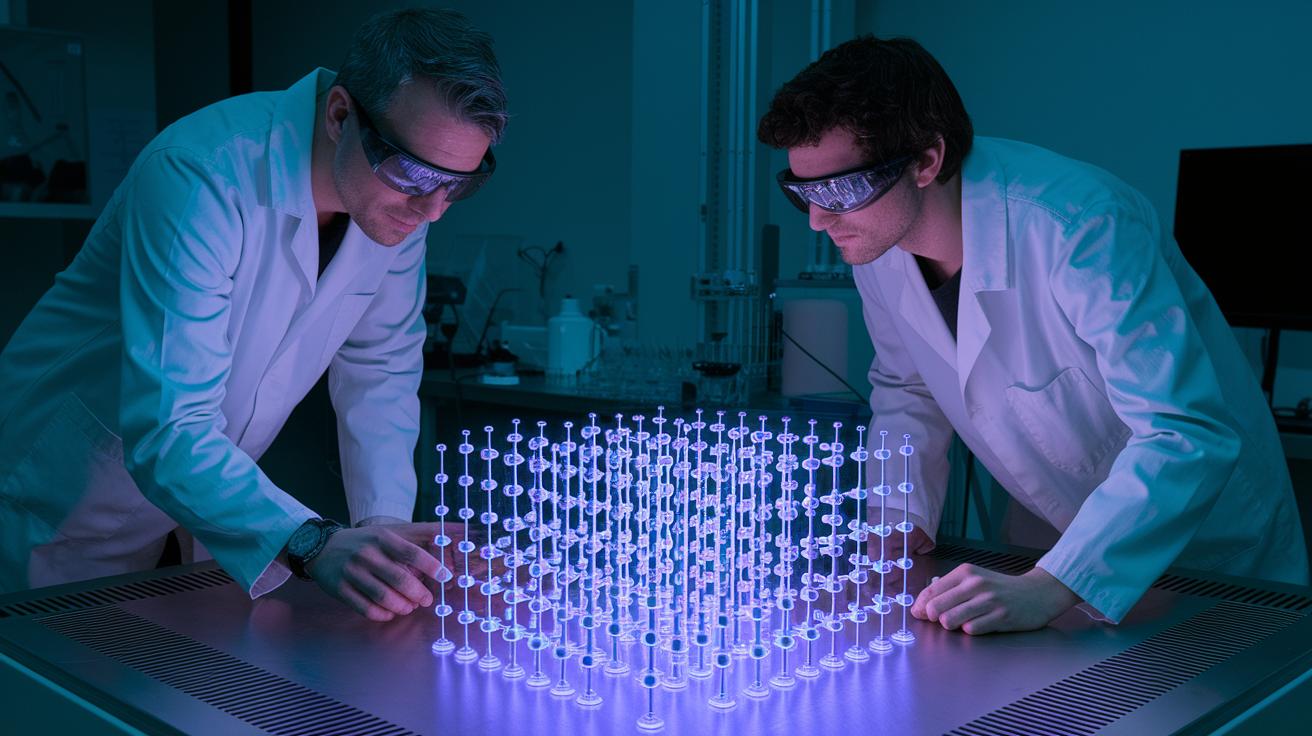
Neutral atom devices are already making waves in fields like quantum simulation and optimization. Researchers use these systems to mimic how lots of tiny particles interact, imagine building a miniature universe in the lab where every atom plays its part. In one experiment, atoms neatly arranged in a specific pattern naturally mimicked the behavior of a complex magnetic material, sparking fresh insights into its inner workings.
Tailored algorithms are springing up to harness the unique strengths of neutral atom quantum computing. Engineers and computer scientists are teaming up to craft special pulse sequences for atom gates (think of these as custom-built switches), making each system perfectly suited for specific tasks. It’s a lot like designing a custom tool that fits each job just right.
Looking ahead, scaling these systems is the next big step. Experts predict that we could soon see neutral atom quantum computers with over 1000 qubits (the basic units of quantum information) within just five years. This milestone would push these setups closer to reliable, large-scale operation. Meanwhile, researchers are honing strategies to reduce errors and maintain coherence, paving the way for even more complex simulations and tough optimization challenges.
Final Words
In the action, we explored how neutral atom quantum computing works by digging into optical trapping, qubit encoding, and Rydberg-mediated gates. The article broke down the steps from laser-cooled atoms held in tweezers to scalable arrays and error corrections.
We also looked at leading platforms and the practical applications driving today's research. Every step adds to our understanding of neutral atom quantum computing, sparking excitement for the breakthroughs just ahead.
FAQ
FAQ
How does neutral atom quantum computing work?
Neutral atom quantum computing works by cooling atoms with lasers, trapping them in optical tweezers, and encoding qubit data in hyperfine ground states. It then uses Rydberg interactions for two-qubit gate operations.
What role do optical tweezers play in neutral atom quantum computing?
Optical tweezers trap single atoms with focused laser beams, arranging them precisely into arrays. This controlled placement allows stable qubit confinement essential for quantum computation.
How are two-qubit gates implemented in neutral atom systems?
Two-qubit gates operate by exciting atoms to high-energy Rydberg states using laser pulses. This excitation shifts energy levels nearby, effectively preventing simultaneous excitation and enabling controlled operations.
What challenges exist in scaling neutral atom quantum computers?
Scaling these systems involves increasing qubit arrays while managing challenges like atom loss, laser noise, and crosstalk. Researchers are also developing error correction strategies to maintain reliable performance.
Which platforms lead neutral atom quantum computing research and commercial efforts?
Leading platforms come from academic research at major universities and companies like ColdQuanta, Pasqal, and QuEra. They provide scalable systems with advanced qubit arrays and integrated control software.
What applications and future prospects do neutral atom quantum computing systems offer?
These systems excel in simulating quantum physics, solving optimization problems, and designing novel materials. Future plans aim at scaling to systems with over 1000 qubits for more complex tasks.