


Ever wonder if the moon might be more than just a quiet rock in the sky? At Vanderbilt and Georgia Tech, Lunar Labs is showing us a new way to look at it. Instead of just watching from afar, they’re turning the moon into a real, working lab in space.
Scientists from different fields are coming together, like puzzle pieces fitting perfectly, to run experiments that could spark insights for the next generation of innovators. With support from respected research leaders and trusted funding groups, this project is pushing the limits of smart tech and robotics. It’s lighting up a clear path toward a bright future in space research.
lunar labs: Inspiring Mission and Clear Vision
At Vanderbilt, the Lunar Labs Initiative unites experts from all kinds of fields to use the moon as a one-of-a-kind lab for groundbreaking science. The team has three clear goals: bringing different disciplines together, training America’s next group of scientists, engineers, and policy makers, and creating a campus hub that keeps the lunar tech conversation alive. Think of it like solving a puzzle, researchers in physics, computer science, and engineering each add their piece to design moon experiments.
This project enjoys strong support from Vanderbilt’s research and innovation leaders as well as the Chancellor’s office, along with funding from trusted groups like the John Templeton Foundation and the REAM Foundation. It’s a vote of confidence in the bold vision of these lunar labs to push space research and foster teamwork across various academic fields.
Over at Georgia Tech, there’s a Lunar Laboratory that is busy perfecting autonomous robotics and navigation, robots that can act on their own in unpredictable environments (that means machines designed to work independently without direct human help). Their work on these systems not only deepens our understanding of operations on land, air, and space but also fuels broader space exploration research.
By joining forces, Vanderbilt and Georgia Tech have created a dynamic hub where rigorous study meets hands-on innovation, lighting the way for an inspiring future in science and technology.
Lunar Labs Research Focus and Core Technologies

Lunar Labs is diving into a mix of technical methods that push space science and smart machine learning forward. They’re teaming up with Vanderbilt’s Data, Analytics & Research Computing and its Behavioral Lab, and they even bring in fresh ideas from Georgia Tech. I love how they blend classic research with new tech to build smarter algorithms and boost neural network work, think of it like piecing together a cool robot from everyday parts.
The team works hard on computer vision (tech that lets computers "see"), state estimation (basically guessing what the current state of a system is), and probabilistic inference (a fancy term for making predictions based on chance). All these efforts set the stage for creating advanced robotics that can navigate tough environments without a helping hand.
- Computer vision algorithms
- Both supervised and unsupervised machine learning (methods that learn with or without human hints)
- Deep neural network techniques
- Bayesian estimation and inference (a way to update predictions as new info comes in)
- Autonomous navigation and robotics integration
- Behavioral data analytics
This mix of skill and constant creativity makes an exciting place for research to meet new tech ideas. Using machine learning alongside deep neural networks not only makes robots work better but also helps build systems that adapt to changing conditions. By combining strong computing power with smart behavior analysis, Lunar Labs is paving the way for technologies that might revolutionize everyday life and even our adventures in space.
Major Projects, Workshops, and Event Highlights at Lunar Labs
At Lunar Labs, we love taking on bold projects and hosting events that spark fresh ideas. One standout project is ShelfGaussian. It uses smart shelf-supervised models (basically clever computer programs) to help machines make sense of detailed 3D scenes. Just last November 14, 2025, Dr. Minghan Zhu gave an inspiring talk titled "3D Robot Vision for Structured World Understanding: A Physics and Symmetry Perspective." He shared how using simple ideas from physics and balanced shapes (symmetry) can really improve how robots see the world. Then, in January 2026, Lu was named Associate Editor for IROS 2026, which shows how our team is getting more recognized in technical publishing.
Every year, we also come together for workshops and meetings to share our work. These gatherings, from the 2023 Lunar GW Workshop to the 2024 LILA Meeting and the events in 2025 like the Lunar GW Workshop and Lunar Frontier conference, create a warm space for teamwork and fresh discoveries. Below is a simple timeline to help you see our progress at a glance:
| Event/Project | Date | Focus |
|---|---|---|
| ShelfGaussian | Ongoing | 3D scene understanding with smart shelf-supervised models |
| 3D Robot Vision Seminar | Nov 14, 2025 | Learning how physics and symmetry boost robot vision |
| IROS 2026 Appointment | Jan 2026 | Lu becomes Associate Editor for IROS 2026 |
| Annual Workshops & Conferences | 2023–2025 | From Lunar GW Workshops to LILA Meeting and Lunar Frontier conference |
Partnerships, Funding, and Strategic Growth of Lunar Labs

Industry collaborations are now taking center stage. A handful of tech companies specializing in robotics and AI are joining forces with Lunar Labs, bringing real-world testing and market insights that go beyond what the in-house team offers. These partners share new ideas from fresh engineering breakthroughs and practical applications. For instance, one manufacturing company boosted its testing efficiency by 40% after switching from outdated methods, before teaming up with Lunar Labs, it just couldn’t keep up in the competitive market.
By focusing on these smart industry partnerships, Lunar Labs is also tapping into venture capital insights and paving the way to bring innovations into commercial use. New collaborations are already helping sharpen product prototypes, widen practical applications, and align with larger space projects like NASA’s lunar gateway initiative. This shift towards focused, growth-driven partnerships sets Lunar Labs apart, giving them the edge in developing market-ready technology.
Opportunities, Training, and Career Paths at Lunar Labs
Lunar Labs is where budding scientists, engineers, and policy makers get a real head start in their careers. It’s a place that mixes hands-on learning with solid academic basics so you really see how theories work in the real world. You get to work with things like working papers, case studies, and research resources that make the jump from textbook ideas to practical skills feel natural.
It’s not just about learning, it’s about doing. You can dive right into job opportunities while you’re still building your toolkit, sharpening both your technical know-how and creative thinking along the way.
Lunar Labs also has a variety of programs to boost your growth:
- Fellowships for early-career researchers
- Scholarships to help future innovators shine
- Internships that offer real-world experience
- Support for Postdoctoral Scholars
- Programs for graduate students and Visiting Researchers
- Access to tech incubators and innovation accelerators
When you join this community, you step into an environment that values curiosity, practical experience, and pushing the limits of science and technology. Whether you’re just starting out or looking to add new skills, Lunar Labs shows you a clear path forward, one that’s especially exciting in the fast-paced world of space exploration research.
Future Directions and Innovations Emerging from Lunar Labs
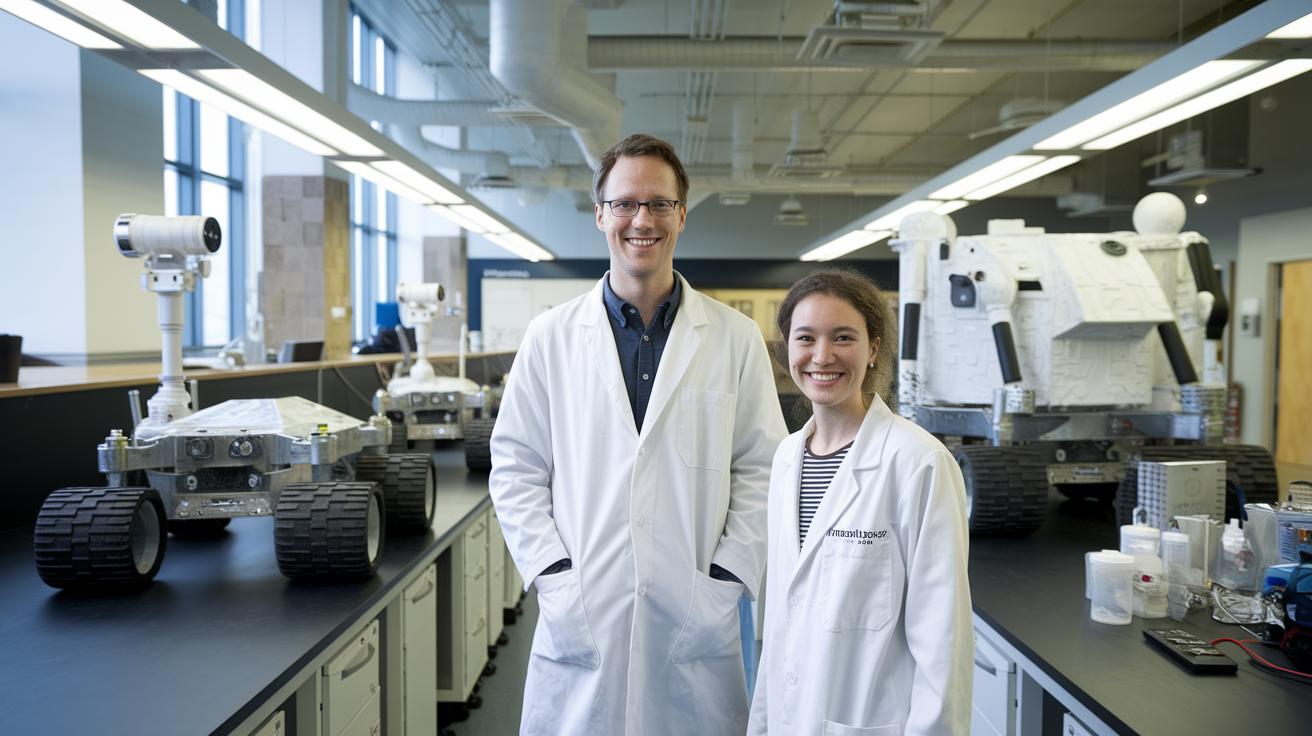
Lunar Labs is sparking breakthrough ideas that will reshape space exploration and robotics. At Vanderbilt, students and researchers work together, sharing lab tools and knowledge. Their programs mix classroom learning with hands-on experiments, which helps new ideas grow into real-world tech solutions.
Researchers at Georgia Tech are busy creating smart robots that can handle the ups and downs of lunar terrain. These robots are designed to explore, help with search and rescue, and handle everyday tasks in tough, unpredictable conditions. Have you ever imagined a robot that adapts like you would when piecing together your favorite gadget? It’s all about making science fun and practical.
This team-up fits perfectly with NASA Artemis goals and plans to build new lunar facilities. By blending solid academics with real-life experiments, these labs are paving the way for future trends and exciting spin-offs that could change how we see space and use its wonders here on Earth.
Final Words
In the action, the blog explored Lunar Labs’ mission, research focus, and projects that combine diverse disciplines.
It detailed innovative technology, hands-on training, strategic partnerships, and impactful funding that drive real progress in space studies.
The post highlighted interactive workshops and career opportunities that open up promising paths for emerging scientists and engineers.
A closer look at evolving research and robust academic support leaves us inspired about the bright future of lunar labs.
The outlook is refreshing and energizing for anyone passionate about tech and science.
FAQ
Q: What is Lunar Labs crypto?
A: The term Lunar Labs crypto refers to initiatives that explore digital asset technologies and blockchain-like systems within lunar research, merging space study with emerging financial tech.
Q: What are Lunar Labs careers?
A: The phrase Lunar Labs careers highlights opportunities for scientists, engineers, and policy experts to engage in research and development focused on lunar exploration and related technologies.
Q: What is Lunar Labs AI?
A: The term Lunar Labs AI denotes efforts in artificial intelligence research, including machine learning and neural networks, to solve challenges in space exploration and robotics.
Q: What does Lunar Labs Moonwell refer to?
A: The reference Lunar Labs Moonwell likely points to a division or project exploring unique lunar technologies, contributing innovative experiments to broader space research.
Q: What is Lunar dream Labs?
A: Lunar dream Labs suggests a visionary initiative within lunar research that blends creative exploration with practical approaches, aiming to push the boundaries of space technology.
Q: Who is Elizabeth Anderson in relation to Lunar Lab?
A: The mention of Elizabeth Anderson indicates her role or association with Lunar Lab, reflecting the institution’s commitment to engaging diverse academic and research partnerships.
Q: What is Lunar Lab Gatech?
A: The term Lunar Lab Gatech applies to Georgia Tech’s lunar laboratory, which focuses on robotics, autonomous navigation, and innovative methods for both space and ground applications.
Q: What is a Lunar gravitational wave detector?
A: A Lunar gravitational wave detector refers to an instrument designed to measure ripples in space-time via lunar observations, aiding our understanding of cosmic events and physics.