


Have you ever noticed how the Moon seems to change shape night after night? It’s almost like a hidden magic show in our own backyard.
Imagine this: you take a clear cup, a bit of water, a small ball, and a lamp. Set them up in a simple way, and you’ll see how sunlight casts different shadows, just like how the Moon’s look changes. Watching it transform might remind you of what people felt the first time they saw our night sky working its wonder. It’s a fun experiment that brings science to life in the most charming way.
DIY Lunar Cycle Project: Step-by-Step Instructions
Before you get started, gather all your supplies. You’ll need a clear cup, some water, a small ball to stand in for the Moon, a lamp or flashlight to act as the Sun, tape and markers, a printed moon phase chart, and a pen and paper to jot down what you observe.
Find a cozy, dim spot to set up. Place the cup or paper plate on a flat surface so you have a steady base for your experiment.
Next, put the lamp or flashlight at one end of your workspace so it stays fixed like the Sun. This will help you see how the light and shadows shift on your Moon model.
Take your printed chart and mark where the new Moon and full Moon occur. These are the easiest phases to see in your demo.
For a full Moon effect, set the small ball right in line with the light source. Then, shift it to the opposite side to mimic a new Moon.
Now, adjust the ball to show the first and third quarter phases. Use tape and markers to label these spots on your work table so you remember them.
Slowly move the ball between these main positions to represent the in-between phases, and notice how the bright part of the ball changes with each adjustment.
Be sure to write down all your observations, including the date, the phase name, and any interesting details about the light.
Finally, compare your notes with the printed chart to confirm you’ve got the order right: New Moon, Full Moon, First and Third Quarters, then the intermediate phases.
Enjoy watching the Moon’s phases come to life, and have fun learning how our night sky works!
Lunar Astronomy Explained: Phases for Your Cycle Project
Have you ever gazed at the moon and wondered why it looks different each night? The moon takes about 29.5 days to complete its cycle (called the synodic period). But when you compare its path to faraway stars (its sidereal period), it only takes about 27.3 days. Since Earth is always moving, the moon needs a few extra days to catch up, which gives us those beautiful changes in light.
The easiest way to follow the cycle is by starting with the New Moon, then moving to the Full Moon, and seeing the First and Third Quarters, with the other phases filling in the gaps. During a New Moon, the lunar surface appears dark because it reflects very little sunlight. In contrast, a Full Moon shines brightly. The First and Third Quarters reveal half of the moon in light, and the phases in between show the illuminated portion gradually growing (waxing) or shrinking (waning).
Take a look at the table below to quickly match each phase with its typical day in the cycle and the approximate amount of light you’d see. This handy guide makes it simple to understand the moon’s changing face and turns your astronomy project into an engaging, hands-on experience.
Watching these shifts not only deepens your grasp of how the moon works but also makes learning about space feel like a fun adventure. Have you ever tried tracking the phases yourself?
| Phase | Cycle Day | Illumination % |
|---|---|---|
| New Moon | 0 | 0% |
| Waxing Crescent | 3-4 | 25% |
| First Quarter | 7 | 50% |
| Waxing Gibbous | 10 | 75% |
| Full Moon | 14 | 100% |
| Waning Gibbous | 18 | 75% |
| Third Quarter | 22 | 50% |
| Waning Crescent | 26 | 25% |
Essential Materials for a Hands-On Lunar Cycle Project
To kick off your project, gather all the supplies you’ll need from around the house. For a creative moon phases activity, try the popular experiment from the Phases of Moon Study Guide, which calls for 8 Oreos, a butter knife, and a paper plate. It’s a fun DIY moon model workshop that even lets you keep a few extra Oreos handy in case one crumbles.
You could also experiment with a simple cup-based method. All you need is a clear cup and some water to mimic how light and shadow dance on a sphere. This budget-friendly setup is perfect for a basic peek into space observation, ideal for curious budding scientists.
Many of these experiments feature in the Homeschool Science For Kids series and come with extra tips from a Teacher Guide and help from ASK JANICE. With these low-budget materials at hand, you’re all set to explore the phases of the moon in a hands-on and engaging way.
Creative Moon Phases Activity Ideas for Lunar Cycle Projects
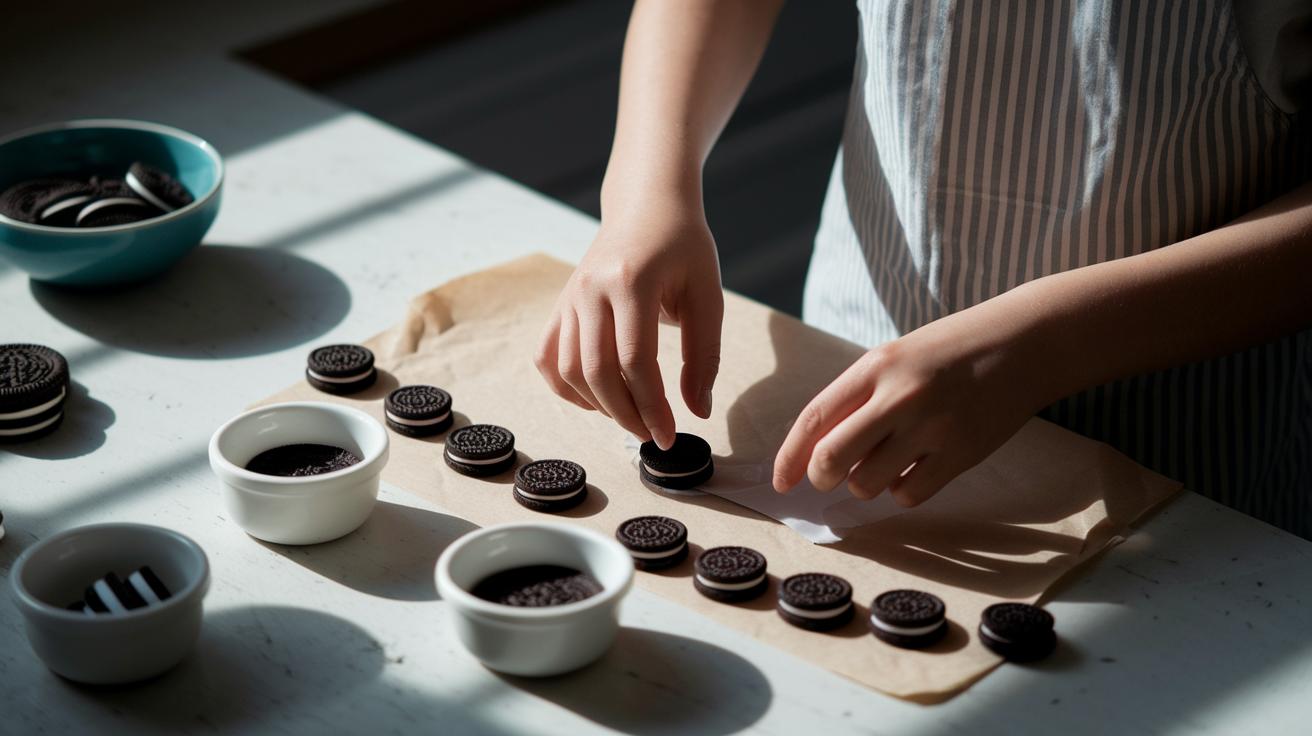
Looking to explore the moon’s changes in a fun and hands-on way? Here are a few engaging methods that let you see how the lunar phases work. For all the step-by-step details, be sure to check out the Essential Materials and DIY Lunar Cycle Project sections.
| Activity | Description | Reference |
|---|---|---|
| Oreo Phases | Take an Oreo cookie and slowly remove parts of its cream to represent the eight stages of the moon, from dark New Moon to glowing Full Moon. | DIY Lunar Cycle Project |
| Cup Model Experiment | Set up a cup under a lamp and move a small ball around it to mimic how the moon gets its light from the sun. | Essential Materials |
| Phase Diagram Craft | Use a paper plate and some markers to draw a timeline of the moon phases, labeling each stage along the way. | DIY Lunar Cycle Project |
For instance, in the Oreo Phases activity, imagine removing just enough cream to reveal a dark spot turning into a bright circle as you proceed, much like watching a New Moon slowly evolve into a Full Moon.
Documenting and Observing Phases in Your Lunar Cycle Project
Keeping a daily record of what you see can turn watching the moon into a fun, interactive adventure. It’s a bit like writing in a journal about your favorite story, except here you’re noting down the moon’s gentle changes as it grows (waxing) or shrinks (waning). Grab a notebook or use a digital journal every day to jot down details like the date, the phase name, an estimate of how much of the moon is lit up, and the times it rises and sets.
A simple entry might look like this:
- Date: October 12
- Phase: Waxing Crescent
- Illumination: Roughly 20%
- Rise/Set: Rises at 8 p.m., sets at 6 a.m.
Imagine writing, “Today, I saw the moon glow with a subtle curve, like a gentle smile in the dark night.” Those little details don’t just tell you the phase; they capture your own unique view of the night sky.
Take time to review your notes over the 29.5-day cycle. Look for changes in brightness and the shifting times of rise and set, you might even spot a cool pattern. This habit of careful observation can turn each night into a mini science experiment, sparking curiosity about the amazing celestial dance happening above us.
Integrating Lunar Cycle Projects into Classroom Curriculum
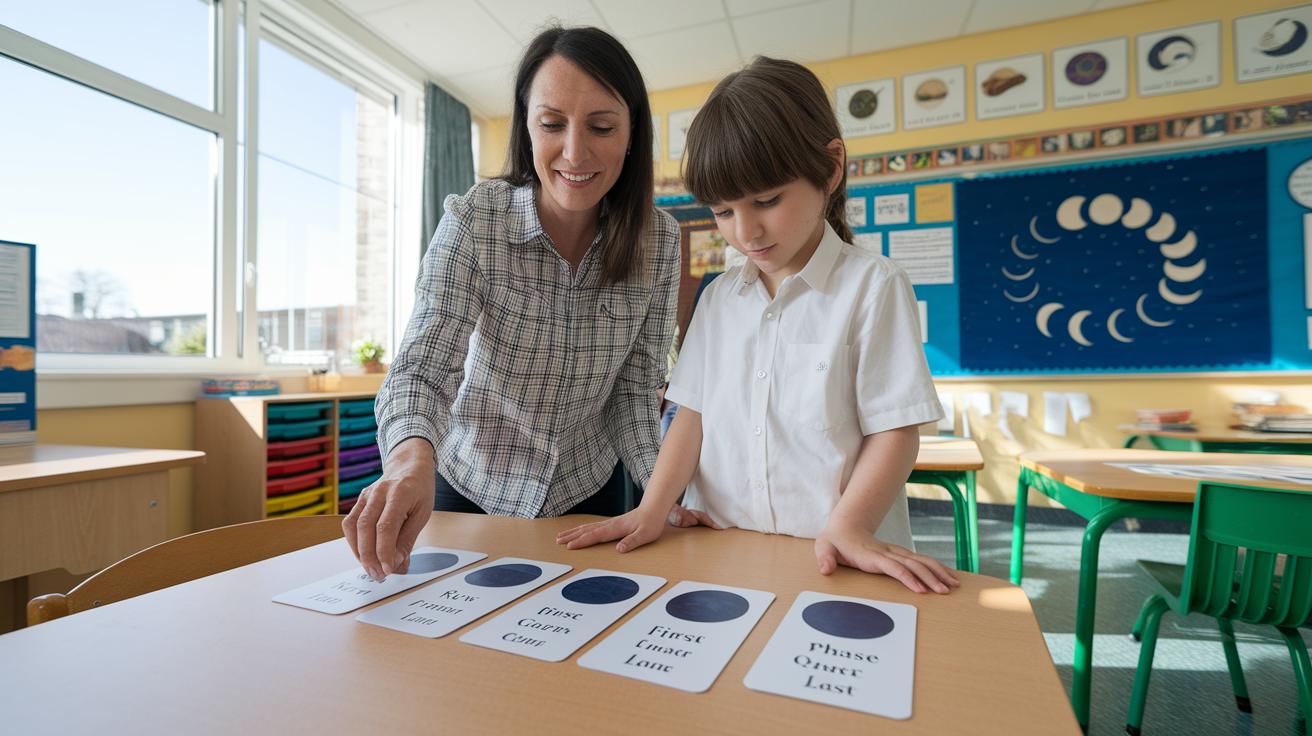
Teachers can easily blend lunar cycle projects into their lesson plans to connect science with everyday experiences while meeting classroom standards. VanCleave’s Teacher Guide and ASK JANICE modules offer practical tips that make moon lessons interactive and simple to follow. These hands-on projects can be adjusted to fit every grade level, whether it's a playful introduction in kindergarten or a detailed study in high school.
In the classroom, a clear phase study guide helps break down each lunar phase with fun models, hands-on experiments, and creative demos. Imagine using simple objects to show how the moon shifts from a New Moon to a Full Moon and back again, this kind of activity lets students see science in action, making it easier to understand how the moon’s orbit affects our night sky.
These exciting explorations encourage students to work together and dive into academic projects that match current educational goals. For example, the Homeschool Science For Kids series is designed for both group and individual learning, showing just how adaptable these projects can be. With the longstanding appeal of programs like VanCleave’s Science Fun since 1979, students get to enjoy engaging STEAM activities that feel both modern and familiar.
Teachers can also mix active projects with thoughtful discussions to boost teamwork and spark curiosity about the moon. This blend of hands-on work and conversation helps students feel connected to the lessons, inspiring them to explore the wonders of our night sky even more.
Final Words
In the action, you’ve seen how to craft a lunar cycle project that brings cosmic science into your everyday space. The post broke down hands-on experiments, explained moon phases, and listed all the supplies you’d need for a fun activity. Each step was designed to make the science behind the lunar cycle clear and relatable. Enjoy building your project, watching the phases evolve, and sparking more curiosity about the wonders of space, a neat way to keep exploring cutting-edge science.
FAQ
How do I make a project about the phases of the Moon?
Making a project about the Moon’s phases starts by gathering simple materials, following clear step-by-step instructions, and tracking the cycle over 29.5 days to capture changes from New Moon to Full Moon and back.
What does a lunar cycle project for school involve?
A lunar cycle project for school involves creating a hands-on model or chart to track the Moon’s phases, using everyday items and observation logs to connect classroom lessons with real sky-watching.
What are some ideas for lunar cycle projects for kids and students?
Lunar cycle project ideas include a cup-based simulation to mimic light and shadow, an Oreo cookie exercise for a fun phase demonstration, and using printable templates for daily phase tracking.
Is there a template or PDF available for a lunar cycle project?
A template or PDF for a lunar cycle project typically provides a list of materials and step-by-step instructions to streamline the setup, ensuring both teachers and students have a clear guide to follow.
What does a moon phases project for 4th grade look like?
A moon phases project for 4th grade features simplified explanations of waxing and waning phases, engaging activities using kid-friendly materials, and daily observation logs to help students visually track the Moon’s changes.
How do I create a moon project for school?
Creating a moon project for school means combining interactive experiments with clear documentation of the Moon’s phases, using charts, hands-on models, and regular observations to illustrate how the Moon changes over time.
What is the lunar cycle for tonight?
The lunar cycle for tonight identifies the current Moon phase, which you can find using reliable astronomical charts or mobile apps that detail the Moon’s illumination and position in its 29.5-day cycle.
What happens every 18.6 years in lunar cycles?
Every 18.6 years, the Moon’s orbit wobbles, slightly shifting its rise and set times and affecting tidal patterns, an interesting long-term change observable through careful celestial tracking.
What year will have 13 full moons?
A year with 13 full moons occurs when a Blue Moon appears, and specific occurrences can be predicted with astronomical calculations that align the lunar cycle with the calendar year.