


Have you ever wondered if earning a certificate could really change your life? Cyber security credentials open up job opportunities where skilled workers are in high demand. Experts predict that career growth in this field could increase by 30% over the next ten years, making these certificates a smart choice for folks in tech, government, or finance.
When you learn the key facts and compare the top certificates, you can choose one that fits your career plans perfectly. Keep reading, and you'll see how the right certification can boost your reputation and help your career take off.
Comparing Top Cyber Security Certifications: Overview and Key Metrics

The world of cybersecurity is buzzing with promise, experts predict nearly a 30% growth between 2024 and 2034! That means if you hold one of these certifications, you're stepping into a field where skills are in serious demand. In simple terms, these credentials show you know your way around real-world security challenges, whether you’re working in government, tech, or finance.
Take a look at the table below. It breaks down eight popular certifications by what they focus on, how much they cost, and what you need to qualify. Use this guide to find the credential that fits best with your career dreams, whether you’re eyeing roles in network defense, risk management, or operational security. The right certification can boost your credibility and open the door to higher-paying jobs.
| Certification | Focus Area | Exam Fee | Prerequisites |
|---|---|---|---|
| CompTIA Security+ | Foundational Security | ~$370 | None |
| CISSP | Advanced Security & Management | $749 | 5 years experience or (ISC)² Associate option |
| CEH | Ethical Hacking | $1,199 | Prior IT experience recommended |
| CISA | Audit & Assurance | $575–$760 | Relevant work experience |
| CISM | Information Security Management | $575–$760 | Experience in security management |
| GCIH | Incident Handling & Response | $699 | Understanding of network fundamentals |
| SSCP | Operational Security | Varies | IT role experience |
| GSEC | Security Essentials | Varies | Basic IT know-how |
Entry-Level Cyber Security Certifications for Beginners

Starting out in cybersecurity can be exciting, and these beginner certifications give you a solid jumpstart. They cover the core ideas like how to protect networks, fight off malware, and understand the basics of IT. Even if you’re new to the field, these certifications help you see real-world security issues up close. Fun fact: many seasoned experts began their careers with these very certifications, which then led to bigger opportunities.
Here are some great options to consider:
- CompTIA Security+ (~$370): This course teaches essential security skills and doesn’t ask for any previous experience.
- (ISC)² SSCP (Cost varies): Perfect for IT pros who want to switch their focus to basic security measures.
- Google Cybersecurity Professional Certificate (~$49/month for six months): Learn about Linux, Python, and tools that help spot intrusions.
- Security+ Boot Camps (Cost varies): Dive into hands-on training that reinforces what you learn about network security and malware.
- Free Cyber Security Credentials (Free): Get access to practice tests and introductory materials that break down core concepts.
- Introductory Cyber Defense Courses (Cost varies): These courses use real-world examples and interactive modules to teach digital defense strategies.
Take advantage of free practice tests and resources from various vendors. They’re a fun and engaging way to really get a feel for the tools and ideas in the industry, setting you up for a rewarding career in cybersecurity.
Advanced Cyber Security Certifications to Elevate Your Career

Advanced cybersecurity certifications can give your career a serious boost, and they might even help you earn a higher salary. These qualifications prove that you have the hands-on skills and deep knowledge needed to handle tricky security setups. Employers love these credentials because they show you’re ready to face both strategic and technical challenges to keep important data and systems safe.
CISSP
CISSP from (ISC)² is seen as the top choice among seasoned security experts. It’s meant for folks with around five years of work experience across different security areas (or those starting as Associates to eventually meet the full requirements). The exam tests your knowledge on things like managing risks, protecting assets, and building secure systems. The cost is about $749, and many candidates mix self-study with classes and hands-on labs to get ready.
Certified Ethical Hacker (CEH)
CEH by EC-Council focuses on ethical hacking skills and is perfect for learning how to find and fix security holes. The course covers topics like network security, dealing with malware, and even tricks like social engineering. You’ll face a mix of multiple-choice questions and real-life challenges to show you can spot and fix vulnerabilities before they’re exploited. The fee is around $1,199, so it’s a strong fit for professionals who want to specialize in offensive security.
Offensive Security Certified Professional (OSCP)
OSCP is all about real-world penetration testing and puts your skills to the test with a 24-hour lab exam. You’ll need to complete a series of practical tasks under a tight deadline, proving you can come up with smart solutions and even automate attacks to spot weaknesses. The exam costs roughly $800, making it a great option if you thrive under pressure and love hands-on challenges.
When you’re picking a certification, think about your own career goals and which path fits best with where you want to go.
Cyber Security Certification Training and Exam Preparation Strategies

When it comes to gearing up for cyber security exams, there are plenty of ways to learn that fit your style. You might choose self-paced modules that offer over 120 hours of material, imagine sitting down with your favorite study guide after dinner and letting the lessons flow with your own rhythm. Alternatively, you can join virtual security classes where instructors are there in real time to clear up any tricky details as you work through the topics. And then there are the intensive bootcamps, lasting about 6 weeks (or 80–120 hours), designed to fully immerse you in the subject while giving you plenty of hands-on practice. Each option mixes lectures with practical labs, so you not only grasp theory but also build the real skills you need.
Breaking your study into weekly steps can really boost your progress. Try splitting the syllabus into smaller, clear parts, set about 8 to 12 goals, and commit to a daily two-hour review session. This steady routine helps you tackle tough topics bit by bit while still leaving time for revisions. For instance, you might focus on network security fundamentals one week and then shift your attention to intrusion detection systems the next.
Also, make sure to use free practice tests and scenario-based drills offered by certification bodies. These exercises let you face real-world challenges in lab-like settings, helping you practice what you’ve learned and quickly spot any areas you might need to work on before exam day.
Analyzing Costs and Return on Investment for Cyber Security Certifications
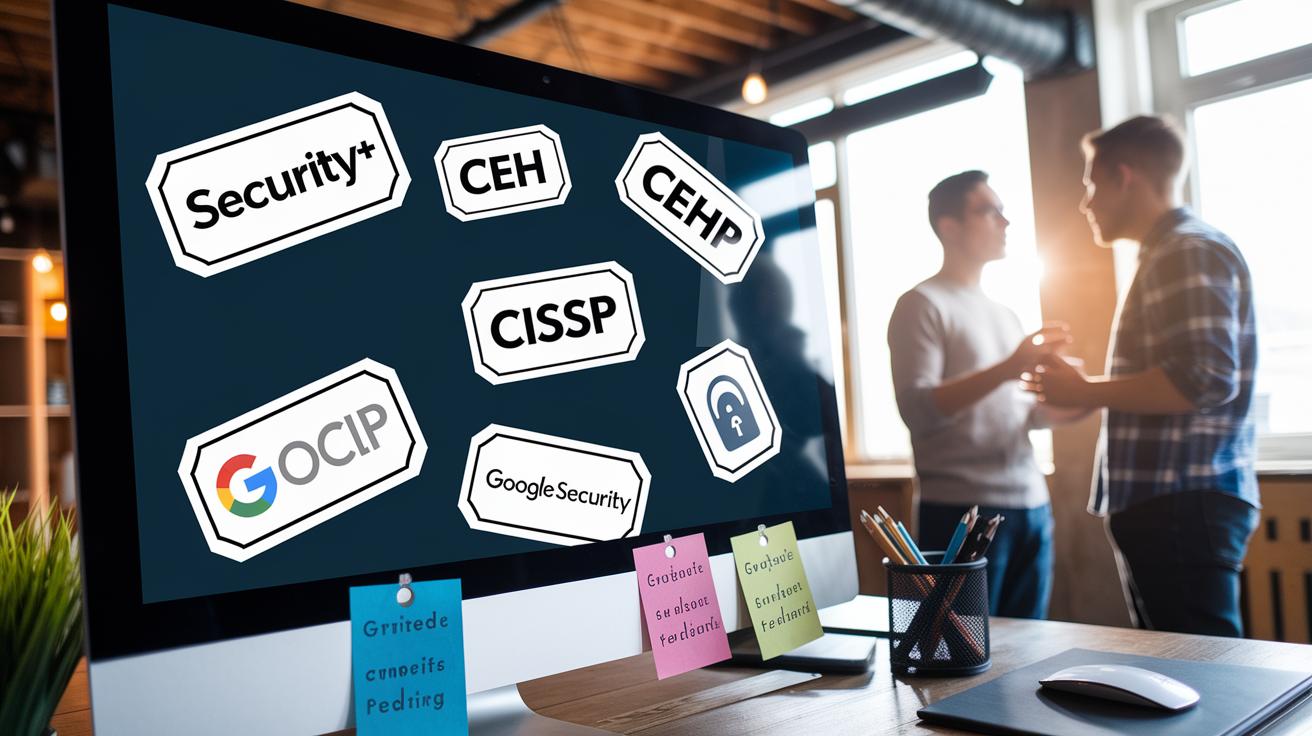
When you dip your toes into cyber security certifications, you quickly find that exam fees can really vary. For instance, you might shell out about $349 for a Security+ test, but if you go for the Certified Ethical Hacker exam, you could be looking at as much as $1,199. Then there’s the CISSP exam at roughly $749 and the OSCP exam, which might cost up to $1,499. And if you’re more into spreading out your expenses, the Google Cybersecurity Professional Certificate comes in with a monthly fee of around $39 to $49. Whether you've got a tight budget or you're set to invest a bit more, there’s a certification that might just fit your career goals in digital defense.
Looking at the money side of things, these certifications can really pay off. People with a Security+ certificate often earn about $75,000 a year. If you hold a Certified Ethical Hacker credential, your salary might average around $90,000. Those with a CISSP can see their earnings rise to nearly $130,000, and OSCP holders typically make close to $110,000. Most folks manage to cover their exam costs within 6 to 12 months thanks to these bumps in salary. In short, getting certified not only builds up your skills but can also bring you a fast return on your investment, making it a smart move if you're eyeing career growth.
Career Pathways and Impact of Cyber Security Certifications

Cyber security certifications can really open up a world of job opportunities with attractive pay. With these certifications, you might land a role as a Security Analyst, earning around $80k to $110k, or work as a Penetration Tester with a salary between $90k and $120k. If you’re interested in leadership, you might become a Security Manager, making roughly $100k to $140k, or even climb to a CISO position, which can pay over $180k. These credentials offer a practical alternative or addition to a traditional degree by letting you prove your hands-on skills in today’s fast-changing security world.
As a Security Analyst, your job would mainly involve watching over networks and spotting potential threats using basic tools learned in certification courses. Penetration Testers use what they learn in ethical hacking programs to check systems for weak spots, helping build stronger defenses. If you’d rather lead a team, a Security Manager role mixes technical knowledge with management skills to keep security operations running smoothly. And for those aiming really high, the CISO role demands deep experience and advanced certifications to oversee a company’s entire cyber defense strategy.
Staying at the top of your game in cyber defense means you have to keep learning. Professionals need to update their skills and renew credentials through continuing professional education (CPE) credits, a step that ensures they’re ready for the ever-evolving challenges of digital security.
Final Words
In the action, this article laid out a clear comparison of cyber security certifications, from entry-level basics to advanced credentials that open new career paths. We walked through cost breakdowns, study strategies, and how industry growth makes these certifications a smart move. The detailed guide helps pinpoint the right program whether you're strengthening fundamentals or building specialized skills. It all combines to show that staying ahead in tech is within reach, embrace these cyber security certifications as a stepping stone to a thriving career.
FAQ
What cyber security certifications are available and what options do they include?
The available certifications cover a range of options such as online programs, free courses, and accredited schools. They provide paths from entry-level to advanced proficiency, helping you choose a route that suits your career ambitions.
What are the best cyber security certifications for beginners?
The best beginner certifications introduce core concepts with accessible coursework and affordable fees. They build a solid base, making it easier to transition into specialized roles later on.
What are the typical costs associated with cyber security certifications?
Certification fees vary widely—from lower-cost entry exams to more expensive, rigorous programs. The investment often pays off with enhanced job prospects and potential salary increases.
Which cyber security certifications offer the highest salaries?
High-paying certifications focus on advanced skills and industry leadership. Credentials like CISSP, CEH, and OSCP are well-regarded and can open doors to roles with substantial financial rewards.
What cyber security certifications does Google offer?
Google offers a Cybersecurity Professional Certificate that provides structured, online training. It covers essential topics and practical skills, serving as a valuable entry point for those new to the field.
What do online discussions, like those on Reddit, reveal about cyber security certifications?
Discussions on platforms such as Reddit share firsthand experiences and insights. They offer tips on exam preparation, program effectiveness, and real-world benefits of various certifications.
What are considered the best certifications to have for cyber security?
The best certifications combine industry recognition with practical skill validation. Options like Security+, CISSP, and CEH help boost credibility and expand career opportunities.
Can a career in cyber security lead to a $200,000 annual salary?
Achieving a $200,000 salary is attainable in cyber security with advanced certifications and experience, especially in roles like CISO or senior analyst where critical expertise is highly valued.
Is 30 too old to start a career in cyber security?
Being 30 is not a barrier to entering cyber security. Many professionals successfully transition into the field by leveraging certification programs that emphasize practical skills and career growth.
Is investing in a cyber security certificate worth it?
Investing in a certificate is worthwhile as it validates essential skills, builds industry credibility, and often leads to improved job prospects and long-term career advancement.
What can one expect from cyber security certification tests and bootcamps?
Certification tests and bootcamps provide intensive, practical training. They focus on real-world scenarios and hands-on labs, preparing you for the challenges of professional cyber defense roles.