


Ever wonder how a few curious minds can change our view of space? At NASA's Jet Propulsion Laboratory, a small team of creative researchers from Caltech kicked things off, setting the stage for some truly historic space moments. Today, JPL keeps surprising us with bold missions that explore our solar system and even reach farther. This story shows how the lab’s rich past and exciting projects not only put America on the space map but also keep pushing the boundaries of science and technology.
Introducing NASA’s Jet Propulsion Laboratory (JPL)
JPL got its start in 1936 when a handful of curious researchers at Caltech set the stage for what would become groundbreaking space research. By 1958, the lab joined NASA as a federally funded research center, managed by Caltech, a collaboration that still fuels its innovative spirit today.
Today, JPL is known for its work in planetary exploration, studying Earth, exploring space-based astronomy, and developing new technologies (tools and methods that push our limits). Their work is guided by values they call Bold, Inclusive, and Trusted. These core principles help a team of 9,322 dedicated staff members break new ground in science and engineering.
Here's what they focus on:
- planetary exploration
- Earth science
- space-based astronomy
- technology development
JPL is always finding fresh ways to tackle tough technical and scientific challenges. With a mix of new engineering ideas and creative research methods, they turn state-of-the-art concepts into real breakthroughs that benefit both our nation and the world.
Historical Foundation and Legacy of JPL

JPL started back in 1936 when a handful of creative Caltech researchers set out to explore new frontiers. By 1958, NASA began funding the lab, kicking off a partnership that still sparks breakthrough space research today.
Pretty soon, the team made waves by building America’s first Earth-orbiting science satellite, a major milestone that put the nation on the space exploration map. Not long after, they launched the first spacecraft to travel between planets, showing that with careful planning and bold design, reaching beyond our world is definitely within reach.
Even now, JPL’s early achievements still light the way for modern space projects. Their work keeps driving research that stretches our understanding of the solar system and what lies further out in the cosmos.
JPL NASA Key Missions and Planetary Discoveries
JPL’s work is truly inspiring. They’ve taken on challenges from launching the very first science satellite in the U.S. to making groundbreaking trips between planets. Their projects mix historical firsts with today’s impressive achievements, all aimed at deepening our understanding of the solar system and beyond.
| Mission | Launch Year | Objective |
|---|---|---|
| Explorer 1 | 1958 | First U.S. Earth-orbiting science satellite |
| Mariner 2 | 1962 | First successful interplanetary spacecraft |
| Voyager | 1977 | Exploration of outer planets and interstellar space |
| Cassini | 1997 | In-depth study of Saturn and its moons |
| Juno | 2011 | Investigation of Jupiter’s atmosphere and magnetic fields |
| Perseverance | 2020 | Mars rover exploring surface geology and climate (NASA Mars Rover) |
When you dig into JPL’s track record, every mission feels like a step into the unknown. From the spark of Explorer 1 to the gutsy spirit of Perseverance, each launch is a leap forward in our cosmic adventure. Their efforts help us understand not just nearby planets but the whole mysteries of space, driving technological innovation along the way. It’s like they’re inviting us to keep dreaming big and reach even further into the stars.
Technological Breakthroughs at JPL NASA
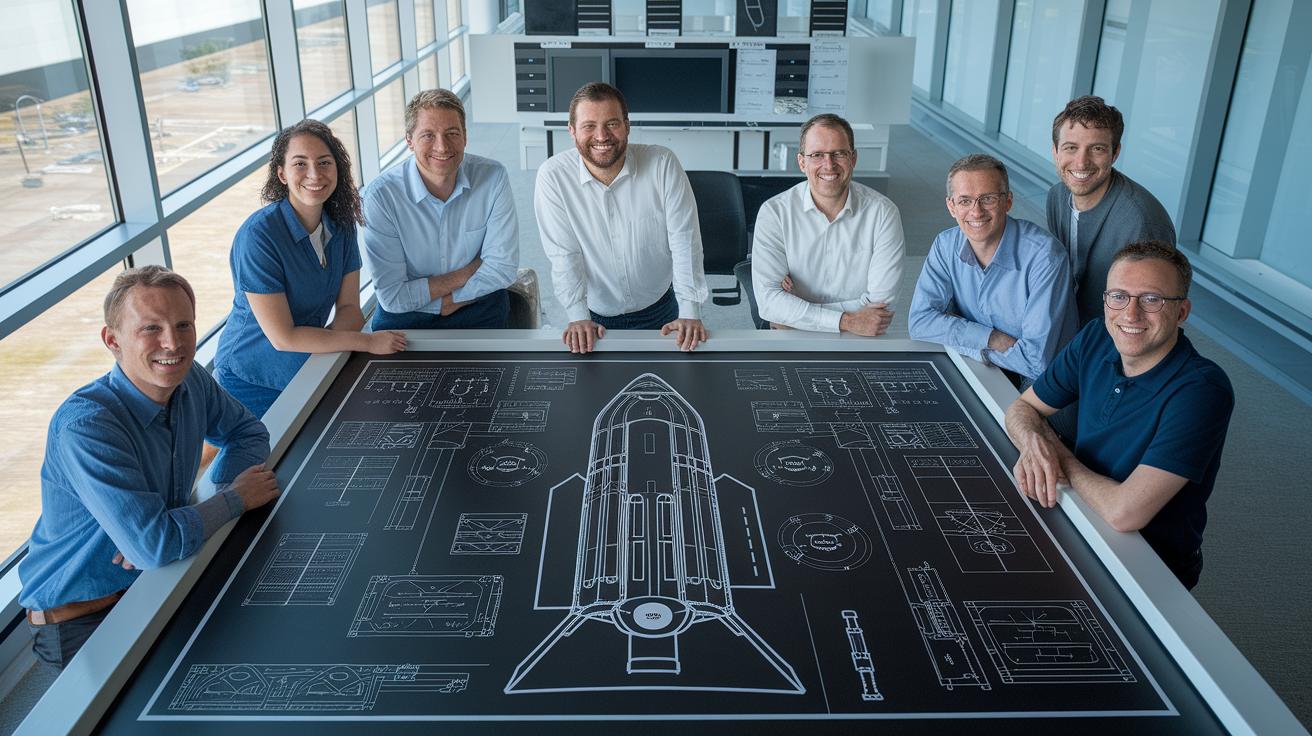
At JPL, NASA engineers are tackling big challenges with fresh, creative approaches that break away from old habits. They’re using new design ideas and the latest tools to boost deep-space communications, experiment with next-generation propulsion (that’s the tech behind how spacecraft move), and power missions with high-performance computing (really fast computers solving big problems). Imagine it like reworking an old engine to run on an entirely new fuel, each adjustment brings more efficiency and reliability. It's a bit like watching a team fine-tune a data relay until it almost hums, letting far-off spacecraft chat clearly across billions of miles.
They’ve also reached some exciting milestones. For example, they upgraded their deep-space network for smoother connectivity, ran propulsion tests that push us closer to safer and faster space travel, and worked with NSF and global experts to create advanced infrared instruments for sky research. Picture a little sensor that, after hours of careful tweaking, captures crisp images of galaxies light-years away, that’s the kind of breakthrough that drives JPL’s innovation. These wins aren’t just technical achievements; they’re stepping stones to exploring even more demanding space frontiers.
Each of these advancements sets the stage for future missions, giving JPL the tools to push deeper into the cosmos and keep breaking limits.
jpl nasa shines with historic and current missions
JPL NASA is hard at work with projects that study our Earth and the stars. They recently joined forces with SpaceX to send up a US-European satellite that keeps tabs on our oceans, helping us watch over our home planet. Around the same time, they started an infrared sky survey with NSF (that’s the National Science Foundation) to collect new data from space and give us a fresh peek into our vast universe.
Looking forward, JPL is mixing robotics with clever research in its next projects. Upcoming missions like the Europa Clipper and the Psyche mission will explore icy moons and metal-rich asteroids. Imagine a little robot bravely wandering into unknown worlds to pick up clues about what’s out there. This plan shows a clear path to learning more about interplanetary probes and pushing the limits of space exploration.
By fine-tuning ways for small machines to tackle big challenges, JPL is paving the way for tech-driven discoveries. With new approaches in robotics and mission planning, they’re setting up long-term projects that could change how we explore our solar system. Every step invites us to marvel at a mix of today’s innovations and the exciting possibilities of the future.
Careers and Visitor Experiences at JPL NASA

At JPL, there are plenty of career openings and internships for anyone excited about aeronautics and space science. Whether you're interested in engineering, project management, research, or design, there's something for you. They even have special roles for commercialization, senior research scientists, and experts in AI or autonomy (technology that lets machines work on their own). You get a chance to work on real projects and experience the fast-paced world of space science up close.
If you’re curious to see where the magic happens, JPL has you covered. They host public tours and fun science events that let you step behind the scenes of one of the nation’s most innovative research labs. Open-house events and guided campus visits offer a close look at day-to-day work and ongoing projects. It’s a great way for students, teachers, and alumni to get a feel for life in space science. With over 1.15 million followers on their website, it’s clear that many people are inspired by their pioneering work. These experiences not only highlight amazing achievements but also spark ideas about future careers in space exploration and related fields.
Final Words
In the action, this post explored jpl nasa’s early beginnings, mission milestones, and engineering breakthroughs that have shaped space exploration.
It highlighted key areas like planetary exploration, Earth science, space-based astronomy, and innovative technology development while also touching on career and visitor opportunities.
By covering these themes, the piece shows how jpl nasa continues to tackle scientific challenges with creativity and passion.
We end on a hopeful note, eager to see what exciting advancements come next.
FAQ
Q: What does JPL do for NASA?
A: The role of JPL for NASA is to develop and manage space missions, robotics, and advanced technology that support planetary exploration, Earth science, and space-based astronomy.
Q: Is JPL part of NASA or Caltech?
A: The relationship of JPL to NASA and Caltech is that JPL is a NASA-affiliated research center managed by Caltech, forming a unique partnership that fuels innovative space technology.
Q: What is the difference between NASA and JPL?
A: The difference between NASA and JPL is that NASA is the federal agency responsible for space exploration, while JPL is a federally funded research center focused on mission design and technology development under Caltech’s management.
Q: Are JPL employees NASA employees?
A: The employment of JPL staff means they are not direct NASA employees; they work for JPL, which is managed by Caltech and funded by NASA, thereby contributing indirectly to NASA’s missions.
Q: What kind of organization is JPL?
A: The identity of JPL is that of a federally funded research center specializing in planetary exploration and space-based astronomy, enabling significant advances in science and technology for NASA.
Q: Where can I find JPL news, live updates, photos, and job opportunities?
A: The sources for JPL news, live mission updates, photos, and career opportunities are the official JPL website and NASA press releases, providing the latest insights and information on their projects.
Q: When are JPL launch dates and live events scheduled?
A: The scheduling of JPL’s launches and live events happens through NASA’s official launch schedule and JPL’s update channels, offering real-time tracking and detailed project announcements.
Q: Does JPL work on aircraft for NASA?
A: The focus of JPL’s work is mainly on space probes, robotics, and deep-space technology rather than designing or operating aircraft, which remain outside its primary mission scope.