


This week in AI felt less like a steady march and more like an explosion. Labs, startups, and incumbents all pushed boundaries at once: humanoid robots picked up novel tasks, ChatGPT-style assistants gained the ability to control apps, zero-code platforms let anyone build autonomous agents, and estimates put roughly $18 billion flowing into NVIDIA GPUs. Samsung announced an efficiency-first model that challenges the 'bigger is better' orthodoxy, while questions about a widely cited AI report tied to Deloitte underscored the reputational risks of sloppy hype. Below we unpack each headline, what it means, and what to watch next.
This Week in AI: Pure Chaos and Rapid Shifts

This week didn’t just bring news , it brought tectonic shifts. From robots demonstrating hands-on adaptability to language models pushing beyond chat into app control, the pace and breadth of progress stunned observers. Massive compute bets keep pouring into GPUs while efficiency research quietly undercuts the assumption that the biggest models always win. At the same time, an ethics flare-up around a high-profile AI report served as a reminder that credibility matters as much as capability. Read on for a closer look at each development and its real-world implications.
Humanoid Robot Learns New Tasks
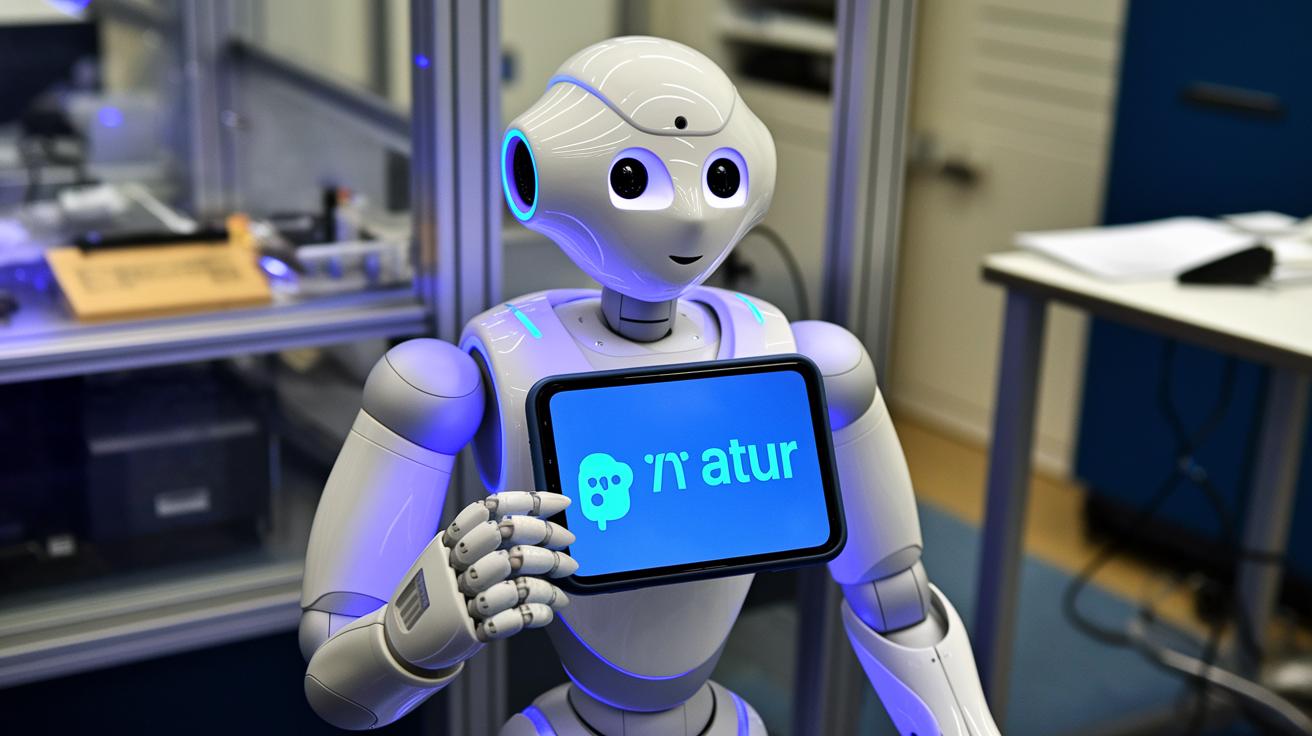
A prominent robotics demo showed a humanoid platform learning new tasks with minimal retraining, combining imitation, online adaptation, and modular control strategies. Instead of custom-coded behaviors, the system generalized to unfamiliar objects and sequences by reusing learned skills and lightweight fine-tuning methods. That sounds academic, but it’s a big step toward flexible automation in warehouses, manufacturing, and care settings where environments change constantly. The demo isn’t a plug-and-play solution yet , safety, durability, and cost remain barriers , but it marks growing confidence that robots can move from rigid automation to adaptable assistants.
ChatGPT Can Now Control Apps

Natural-language agents are moving from passive assistants to active controllers. This week highlighted new integrations and tooling that allow ChatGPT-style models to invoke APIs, fill forms, schedule events, and orchestrate multi-step workflows across apps. For end users that means true conversational automation: ask for a meeting, and the assistant books it across calendars and notifies participants. For enterprises it opens automation potential in support, sales, and ops. But handing apps to models raises permission, privacy, and auditability concerns , expect fresh UX patterns for consent, scope-limited access, and enterprise governance controls.
Build AI Agents With Zero Code

No-code agent builders became a headline this week as platforms offered drag-and-drop composition of tools, data connectors, and LLM prompts into autonomous agents. Teams can now prototype workflow bots, content assistants, or domain-specific helpers without writing glue code. That democratizes innovation, letting product managers and analysts iterate quickly. The downside: governance often lags capability. Unsupervised agents can exfiltrate data, run up cloud bills, or take harmful actions. Organizations adopting zero-code agent platforms will need templates, logging, permissions, and review workflows to balance speed with safety and compliance.
$18B Spent on NVIDIA Chips , The Compute Arms Race

Estimates circulated this week suggesting roughly $18 billion flowed toward NVIDIA GPUs and related infrastructure, underscoring how compute remains the fuel for frontier AI. Cloud providers, enterprises, and research labs are racing to secure capacity for larger models and faster iteration. That concentration of demand reinforces NVIDIA’s market power, pressures supply chains, and encourages rival silicon and custom-AI chip efforts. It also raises energy and sustainability questions: more datacenter capacity means higher power needs unless paired with efficiency improvements. Expect continued focus on model optimization, hardware specialization, and geopolitical supply concerns.
Samsung Outperforms Billion-Parameter Models (Efficiency First)

Samsung announced research claiming an efficiency-first model that rivals much larger parameter-count systems on certain benchmarks. The company emphasized hardware-aware tuning, quantization, pruning, and architectural tweaks that deliver stronger performance-per-parameter and enable on-device inference. If independently verified, this would be a meaningful nudge against the idea that scaling alone is the path to progress , enabling advanced capabilities on phones and edge devices while lowering latency and energy use. Skeptics will want reproducible benchmarks and open evaluations, but the direction , hardware-aware, efficient model design , is now a major competitive front.
Consulting Ethics Flashpoint: Questions Around an AI Report

A reputational snag hit the consulting world this week when social posts and coverage raised doubts about a widely cited industry report tied to a major firm. Allegations focused on possible misrepresented methodology and selective sourcing, prompting calls for clarification and stronger third-party validation. Whether the issue stems from overzealous marketing or genuine misconduct, the episode highlights a growing need for transparency, auditability, and independent review in AI claims. Clients, regulators, and the media are increasingly skeptical of flashy numbers; credibility now matters as much as technical prowess.