


Have you ever thought a simple drawing could unlock the mysteries of quantum puzzles? Quantum computing diagrams work like clear guides that show how qubits (tiny particles that can be in two places at once) operate in circuits. Unlike regular bits that stay fixed on one value, qubits can hold two values simultaneously, imagine a spinning coin that seems to show both heads and tails at the same time. With bright colors and simple shapes, these diagrams turn complex quantum ideas into something easy to see and understand. In this article, we'll walk you through each part step by step, making the world of quantum circuits approachable and clear.
Understanding Quantum Computing Diagram Fundamentals
Diagrams in quantum computing act like maps that help us see why this technology is so unique. Instead of using bits that stick to being either 0 or 1, quantum systems use qubits that can hold both values at the same time. Think of a qubit as a circle split into two parts, one half for 0 and the other for 1. It’s a bit like Schrödinger’s Cat, where until you check, things can be in two states at once.
In these visuals, you'll notice a clear difference. Traditional binary bits appear as fixed, unchanging nodes. But qubits are drawn with overlapping symbols that hint at their flexible nature. They often use smooth gradients or merging colors to show that they represent both states simultaneously. Imagine watching a coin spin in the air, blurring the line between heads and tails.
These clear, playful visuals turn complex ideas into something more approachable, letting us all get a glimpse into the exciting world of quantum computers.
Quantum Computing Diagram of Qubit Circuit Components
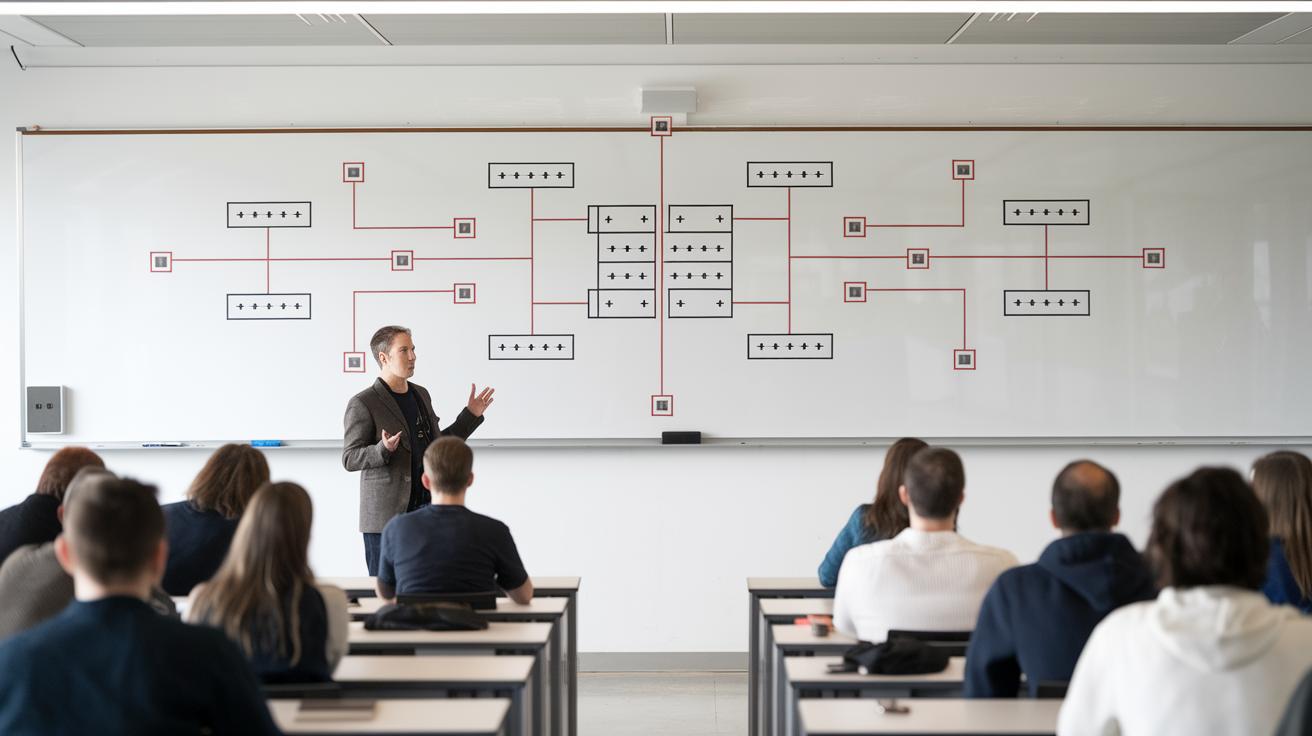
Quantum computing diagrams are like simple maps for qubit circuits. They show how different commands and “gates” (steps that guide a process) work together. These block diagrams help us follow the journey of qubit wires, control nodes (points where decisions are made), and measurement blocks (parts that read data). Sometimes, the diagram looks like a handy cheat sheet from 12 Apr 2022 that lays out each step and even points out alternative routes for quantum information. This design makes it clear how qubits – those tiny carriers of information – move through a series of operations that feel both steady and exciting. If you’re curious to learn more about qubits, you might want to visit a site dedicated to quantum computing qubits.
Many of these diagrams follow a familiar layout. They display a row of qubits as parallel lines, with logic gates (components that change the qubit states) placed one after the other. Control nodes work like little decision-makers between the qubits, and special measurement blocks mark where the circuit’s information is read at the end. Every element fits together nicely, making even the tricky ideas behind quantum technology easier to understand.
Here’s a handy table that breaks down the main parts:
| Component | Symbol | Function |
|---|---|---|
| Qubit Wire | ─ | Connects different parts of the circuit to pass along quantum information |
| Control Node | • | Acts as a decision point to start conditional operations between qubits |
| Measurement Block | M | Reads the final state of a qubit once the circuit has finished |
Quantum computing diagram: Spark Clarity in Circuits
Quantum circuit diagrams are like maps, showing how quantum gates twist and flip qubits’ states. They use simple symbols to represent the tricky changes happening inside these very small bits, making it easier to see how everything connects on a circuit layout.
One key player is the Hadamard Gate. You might picture it as a special box that splits a qubit’s chance of being 0 or 1 exactly in half, kind of like flipping a fair coin. When you see a qubit enter a Hadamard box and come out with equal odds, it’s a clear visual hint of something called superposition (where a qubit can be both 0 and 1 at the same time).
Then there’s the Pauli-X Gate. This one works like a simple switch, it flips the qubit from 0 to 1 or from 1 to 0. Its symbol is straightforward because its only job is to change the state directly, much like turning a light switch on or off.
Another important gate is the Controlled-NOT Gate, which involves a duo of qubits. In these diagrams, you see a control node linked to a target symbol. Here’s the neat part: if the control qubit is 1, the gate flips the target qubit’s state. It’s shown in a clear, step-by-step way that makes the relationship between the two qubits easy to follow, much like connecting dots in a friendly game.
Hope this gives you a clearer picture of how quantum circuits work and how each gate plays its role in transforming what a qubit does!
Advanced Quantum Computing Diagram for Hardware Architectitectures
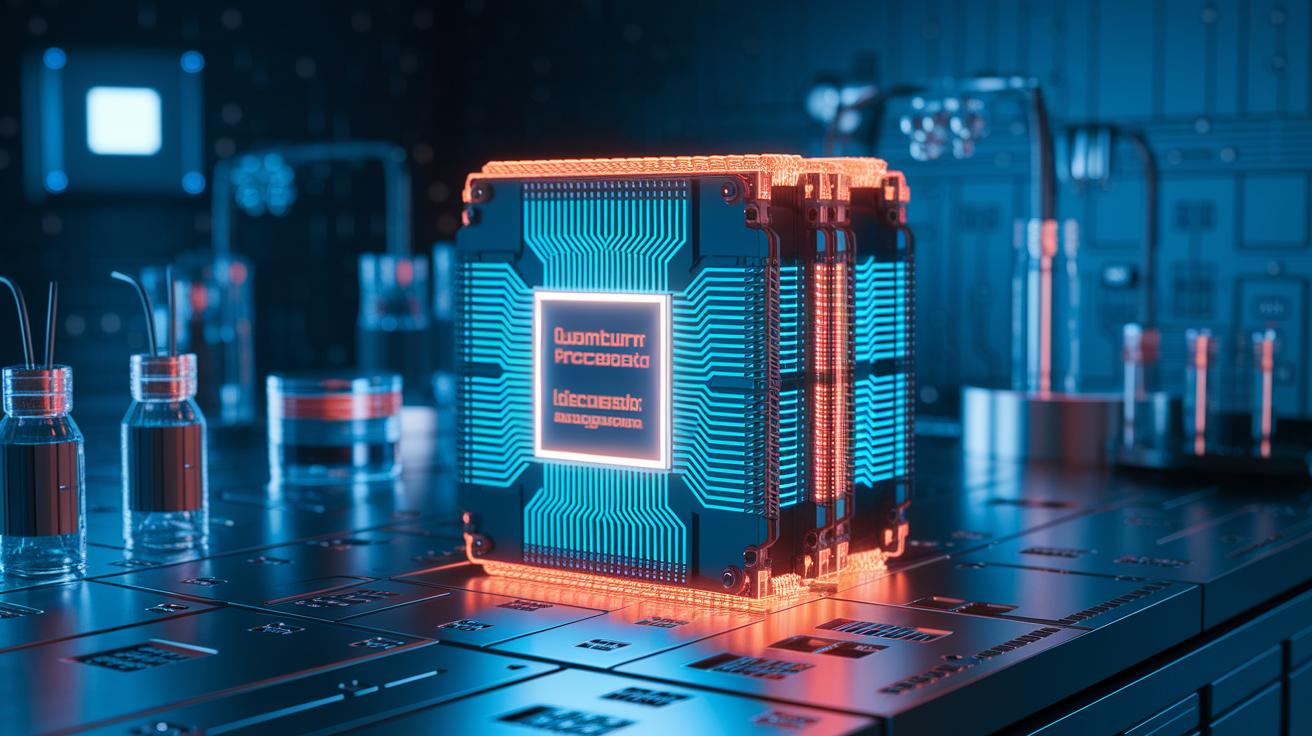
Quantum computing diagrams might seem complex at first glance, but they really act as high-level maps of how hardware is set up. They show processor cores and qubit connections, almost like blueprints that highlight the pathways where quantum signals move. Imagine each processor core as a mini control center, connected to others by visible channels that guide the flow of quantum information.
Engineers and developers use these visuals to get a clear picture of how hardware and software development kits work together. They help turn abstract ideas into organized, real-world operations. Picture a diagram showing a core module linked by several channels to its neighbors, symbolizing smooth and coordinated processing, making the whole system easier to understand.
These diagrams blend technical detail with a clear visual language, so experts can plan, troubleshoot, and improve quantum hardware systems. It's like watching the intricate dance of quantum signals, each step contributing to the system’s overall performance.
Final Words
In the action, we dove into a quantum computing diagram that brings light to the contrast between traditional binary bits and versatile qubits. We broke down circuit components and quantum gates, making it simple to grasp how superposition gives qubits their dual life.
Short layouts and clear symbols helped us see the structure behind hardware architectures too. Such insights pave the way for exciting tech discussions and smart decision-making in the world of science and technology.
FAQ
What is a quantum computing diagram simple?
A simple quantum computing diagram uses clear symbols to represent qubits, gates, and their interactions. It helps show how qubits can hold both 0 and 1 at once, making the complex ideas easier to understand.
What is a quantum computing diagram pdf?
A quantum computing diagram pdf is a document file that displays qubit circuits and gate operations in a fixed layout. It offers a visual guide to understanding quantum architectures with labeled components.
What is a quantum computing diagram for beginners?
A quantum computing diagram for beginners breaks down complex systems into easy-to-follow parts like qubits, gates, and wires. It helps new learners grasp basic concepts of quantum circuits without the technical overload.
What is a quantum computer?
A quantum computer uses the principles of quantum physics to process information. It relies on qubits, which allow for simultaneous 0 and 1 states, potentially solving certain problems faster than standard computers.
What is quantum computing with example?
Quantum computing uses qubits that can be in multiple states simultaneously. For example, a quantum algorithm can explore many solutions at once, making it more efficient for certain problem-solving tasks than classical methods.
What are quantum gates?
Quantum gates act on qubits to change their states, similar to how logic gates work in classic circuits. Examples include Hadamard, Pauli-X, and Controlled-NOT, each performing specific operations that alter qubit information.
What are quantum circuit examples?
Quantum circuit examples illustrate how qubits pass through various gate operations. These diagrams mark qubits, control nodes, and measurement points, offering a step-by-step view of how quantum information is processed.
Who invented quantum computing?
The invention of quantum computing is credited to pioneers like Richard Feynman and David Deutsch. Their early work on quantum theory laid the foundation for using qubits and quantum mechanics in computing.
What are the 5 main components of quantum computing?
The five main components in quantum computing include qubits, quantum gates, measurement devices, control circuits, and error correction methods. Diagrams often visualize these parts to show their roles in a functioning system.
Why did NASA shut down the quantum computer?
NASA shut down its quantum computer project due to technical difficulties and strategic reassessments. The decision was part of an effort to focus on more dependable technologies for space research.
What does Elon Musk say about quantum computing?
Elon Musk has expressed caution about quantum computing, noting its challenges and the potential risks of integrating it into broader technology ecosystems. His views remind us to consider both potential benefits and limitations.
What exactly is quantum computing?
Quantum computing is a method that uses quantum phenomena like superposition and entanglement to process data. For more details on what is quantum computing, visit this link.