


Have you ever wondered if computers could learn as naturally as water flows in a river? Liquid neural networks work on that idea by changing their behavior on the spot. They adjust and flow smoothly, much like water finding its way around obstacles.
Instead of needing huge, pre-sorted sets of data, this system uses everyday information. In a world where many AI models get tripped up by messy input, these networks show a promising path toward smarter, more flexible technology.
Liquid Neural Networks Defined
Liquid neural networks, or LNNs, are a new way of learning that breaks from traditional methods by working in a fluid, adaptable style. They draw inspiration from how our brains process information continuously (think of it like a smooth, ongoing stream of data). Imagine a river that constantly shifts its path with every twist, that’s much like how LNNs operate.
Unlike older models that run on fixed routines and repeated loops, LNNs adjust in real time. They refresh their memory with every new piece of information, which means they don’t need huge, pre-tagged datasets to learn effectively. This lean design lets them handle tasks like spoken language or tracking time-series data on the fly.
By processing information continuously rather than in chunks, LNNs challenge the old idea that more data is always better. They blend each new input seamlessly with what they already know, forming flexible ideas about time. And while traditional networks might stumble over unexpected or messy data, LNNs quickly adapt, making them both sturdy and swift.
In short, liquid neural networks mix precise technology with the natural, ever-changing way our minds work. Each moment brings a chance to learn something new, paving the way for smarter, more responsive AI that transforms how we handle sequential data.
Architecture and Dynamics of Liquid Neural Networks
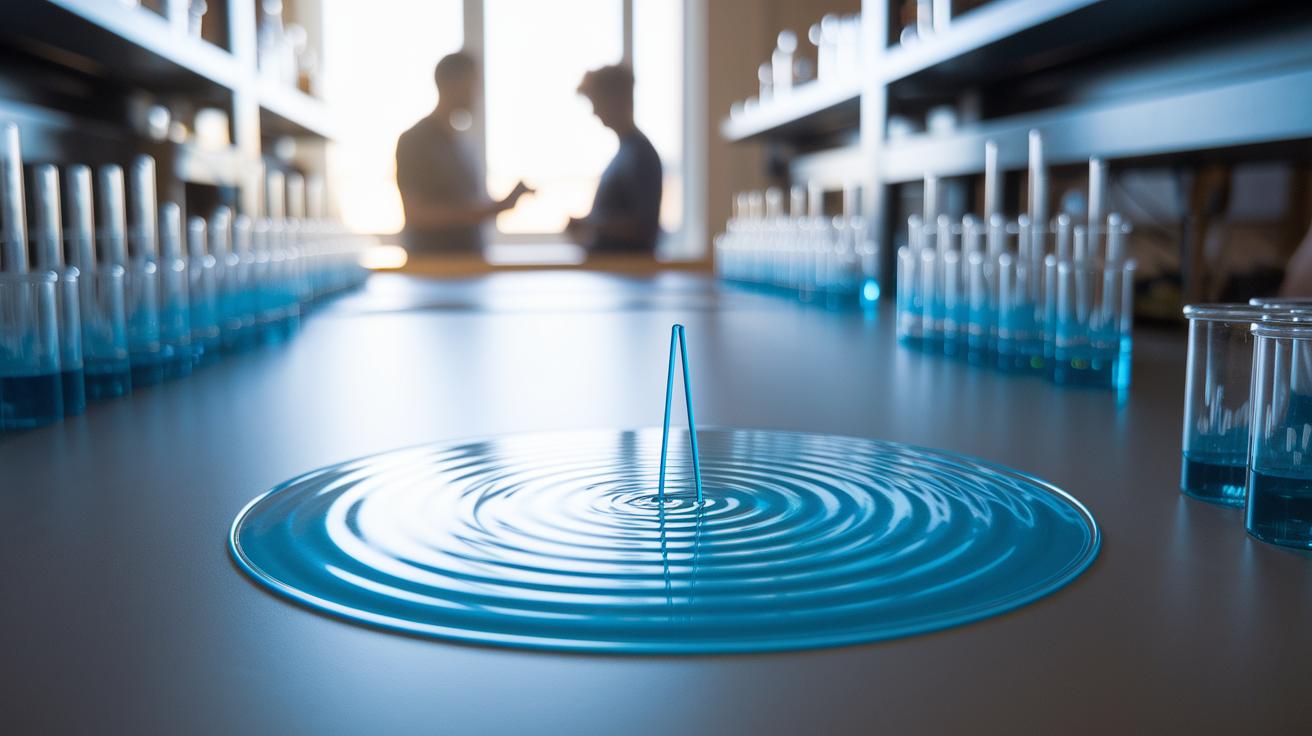
Liquid neural networks use small nodes that act a bit like droplets of water. Imagine each node as a tiny splash that changes shape smoothly when something new comes along. It’s like watching a drop of liquid flow around an object, always adjusting to its surroundings.
These nodes update themselves with flexible timers, letting them change on the fly even when the data is a bit messy. This built-in adjuster works like a natural filter that keeps everything running smoothly. The design takes a page from nature, copying how living things adapt to change without missing a beat.
Instead of using old-school fixed loops, these nodes stay in a liquid state where they easily mix past information with new input. That means the system doesn’t need a full retraining every time something shifts. It’s part of what we call dynamic fluid AI, a blend of simple design with constant updates. Researchers even call it computational fluid intelligence because it handles tough tasks with fewer parts while still doing a great job. You can check out more details on neural network architecture here: https://fairlygreat.com?p=1202.
At its core, the magic comes from adaptive time systems that help the model flourish under changing conditions. Since it adjusts continuously without relying on rigid loops, the network learns in real time, making it responsive, efficient, and smart.
Continual Adaptation Mechanisms in Liquid Neural Networks
Liquid neural networks constantly adjust their settings using special rules. Think of it like a small formula, dW/dt = -η · ∇(error) (where η tells you how quickly the system learns and ∇(error) shows the direction of the mistake). Even the tiniest change in a signal can spark a quick, little update.
These smart models let different parts learn at different speeds. For instance, one part might snap into action when it detects fast, changing sensor data, while another part makes slow, steady tweaks for more consistent inputs. It’s like each section has its own personal clock, which is pretty cool.
Research has shown that when a model keeps fine-tuning itself continuously, it can handle unexpected changes in its input. It’s a bit like knowing when to quickly switch lanes on a busy highway when you see a sudden obstacle.
| Feature | Description |
|---|---|
| Differential Update Rule | Ongoing adjustments made with a formula: dW/dt = -η · ∇(error), where small changes lead to immediate tweaks. |
| Variable Time-Scale Adaptation | Different parts of the network update at their own pace, some quickly, others slowly, depending on the data. |
Comparing Liquid Neural Networks and Recurrent Neural Networks

Traditional recurrent neural networks use fixed time steps and loops to pass along information. They work in step-by-step updates, which can be a problem when data shifts quickly, like in everyday scenarios. In contrast, liquid neural networks are more like a river, they adjust continuously as time flows, rather than sticking to set intervals.
Liquid models build lean, responsive systems. They can react to new inputs almost immediately, blending what happened before with what's happening now. This smooth mix makes them great at managing unexpected or noisy data. Instead of being locked into a repetitive loop, they adapt on the fly, handling long-term patterns with ease.
RNNs can lose their edge with messy or rapidly changing data due to their fixed update steps. Meanwhile, liquid networks stay nimble, tuning their reactions in real time. Imagine a system that instantly adjusts when it spots a sudden change in a pattern, that’s the liquid approach at work. This shift from repetitive processing to smooth, continuous updates is paving the way for more flexible and dynamic models.
Biological Inspiration Behind Liquid Neural Networks
Liquid neural networks get their spark from nature. They take inspiration from simple creatures like the worm C. elegans, a tiny animal with just a few nerve cells that still manages to adapt to changes around it in real time. It’s pretty amazing to think that such a simple being can perform complex behaviors without a big brain.
These networks work much like living cells that constantly swap signals to react instantly to new situations. They adjust on the fly without needing a complete reset, similar to how our cells respond to the world around them. This clever design shows the idea of plasticity (the ability to quickly change and adapt) and sets the stage for more compact and efficient AI that learns as naturally as living organisms do.
Applications of Liquid Neural Networks in Time-Series Prediction

Liquid neural networks are stirring up some buzz in real-world projects. They’re used in everything from weather forecasting and speech recognition to helping self-driving cars navigate busy streets. Imagine a device that tweaks its predictions the moment the weather changes, almost like it’s reading the skies in real time. That’s how these networks keep sharp, even when the conditions get noisy and unpredictable.
In scenarios like autonomous flight, these networks really come into their own. They blend sensor data on the fly, giving pilots or automated systems a continuous, updated view of what’s happening. Think of it as having an expert co-pilot who recalculates the best route when sudden turbulence hits, turning chaos into steady navigation.
Their small size and constant learning ability also pop when resources are tight. Whether it’s running on a compact plane or fitting into a handheld device that converts live speech, liquid neural networks perform reliably. Picture a nimble helper that adjusts its knowledge sweep by sweep, ensuring smarter responses as new data rolls in.
- Liquid neural networks quickly process and merge fresh sensor information.
- They excel in settings where rapid adaptation isn’t just preferred; it’s absolutely necessary.
- Their minimal design means you don’t need bulky, resource-heavy systems, making them perfect for compact setups.
This ability to always evolve shows why liquid neural networks are such a promising tool when every second counts.
Research Publications and Educational Resources on Liquid Neural Networks
A free AI Agents Cheat Sheet and an engaging webinar have already reached over 100,000 curious minds. They offer an easy, down-to-earth look into how liquid neural networks work, covering ideas like continuous-time neural adaptation (that’s how neural systems adjust on the fly) and dynamic model design (creating models that shift and change in real time).
These resources break complex topics into simple, step-by-step insights. Imagine a brief explanation showing how a tiny tweak in steady data can set off adaptive changes, much like a small ripple expanding in a pond. It’s a clear way to see that even minor changes in a neural system can lead to major shifts in learning.
Here’s what you can expect:
- An AI Agents Cheat Sheet that uses everyday language to lay out the core ideas.
- A webinar that walks you through the real-time flow of how these neural networks adapt and evolve.
- A collection of research articles that dive into dynamic models and adaptive systems.
These educational tools not only clear up the science behind liquid neural networks but also point you toward more in-depth readings available in preprint archives on adaptive systems.
Liquid neural networks Spark Promising Advances
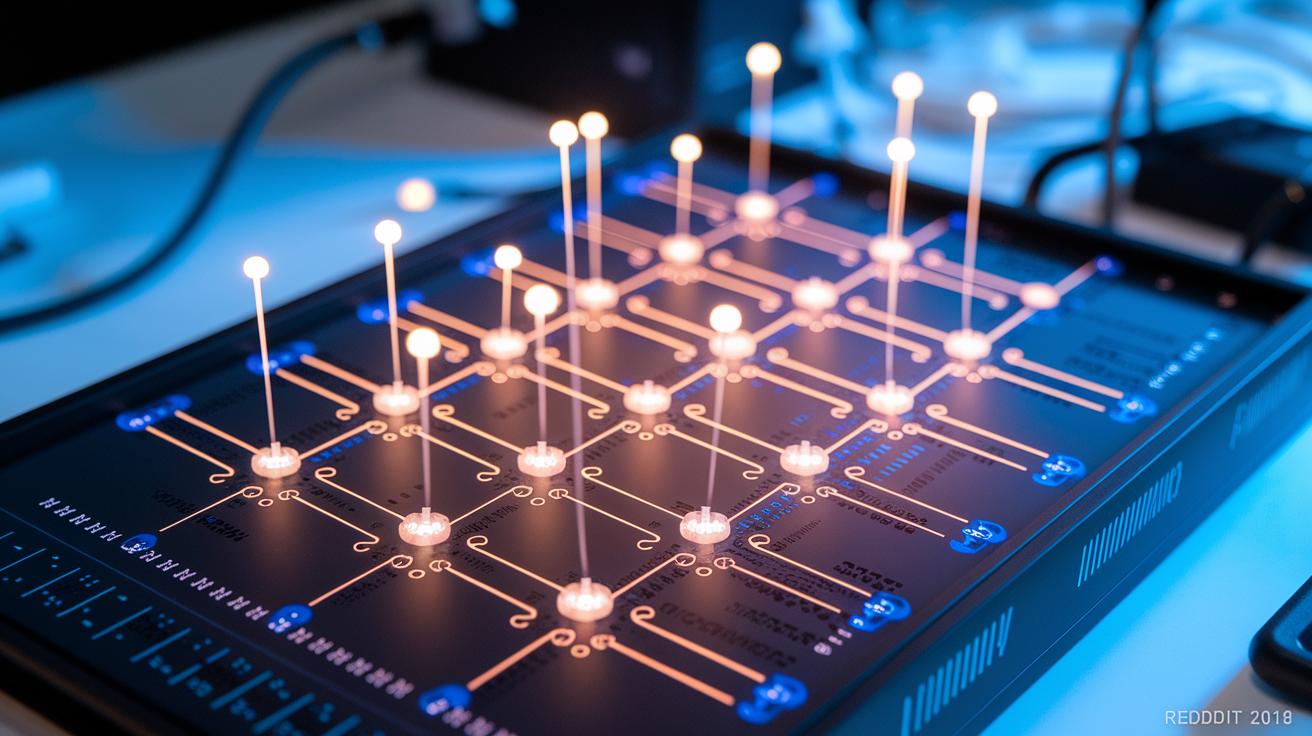
Liquid neural networks are showing some cool progress, even though they still face tough design and deployment challenges. They break away from the idea that "more is always better" by favoring small, efficient models instead of bulky ones. This choice means we need to carefully set up the rules that help the network learn (think of them as simple guides for adjusting to new information).
One big challenge is making sure these lean networks still capture all the important details. Imagine a sensor that needs to quickly handle noisy, ever-changing data, the model must stay steady even when things get unpredictable. It's like trying to balance a small boat in a choppy sea, a demanding task for any designer.
Researchers are busy exploring new ideas for these dynamic systems. They’re looking at ways to add smart tweaks to these models, often drawing inspiration from the simplicity of biological systems to keep performance high. Plans are also in place to optimize these networks for small devices, where being compact and energy-efficient is key.
Every small breakthrough in refining liquid neural networks brings us closer to systems that learn continuously, even under messy, high-pressure conditions. And that's what makes these innovations so exciting, each new solution paves the way for smarter, more adaptable AI in real-world, fast-changing environments.
Final Words
In the action, we explored how liquid neural networks push the boundaries of real-time learning by mimicking continuous biological signals and adapting on the fly. We broke down their compact design, real-time weight adjustments, and unique edge applications, from weather prediction to autonomous flight, illustrating their versatility in handling noisy, time-series data.
This fresh take on neural network tech shows a promising future, with ongoing research paving the way for practical, efficient solutions that keep liquid neural networks at the forefront of innovation.
FAQ
Where can I find liquid neural network resources like the paper, GitHub repos, MIT projects, Python code, LLM details, PDFs, and Telecom applications?
The liquid neural network resources cover research papers, GitHub repositories, and institutional projects from places like MIT. You’ll also find Python implementations, detailed PDFs, and insights on telecom applications in reputable online collections.
What is a liquid neural network?
A liquid neural network is an AI model that processes time-series data in a continuous, adaptive way, using fluid-like dynamics to learn and adjust in real time from evolving inputs.
What is the difference between a liquid neural network and an LSTM?
A liquid neural network uses continuous-time dynamics and fluid state adjustments for real-time learning, while an LSTM depends on discrete steps and fixed recurrent loops, often making it less adaptable to shifting data.
What problems can Liquid AI solve?
Liquid AI tackles challenges in real-time data processing, time-series prediction, and autonomous control in complex, noisy conditions. Its ability to learn continuously makes it effective where static models often struggle.
How do liquid networks make robots smarter?
Liquid networks boost robotic performance by processing sensor data on the fly and adapting quickly to changes, which leads to smarter navigation and handling of unpredictable, real-world environments.