


Have you ever wondered if computers could do something even smarter? Imagine a system that works on several puzzles at the same time, kind of like a coin that shows both heads and tails simultaneously. Quantum machine learning uses qubits (tiny units that can be in two states at once) to go beyond the usual, one-step-at-a-time math. This new way of crunching data is opening up exciting new possibilities in tech and science. It challenges the old methods and hints at a fresh wave of innovation that could change how we solve the toughest problems.
Quantum Machine Learning Foundations
Classical machine learning gets its power from doing tons of math on really strong GPUs (graphics processing units with thousands of cores) that work through linear algebra operations one step at a time. These models crunch numbers by following a set sequence of calculations, much like a recipe you can rely on every time.
Quantum machine learning, on the other hand, brings something truly exciting to the table with qubits. Qubits can explore several outcomes at once, almost like spinning a coin that doesn’t just land on heads or tails, but kind of shows both at the same time. This lets us go beyond just crunching numbers, opening doors to new ways of getting insights from data.
One of the coolest things about qubits is that they can stay in a state known as superposition (imagine a coin spinning in mid-air where it holds both possibilities). They also share a special connection called entanglement, which means they can be linked together in a way that classical bits never can. It’s like having a team that always works in perfect harmony.
Superposition and the vast space known as Hilbert space (a kind of room where all quantum states live) give rise to countless parallel paths for computation. This setup means that algorithms can pack and process data from many angles at the same time. Whether you’re training a model or sorting data into categories, quantum machine learning can tackle problems on multiple fronts simultaneously, handling challenges that would leave classical systems in the dust.
All in all, this fresh approach to data processing and pattern recognition is paving the way for technology that’s faster, more efficient, and full of potential. Have you ever wondered how it might feel to solve an intricate puzzle with a million pieces at once? Quantum machine learning is giving us a glimpse of that future.
Quantum Data Encoding Techniques in Machine Learning

State encoding is our first step in turning everyday data into a language that quantum circuits can understand. In regular computers, we work with simple bits. But here, we take that same info and transform it into qubits (the basic unit of quantum info) that can do amazing things like exist in multiple states at once. Basically, this method sets the stage for tapping into the unique abilities of quantum systems.
There are a few ways we can encode data into these quantum bits:
- Angle encoding: Each piece of data gets its own little rotation.
- Amplitude encoding: The entire set of data is packed into the amplitudes (the strengths) of a qubit.
- Basis encoding: Data is turned into a binary map spread over several qubits.
Choosing the right method really shapes how the quantum circuit works. For instance, angle encoding gives each data feature its own twist, which can simplify the design and keep things neat. Amplitude encoding, on the other hand, squeezes the entire data set into one state; this might make the circuit a bit more complicated but can capture more detailed patterns. Basis encoding uses a straightforward binary approach, balancing efficiency with power. Each option has its own pluses and minuses when it comes to how deep the circuit is, how well it works, and how much detail the method saves, all of which affect speed and accuracy in the quantum machine learning model.
Variational Circuits as Quantum Neural Networks

In variational circuits, the key players are quantum gates with settings you can adjust. Rather than using fixed gates, these circuits use rotation gates like RY(θ) that can turn to different angles. Just think of these rotations as layers in a regular neural network. Because they can change, they help the circuit catch even the smallest hints in the data, learning and adapting along the way.
Another important piece is the classical optimizer. It works closely with the quantum circuit by fine-tuning the angles of these rotation gates. The goal is simple, lower the cost (or, in everyday terms, make predictions as accurate as possible). By making small tweaks over and over, the optimizer reduces errors and guides the circuit towards a better setup. It’s a neat team effort between new quantum ideas and our trusted optimization methods.
A clear example is the quantum variational classifier, which you might use on datasets like two-moons. Here, the classifier stacks adjustable rotations, CNOT layers (think of them like quantum switches), and gates that link qubits together. This mix lets the model use quantum traits to spot patterns in the data, providing a fresh take on problems that once challenged traditional methods.
Hybrid Quantum-Classical Training Loops in Machine Learning

Imagine combining the magic of quantum computing with the steady reliability of classical methods. We kick things off by setting up a quantum circuit with some starting values, which lets the system try out lots of options at once. Then, based on the results we collect from these quantum experiments, we tweak the parameters. We keep doing this over and over until our overall measurement hits a sweet spot, showing that our model is getting better.
Here’s how the process typically flows:
- Start with an initial set of values (θ).
- Run the quantum circuit using these values (U(θ)).
- Check the measurement (⟨Z⟩).
- Adjust the values using a classical optimizer.
Mixing quantum evaluation and classical optimization brings a bunch of benefits. Quantum circuits can look at many possibilities at the same time, which opens up a wider range for finding solutions. Then, the classical optimizer uses these detailed results to fine-tune the settings precisely. In short, this combined method helps us solve really tough problems by harnessing both the parallel power of quantum computing and the reliable efficiency of classical algorithms.
Hardware and NISQ Considerations for Quantum Machine Learning
NISQ, short for noisy intermediate-scale quantum, describes today's quantum devices that pack between 50 and 1,000 qubits, tiny building blocks of quantum information, but they’re prone to noise and errors. These machines run without full error correction, meaning we still have to deal with imperfections in the quantum gate operations (the basic instructions that tell the qubits what to do). Right now, hardware limitations force us to work around issues like decoherence, when quantum states lose their balance. In a way, NISQ devices are like early prototypes that reveal both the exciting promise and the real challenges of using quantum processors in everyday applications.
Decoherence and faulty gates stand out as major error culprits in NISQ devices. To tackle these problems, scientists have come up with strategies like zero-noise extrapolation, which estimates what results might look like if the noise were nearly absent. Researchers and engineers are also trying out other methods to find the right balance between dialing down the noise and keeping the computational cost in check. After all, even tiny errors can mess up the delicate calculations needed for quantum machine learning algorithms.
Looking into the future, experts believe that to overcome today’s hardware issues, we might need around 1,000 logical qubits to run quantum support vector machines on something as complex as 100-dimensional images. This isn’t just a random number, it marks a major milestone in performance that could let us really unlock the potential of quantum machine learning. As quantum hardware gets better and more precise, we expect to see innovative models and enhanced simulations that could transform how we approach complex problems.
Benchmarking Quantum Machine Learning Performance
Quantum machine learning tests show some cool differences when compared to traditional methods. Early experiments suggest that when quantum setups are built to fit the natural shape of the data, they can sometimes do better than well-known classic techniques. For example, a 2021 study found that a 6-qubit quantum kernel outperformed a common support vector machine on made-up data. Other research hints that around 1,000 logical qubits (think of these as the building blocks in a quantum computer) might be needed to classify 100-dimensional image data with a quantum support vector machine.
| Experiment | Quantum Setup | Classical Baseline | Result |
|---|---|---|---|
| IBM 2021 Kernel Test | 6-qubit quantum kernel | Support vector machine | Better performance on synthetic data |
| QSVM Image Classification | Prototype QSVM with simulated logical qubits | Traditional classifier | Shows potential with 1,000 logical qubits |
Quantum models really shine when their circuit design closely mirrors the data’s natural structure. This match lets the circuits process lots of information at once, handling big, multidimensional data more smoothly. Projects that need to pick out subtle patterns or work with tricky data structures stand to gain the most. Essentially, the quantum method delves into the deep structure of the data in ways classic methods just can’t match. These early results hint that, with the right setup, quantum machine learning could boost the power of our current algorithms and offer a solid new tool for handling data-heavy challenges.
Practical Quantum ML Frameworks and Tools
Quantum machine learning is stepping into the spotlight with tools that make exploring quantum ideas as easy as using your favorite programming language. These frameworks let curious minds play with quantum algorithms without having to reinvent the wheel. By linking up with Python, they offer a friendly entry point into a world where classical computing meets the exciting potential of quantum power (think of it as blending the everyday with the extraordinary).
Here are a few key frameworks you might want to check out:
| Tool | Description |
|---|---|
| Qiskit | IBM’s toolkit for designing quantum circuits and experimenting with ML examples. |
| TensorFlow Quantum | An add-on that lets you build hybrid models combining classical and quantum approaches. |
| PennyLane | A system that connects quantum hardware with popular frameworks like PyTorch. |
| Google Cirq | A platform designed for creating and simulating circuits on today’s quantum devices (often called NISQ devices). |
Each of these resources is designed to meet different project needs, whether you’re crafting new circuits or testing out theories on noisy quantum systems. With a mix of modules and step-by-step tutorials, they quickly show you how to experiment with quantum models. And if you’re just starting out, many of these tools come with beginner-friendly guides that simplify your journey into quantum learning with Python, opening up a world of innovative possibilities for both fresh learners and seasoned researchers.
Future Directions and Research Trends in Quantum Machine Learning
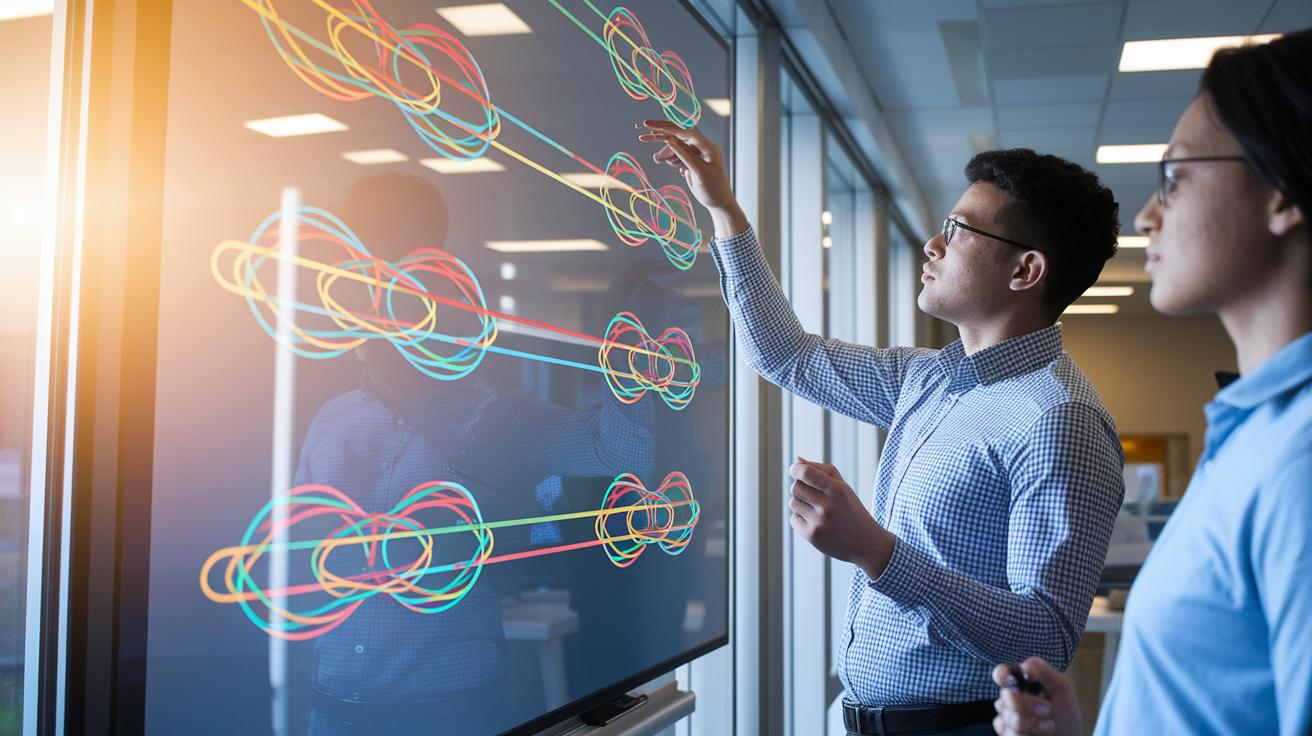
Researchers are now trying out exciting new ways to look at data using quantum ideas. Picture this: algorithms grouping data points with quantum circuits, a bit like your regular clustering tools but supercharged to work on many possibilities at once. This new approach not only shakes up how we usually sort data but could also uncover secret patterns hidden in messy numbers. Plus, clever new designs called kernels are making quantum models smarter at comparing information, setting us up for tools that are both faster and more efficient.
A big buzz is building around designing hardware and algorithms together. Instead of working on each piece on its own, scientists are teaming them up so they perfectly match each other's strengths. This combo aims to boost the performance of quantum systems, even with challenges like background noise or usual errors. Think of it like a perfectly coordinated team where every player knows the drill, this joint effort is paving the way for quantum solutions that work well in real-life situations.
Different fields, from finance to natural sciences, are pitching in ideas to drive quantum machine learning further. Experts predict that in the next five years, we might see models that can handle mistakes more gracefully and systems that scale up to meet big data challenges. It’s a fascinating time where quantum tech is rethinking how we tackle complex problems across many different areas.
Final Words
In the action, we explored the core elements of quantum machine learning through classical comparisons, qubit properties, and novel data encoding techniques. We stepped through variational circuits, hybrid training loops, and current hardware challenges, while also examining performance benchmarks and practical frameworks. Each section highlighted how emerging methods are reshaping our understanding of technology and science. The blend of theoretical insight with real-world testing leaves us feeling inspired and ready for the next breakthrough. Keep moving forward and stay curious!
FAQ
Where can I find books, PDFs, and courses on quantum machine learning?
The quantum machine learning literature—including books, PDFs, and online courses—covers both basic principles and advanced applications, offering a solid introduction for enthusiasts and experts alike interested in blending quantum technology with classical methods.
What academic and career opportunities exist in quantum machine learning?
The field offers a range of paths, from master’s and PhD programs to specialized projects and jobs. These roles allow practitioners to explore cutting-edge research and practical applications that combine quantum techniques with algorithm development.
Will quantum computing eventually grow larger than artificial intelligence?
The potential impact of quantum computing compared to artificial intelligence remains an open question. Both fields bring unique strengths, with quantum methods offering novel data processing capabilities and AI advancing continually through improved algorithms.
How is quantum machine learning different from traditional AI?
The differences lie in the approach: quantum machine learning uses qubits in superposition to evaluate many possibilities at once, while traditional AI relies on linear algebra operations executed on classical hardware, like GPUs.
Can quantum processing units replace GPUs for machine learning?
QPUs provide a fundamentally different way of processing information, but they aren’t yet ready to fully replace GPUs. GPUs still offer more efficient, established support for the extensive linear calculations required by most machine learning tasks.
Is quantum machine learning actually useful in practice?
Quantum machine learning can process data in high-dimensional spaces using unique quantum effects, making it useful for certain complex problems. Its practical benefits depend on ongoing progress in algorithm design and hardware capabilities.
What defines a quantum neural network?
A quantum neural network employs parameterized quantum circuits—similar to classical neural layers—using qubit rotations and entangling gates to process data, which helps address complex classification and optimization challenges in novel ways.
What are the key areas in integrating quantum computing with machine learning?
Key areas include quantum neural networks, the foundations of quantum computing, and cleverly designed algorithms that tap into quantum mechanics’ properties, merging the strengths of both quantum and traditional AI techniques.