


Ever noticed a tool that feels almost magical? AI is shaking up science, solving puzzles that used to take experts years to crack.
Imagine breakthroughs in protein modeling (figuring out how proteins fit together), brain mapping (charting our minds), and even flood forecasting, all speeding up our understanding of the world.
It’s like smart technology and hands-on research are teaming up to show us nature’s hidden patterns. So, how far can we go when our digital friend works right alongside us?
This exciting progress is opening doors to new insights about our world every day.
AI science breakthroughs Spark Bold Progress
AI is changing how we explore everything from biology to weather studies, and even engineering. It’s like having a super-smart helper that turns work that used to take years into tasks done in minutes.
Take a look at these cool breakthroughs:
- Protein folding predictions: In 2022, AI models managed to predict the shape of 200 million proteins in just minutes. It’s like watching a massive puzzle come together almost instantly.
- Connectomics mapping: By 2024, researchers used AI to create detailed maps of brain segments, complete with smart annotations, and shared them with everyone.
- Flood forecasting: Advanced AI models are now predicting major flood events up to seven days ahead. This system covers 100 countries and helps protect around 700 million people.
- FireSat wildfire detection: Imagine a satellite that spots tiny wildfires, as small as a classroom, in only 20 minutes anywhere in the world.
These achievements show that smart algorithms aren’t just a neat trick; they’re making science faster and more accessible. Even puzzles like how proteins fold or what makes a storm, well, a storm, can now be unraveled with AI. This innovation is opening doors to new methods that not only speed up research but also deepen our understanding of the world around us.
AI Science Breakthroughs in Environmental and Geospatial Analysis

Recent AI breakthroughs are giving us new ways to understand how our planet changes over time. These smart systems are shaking up how we keep an eye on nature, using real-time data to track events as they happen. Researchers are building on innovations like Google Earth AI Models and GraphCast Weather Forecasting to push the limits of what we can learn from our environment.
Google Earth AI Models
• Google Earth AI Models use clever geospatial neural networks (computer systems that mimic the human brain) to sort through satellite images and provide near real-time updates on global changes.
• Think of it like watching a live event, these models can spot tiny shifts in landscapes, such as the soft rumbles of a volcano that might hint at an eruption, even before older methods catch on.
GraphCast Weather Forecasting
• Launched in 2023, GraphCast Weather Forecasting uses new graph-based architecture (a way of connecting different pieces of weather data) to look ahead for up to 10 days.
• This method helps track cyclones by linking various weather clues together, much like a detective piecing together a story. For example, it was able to give a three-day heads-up about Hurricane Lee’s impact.
These AI-driven advances in environmental analysis are changing the game. They not only boost our ability to monitor natural events but also help build smarter plans to face the challenges of a changing climate. With these tools, decision-makers gain crucial insights to better prepare for nature’s surprises.
AI Science Breakthroughs in Biomedical and Neuroscience Research
AI is shaking up life sciences by turning messy biological puzzles into neat data sets. It quickly maps out protein shapes and brain circuits, almost like organizing a giant, complex puzzle in record time.
Protein Structure Prediction and Connectomics Mapping
For instance, in 2022, smart folding algorithms predicted 200 million protein structures in minutes instead of taking a year for each one. This breakthrough built huge protein databases that scientists can dive into. Meanwhile, a ten-year project mapped a part of the human brain in incredible detail, complete with AI-generated notes. The full set of data, released in 2024, gives researchers a rich look at neural connections using an efficient annotation system.
DeepSomatic for Precision Medicine
Researchers recently shared news in a top biotechnology journal about DeepSomatic, a tool that makes analyzing cancer mutations much more precise. By using fresh, innovative methods to study somatic mutations (changes in the body’s cells), this tool boosts accuracy in precision oncology, which tailors treatments to individual patients.
Together, these breakthroughs speed up drug discovery and deepen our understanding of the brain. They offer scientists fast, detailed blueprints of biology, letting them explore diseases at a tiny, molecular scale and design more targeted therapies. In short, using AI in these ways holds exciting promise for both structural biology and personalized medicine.
Computing and Reasoning Advances Among AI Science Breakthroughs
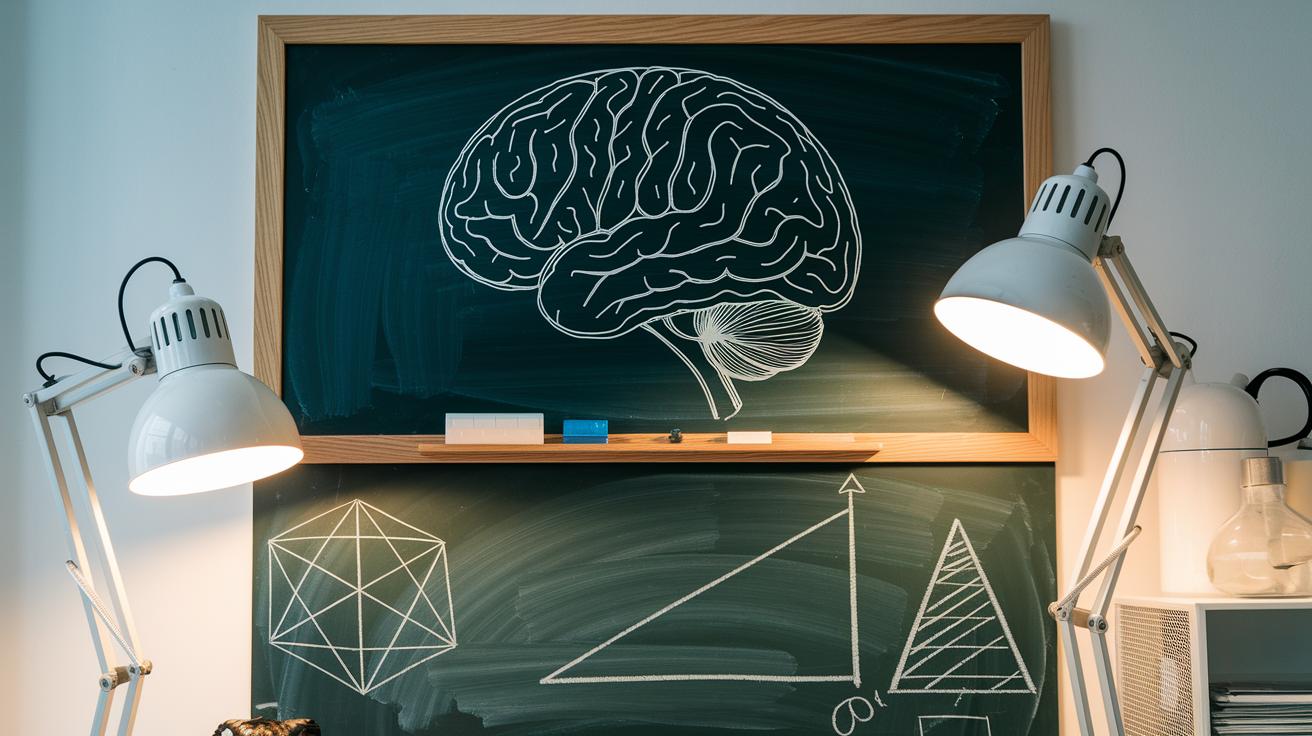
AlphaGeometry and its follow-up, AlphaGeometry 2 from 2024, achieved an exciting milestone by solving 83% of past IMO geometry problems. They use deep learning models to pick up on complex shapes and patterns through a process that refines approximations step by step. This success shows that smart algorithms can tackle puzzles that once left even the best human minds scratching their heads. It’s a neat example of how evolving neural networks (computer systems that learn like a human brain) can push the limits of math.
Quantum Echoes, launched in 2022, took a big leap in quantum chemistry by running the biggest simulations ever seen in that field. It predicts how molecules react and change, much like traditional methods, but without needing heavy error adjustments. By matching the accuracy of classic techniques, Quantum Echoes offers important data that can help researchers understand chemical reactions better. This breakthrough is a promising blend of AI and quantum computing that opens up fresh avenues for scientific inquiry.
Graph Networks for Materials Exploration, or GNoME from 2023, set the bar high by identifying 380,000 stable materials at low temperatures. It does this by combining advanced deep learning with smart search methods to sift through huge volumes of chemical information. Discovering so many materials shows just how powerful data-driven algorithms can be when exploring new substances. This achievement underlines the vibrant role of AI in transforming materials science research.
At EPFL’s Swiss Plasma Center in 2022, scientists used reinforcement learning to help control plasma in a fusion reactor. By constantly fine-tuning the reactor’s settings, the system improved its overall stability and showed off effective real-world AI applications. Together, these advances highlight how artificial intelligence is broadening its reach in both mathematics and physics, steadily expanding the frontiers of scientific computing.
AI Science Breakthroughs Fueled by High-Performance Computing
High-performance computing is like a turbo boost for AI research. It handles huge calculations that used to hold things up. For example, NVIDIA has recently launched more than 80 new science systems, offering an amazing 4,500 exaflops of AI power in just the past year.
| Institution | Location | GPU Count | Peak Performance |
|---|---|---|---|
| TACC Horizon | USA | 4000 NVIDIA Blackwell GPUs | Up to 80 exaflops at FP4 precision |
| Argonne Lab | USA | Planned | Planned exaflop-scale |
| Los Alamos Lab | USA | Planned | Planned exaflop-scale |
| Swiss Center | Switzerland | Not disclosed | Broke the exaflop barrier |
| CINECA | Italy | Not disclosed | Broke the exaflop barrier |
Exaflop-scale computing makes it possible to train AI models much faster by processing vast amounts of data in record time. This means that complex scientific simulations, whether for climate studies or biomedical research, can run in hours instead of weeks. It’s an exciting step forward that sets a new standard for how quickly science can move.
Emerging AI Science Breakthroughs and Research Paradigms
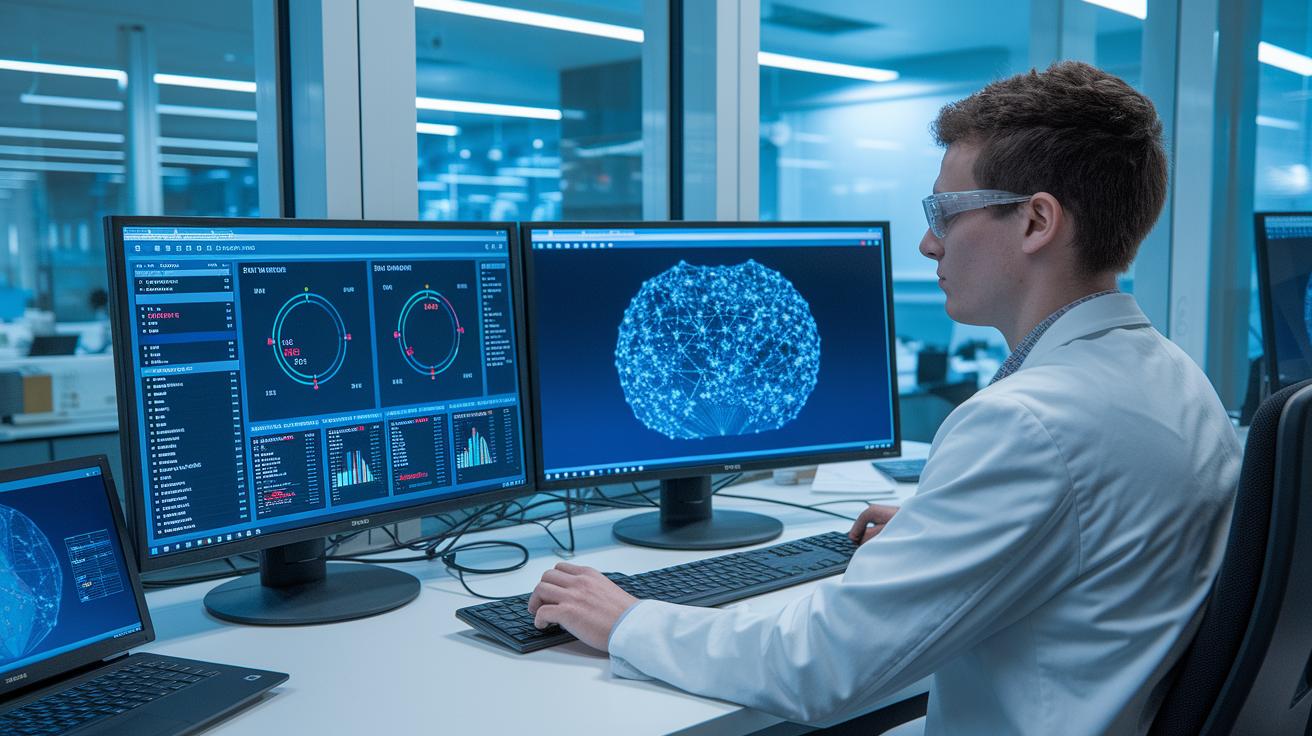
New AI tools are shaking up how we do science. They help us come up with new ideas, dive deep into data, and build smarter models. These tools mix clever algorithms (smart math formulas that let computers learn), open-source teamwork, and safe data techniques to make research faster and easier. They’re making global teamwork a breeze and opening up exciting new paths for discoveries in both schools and businesses.
Take a look at some of the key trends:
- AI co-scientist platforms that help suggest new ideas automatically
- Software agents powered by large language models (big computer programs that understand language)
- Improvements in keeping language model information accurate and linked to real scientific facts
- Analytics techniques that protect privacy using fake (but realistic) data
- A boom in open-source communities sharing AI science tools
- New generative models that simulate data and create realistic simulations
These innovations are not just pushing the boundaries of what’s possible, they’re setting the stage for a revolution in how science is done. With each breakthrough, researchers are finding smarter ways to work together and solve tricky problems. It’s an exciting time that’s paving the way for a future filled with endless possibilities in research and technology.
Ethical and Explainable AI Science Breakthroughs
Scientists are exploring clever new ways to handle data safely in AI. They’re using methods like confidential federated analytics (which keeps data right where it’s collected) and differentially private synthetic data (fake data that mimics real trends), so that models can learn from overall patterns without revealing anyone’s private info. It’s all about protecting our privacy while still getting useful, robust insights.
Another cool development involves fine-tuning AI in context, adjusting the model based on the information it sees to stick closely to the facts. Big language model projects are putting a lot of effort into this by ensuring everything is grounded in actual data and always consistent across different types of inputs. This kind of explainable research helps everyone trust and understand the decisions AI systems make.
Final Words
In the action, our discussion covered how AI science breakthroughs are reshaping fields like biomedical research, environmental monitoring, high-performance computing, and ethical AI. We touched on rapid protein folding predictions, real-time wildfire detection, powerful compute infrastructures, and emerging transparency in AI models.
This overview shows how these AI science breakthroughs drive smarter research and clearer paths for future progress. The blend of innovative tech and responsible research brings optimism and sparks further advancements that benefit our society.
FAQ
What recent AI science breakthroughs and examples are shaping modern research?
The breakthrough examples include rapid protein folding predictions, connectomics mapping, and advanced flood forecasting. They show AI’s growing impact on biomedical, environmental, and computational research.
How does FutureHouse AI work and what can you tell me about Future House AI Crow?
FutureHouse AI is a system that streamlines creative projects and research with advanced algorithms. It offers an intuitive interface featuring tools like Future House AI Crow to boost efficiency.
What role does an AI agent for scientific discovery play in research?
An AI agent for scientific discovery processes data and generates hypotheses, which speeds up the research process. This leads to faster breakthroughs and a more agile approach to scientific inquiry.
Which AI stock is good to buy?
The question reflects growing market interest in AI, but picking a stock depends on individual research and expert advice. Always compare multiple sources before making investment decisions.
What does the 30% rule in AI signify?
The 30% rule in AI is a guideline that describes a performance benchmark where a model achieves a 30% improvement over a baseline. This standard helps assess algorithm efficiency and performance.