


Ever wonder if a computer could work in two spots at once? That's what quantum computing is all about. Instead of regular bits that are either 0 or 1, quantum computers use qubits that can be both at the same time (sort of like a light switch that's on and off at once).
They’re built in layers, from super-cold hardware to clever control systems that chat with each other in unexpected ways. In this post, I break down how every piece fits together and why it might help solve some really big puzzles in the future.
Stick around, and you'll see some seriously cool tech magic in action.
Core Components and Layers of Quantum Computing Architecture
At the core of today’s quantum computers are the essential parts that make everything work. You’ve got qubits (think of them as bits that can be both 0 and 1 at the same time) and key operations like the Hadamard, CNOT, and Pauli-X/Y/Z quantum gates. Along with the quantum processor (or QPU) and a set of control electronics, these components team up to create a system where physical parts and clever controls operate side by side.
Modern quantum systems are built in layers. The first layer is the physical hardware, like cryogenic refrigerators that keep qubits at temperatures close to absolute zero (so cold, it’s almost hard to imagine!). The next layer is the control system, using precise electronics to manage and adjust the qubits. Then comes a middleware layer, which translates high-level quantum ideas into clear, actionable instructions. Finally, an algorithmic layer connects these quantum operations with the applications we use. This layered approach marks a cool shift away from older methods that tried to merge all the pieces into one platform.
The change from early, all-in-one research setups to today’s specialized industrial components is clear. For instance, Bluefors has been honing cryogenic technology since 2008, and companies like QuantWare introduced dedicated QPUs in 2021. IBM’s modular approach, with its Eagle, Osprey, and Condor chips, shows how breaking tasks into smaller parts can boost performance. By carefully integrating each distinct layer and component, quantum computing systems are becoming more scalable, flexible, and ready to take on tomorrow’s big challenges.
Quantum computing architecture: Inspiring tech brilliance
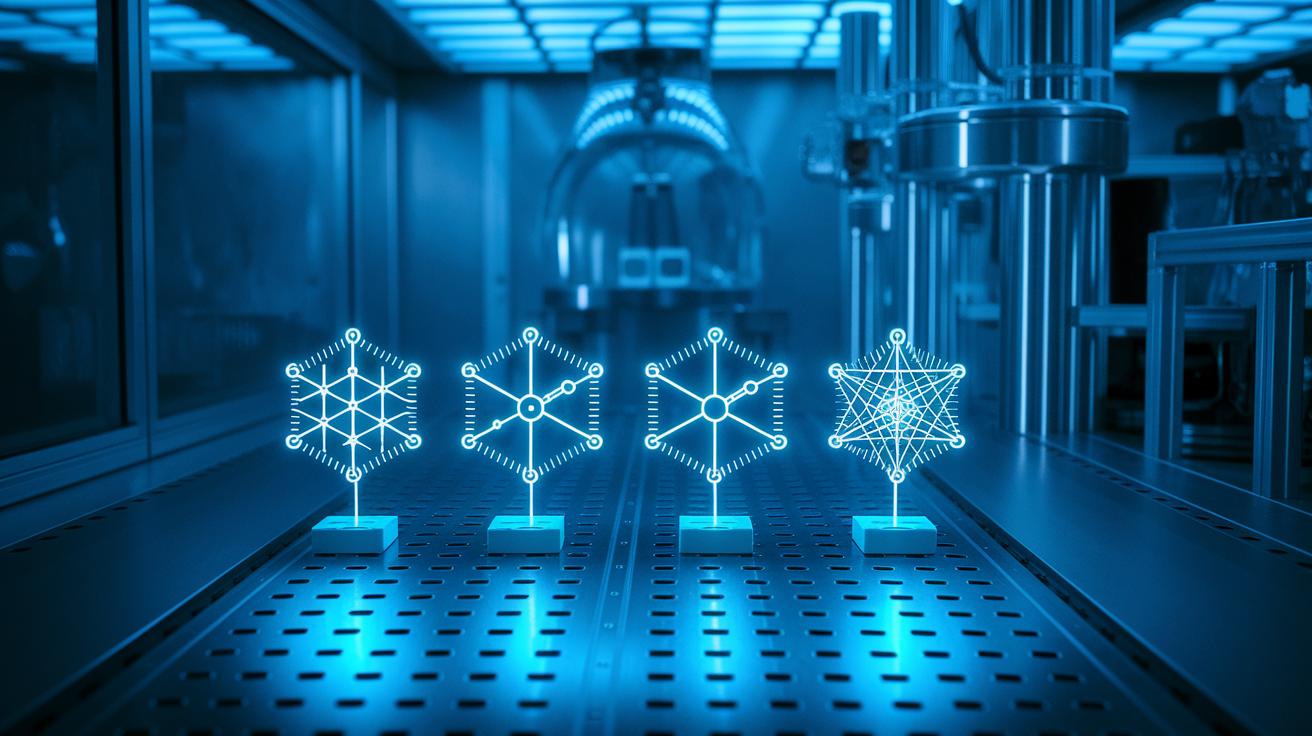
Superconducting circuits, trapped ions, photonic qubits, and neutral atoms are leading the way in qubit development (the tiny building blocks of quantum computers). They take advantage of a trick called superposition, letting a qubit be 0 and 1 at the same time. As you can see in quantum computing qubits, when you measure them, the result comes out based on probability rather than a sure thing.
Because these qubits are really delicate, they have to be kept in very controlled conditions. For instance, superconducting circuits work best in nearly perfect vacuums and at temperatures that are almost as cold as absolute zero (the lowest temperature possible), which helps cut down on interference. Meanwhile, trapped ions rely on finely tuned electromagnetic fields, and neutral atoms along with photonic systems use their own unique setups to stay steady.
How you connect these qubits is key to building a solid quantum computer. Sometimes, it helps to have qubits close enough to interact quickly, while in other cases, you want them to be able to reach out to any other qubit even if they’re farther apart. Engineers essentially lay out logical circuits over the network of physical qubits to get the best performance possible. And when you work with atom-based systems, things can get a bit trickier because the design has to naturally fit with how quantum operations work.
Thoughtful design and smart planning of these connections are paving the way for quantum systems that can actually scale up and handle real-world tasks. Every decision about the environment, layout, or type of connection brings modern quantum platforms a step closer to everyday use. And with fresh, innovative ideas emerging all the time, each element of qubit performance keeps getting better.
Quantum Gates and Circuit Design in Quantum Computing Architecture
Quantum gates are the heart of quantum circuits. They decide how qubits (the tiny bits that power quantum computers) interact and change. For example, the Hadamard gate turns one state into a mix of possibilities, it's like giving qubits the chance to be in many states at once.
Mapping these logical gates onto physical qubits is a bit like piecing together a complex puzzle. Engineers carefully design circuits using microwave lines or photonic links to route signals. This way, everything happens at just the right moment, much like ensuring every wire on a circuit board connects perfectly without any hiccups.
Gates like CNOT and the Pauli group (Pauli-X, Pauli-Y, and Pauli-Z) play a big role in key algorithms, such as Shor’s method for breaking down large numbers or Grover’s search technique. They must work flawlessly, even though tiny timing errors, often around 0.1% to 1%, can lead to mistakes. When even a slight error occurs, things can get noisy or the quantum information might be lost.
Designers tackle these challenges by carefully arranging the way gates work together and planning the layout of the circuits. By tuning both the logical plan and the physical setup, they help quantum systems run smoothly, even on the toughest problems.
| Gate Name | Function | Typical Fidelity | Example Algorithm Use |
|---|---|---|---|
| Hadamard | Makes superposition | ~10⁻³ | Shor’s algorithm |
| CNOT | Links qubits | ~10⁻³ | Grover’s algorithm |
| Pauli-X | Flips the qubit | ~10⁻³ | Error correction |
| Pauli-Z | Adjusts qubit phase | ~10⁻³ | Phase estimation |
Error Correction Strategies in Quantum Computing Architecture
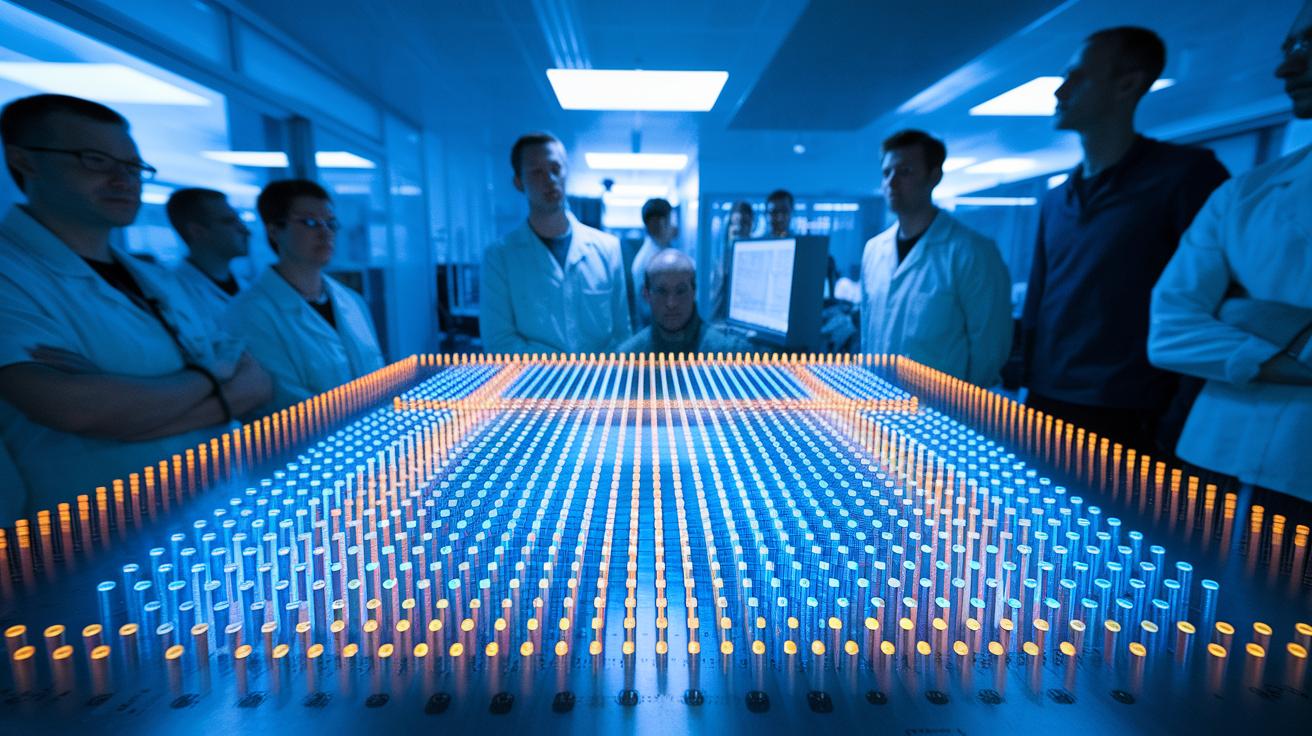
Quantum computers use qubits that are extremely sensitive. Even small disturbances like decoherence (the loss of quantum information), relaxation, or crosstalk can throw off their performance. That’s why engineers build in error correction strategies to keep these systems reliable. You can think of it like having a backup plan for every piece of data so that if one part fails, everything else still works.
Engineers use clever methods like surface codes and Bacon-Shor codes to protect information. Surface codes arrange qubits in a grid that continuously checks for mistakes, while Bacon-Shor codes group qubits into arrays that catch faults as they happen. Often, you might need more than 1,000 physical qubits to protect one logical qubit, which really shows how much extra hardware is needed to keep errors in check.
The control electronics for these systems work at extremely low (cryogenic) temperatures and run the error-correction cycles in real time. Imagine a network of sensors in a busy lab constantly scanning for even the tiniest misstep and jumping into action to fix it, that’s the idea behind these error correction techniques. System designs must plan for these extra layers to ensure every quantum calculation stays as accurate as possible, even in the face of noise and other imperfections.
Scalable Design and Interconnects in Quantum Computing Architecture
Modern quantum computers are at a crossroads, moving from a handful of qubits to potentially millions. Engineers are trying a mix of small, bite-sized designs and bigger, all-in-one chips to make this leap happen. For example, chiplets and 3D integration let designers pack parts tightly and neatly, while cryo-CMOS control arrays help run electronics at freezing temperatures. These fresh ideas could eventually support huge numbers of qubits without turning the whole system into a chaotic mess.
On the chip level, wiring issues are still a big headache. Dense connections can cause signals to fade or mix up with each other, which messes with the qubits’ ability to communicate. To fix this, experts are exploring clever tricks like photonic links (light-based connections) that allow qubits to share information even if they’re far apart. This means that whether qubits are on the same chip or spread out over several chips, they can still chat with precision.
Moving up to the network level, set rules for communication, like quantum repeaters and entanglement swapping, are key to linking multiple nodes into one big, reliable quantum network. These methods pave the way for future systems where every qubit is part of a well-connected, large-scale network ready to tackle real-world challenges. In truth, by refining both hardware and interconnect strategies, the future of quantum computing is starting to look much brighter.
Hybrid and Emerging Models in Quantum Computing Architecture

Hybrid models mix quantum processors with regular CPUs to handle tasks before and after the main computations. Think of it like pairing a super-fast quantum chip with a well-tested CPU, kind of like how a chef uses both a special tool and a trusty knife to whip up an amazing dish. This blend takes advantage of quantum speed while keeping the precision you expect from traditional computing.
In these systems, companies face a choice. They decide whether to run quantum computers in-house or use quantum computing as a service (QCaaS). Running your own system means you have more control, but it might face longer upgrade cycles and occasional delays. Meanwhile, QCaaS offers more flexibility, though it can bring some security concerns along. Engineers even borrow ideas from classic computing (like the von Neumann model, which outlines how computers traditionally work) to design instruction sets for quantum bits. It’s a bit like mixing a spontaneous dance with carefully planned steps, each part playing off the other.
New protocols, such as quantum API layers and middleware that work with any hardware, are changing how these systems connect. This classic-quantum interface sits at the heart of modern designs. Interested in learning how quantum computers really work? Have a look at this link: how quantum computers work. Overall, these hybrid and emerging models are crafting a future where computing architectures are both flexible and powerful, a sure sign of exciting breakthroughs ahead.
Challenges and Future Trends in Quantum Computing Architecture
Quantum computing architecture is up against some real-world challenges that keep us from seeing these systems in everyday use. One big problem is decoherence, which means the tiny units called qubits can lose their unique state with even small changes in their surroundings. It’s a tough nut to crack! Making enough high-quality parts consistently is another struggle, and since these systems run at temperatures near absolute zero, keeping everything cool is a serious engineering puzzle. Plus, when you need to control thousands of qubits at once, the electronics have to be extremely precise.
Researchers are already rolling up their sleeves to push these limits. For example, they’re developing Cryo-CMOS control methods that work at super cold (millikelvin) temperatures to better handle complex setups. Topological qubits show promise because they naturally resist errors, and photonic interconnects are paving the way for faster, more dependable communication between qubits. Big industry players are in on the action too, IBM’s working on a Condor design targeting 1,121 qubits, Google’s Sycamore is steadily improving, and IonQ is exploring scalable trapped-ion systems. It’s all thanks to the teamwork of folks in physics, electrical engineering, and computer science, each adding their piece to the puzzle.
In this fast-changing field, research teams are zeroing in on new design ideas that could shape the next generation of quantum systems. Their focus is on improving reliability, boosting efficiency, and making integration easier as quantum computers scale up. Here are some emerging research directions in quantum computing architecture:
- Topological platforms
- Digital-twin simulations
- AI-driven layout optimization
- Hybrid entanglement networks
- Energy-efficient cryo-electronics
Final Words
In the action, we explored quantum computing architecture from its core components to scalable design and emerging hybrid models. Each section broke down how qubits, quantum gates, and error-correction strategies interlace with control systems and hardware layering. We also touched on interconnect challenges and research directions that promise faster, more reliable systems. The insights shared here help build a clear picture of today’s quantum computing architecture and spark excitement about tomorrow’s tech breakthroughs.
FAQ
Frequently Asked Questions
What is quantum computing with example?
The explanation of quantum computing with example shows how qubits can exist in multiple states simultaneously, allowing them to tackle complex problems at once, much like running many tasks at the same time on a computer.
Who invented quantum computing?
The invention of quantum computing is credited to several pioneers, including Richard Feynman and David Deutsch, whose work laid the groundwork for using quantum phenomena to perform computations.
What are the 5 main components of quantum computing?
The five main components of quantum computing include qubits, quantum gates, quantum processors, control electronics, and error correction systems, all working together to perform quantum operations.
What are the advantages of quantum computing?
The advantages of quantum computing include its ability to process multiple possibilities simultaneously and solve certain problems much faster than classical computers, promising breakthroughs in various advanced fields.
Why is quantum computing important?
The significance of quantum computing comes from its potential to solve highly complex problems that traditional computers struggle with, offering new solutions in areas like cryptography, material science, and optimization.
How much do quantum computer architects make?
The earnings of quantum computer architects vary by experience and location but generally reflect the specialized, high-demand nature of this field in the technology sector.
What does Elon Musk think of quantum computing?
Elon Musk sees quantum computing as a promising and evolving field, though he often highlights other technologies, his interest signals acknowledgment of its potential impact on future tech landscapes.
Is quantum computing as big as AI?
The scale of quantum computing and artificial intelligence differs; quantum computing introduces radically new computational methods while AI focuses on replicating human-like decision-making, with both industries rapidly expanding.
Where can I find quantum computing architecture diagrams or PDFs for engineers?
Available resources like quantum computing architecture diagrams, PDFs, and examples tailored for engineers can be found through academic and technical publications, providing detailed visuals and blueprints for understanding system design.