


Did you ever wonder if the Soviets might have secretly hatched wild plans for the moon? Back in the 1960s, engineers came up with some pretty bold ideas, like splitting launches into parts and trying one-shot missions powered by extra liquid oxygen (LOX, which fuels rockets). In 1964, a major government decision pushed them to develop brand-new space technology at a really fast pace. In this blog, we explore how daring experiments and creative thinking paved the way for a striking display of national bravery and innovation in space exploration.
Soviet Lunar Missions Program Overview
In 1962, engineers at Korolev’s OKB-1 started sketching out plans for trips that would fly by and land on the Moon. They explored two main ideas. One idea split the job into two separate launches with their very own Earth-escape stages. The other was a one-shot plan using a modified Vostok rocket packing extra liquid oxygen tanks (LOX makes the rocket go higher). These creative ideas set the stage for the Soviet push into space during an exciting time of global competition.
On August 3, 1964, the government made a bold move with Decree No. 655-268, promising the resources needed for a crewed lunar landing before 1970. This decree sparked a rush to develop new space hardware. Key parts of the plan included the 7K-L1 circumlunar spacecraft for looping around the Moon, the L3 lunar landing system designed to make gentle touchdowns, and the ambitious N1 heavy-lift rocket intended to push 75 tons into low Earth orbit with the help of multiple launches and refueling tankers.
By November 1966, early tests with uncrewed Soyuz 7K-OK spacecraft had already begun docking experiments that proved vital for later success. These hands-on breakthroughs, mixed with strong political support, really drove Soviet ambitions during a heated space race. It wasn’t just about cool tech, it was a genuine display of a country ready to showcase its nerve and ingenuity on the cosmic stage.
Looking back, these initial steps not only highlight technical prowess but also capture the bold ambition of a nation reaching for the stars. It’s pretty amazing to see how these early ideas helped shape a remarkable chapter in space history.
Soviet lunar missions: Bold Space Triumph
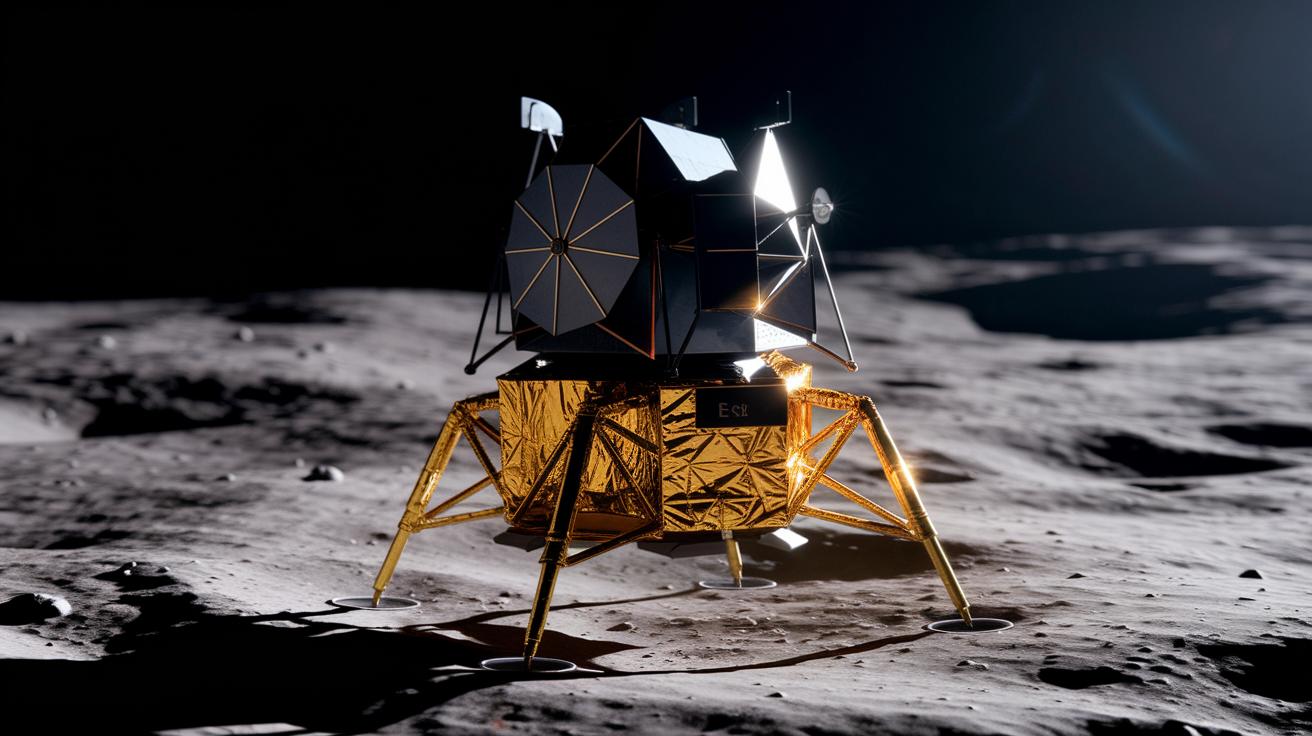
Early Soviet unmanned probes opened up a new world of lunar exploration. They built the E-series probes between 1958 and 1965, and these early models pushed the limits of space travel. Take the E1/E1A pair, for example, they were the first to break free from Earth, showing that a controlled escape was indeed possible. And then came the E3 versions, which added magnetometer booms (devices that measure magnetic fields) to collect richer scientific data.
Luna-3, launched in October 1959, carried a camera that captured 40 frames. Out of those, 15 frames were sent back via FM video (a type of radio signal for video) and revealed a Moon with very little texture in the light, imagine taking a candid photo where everything is overexposed. This breakthrough allowed scientists to glimpse areas of the lunar surface they hadn’t seen before.
After 1965, the Lavochkin design bureau took charge with the E6 missions. These probes not only performed lunar flybys and entered orbit around the Moon, but they also produced the first images of the Moon’s far side. Missions such as Zond-3 in 1965, along with Luna-5 through Luna-8, gathered key data from both impacts and orbital experiments that laid the foundation for future lunar exploration.
| Key Achievement | Impact |
|---|---|
| E-series probes | Proved that deep-space missions were technically possible |
| Photographic breakthroughs | Inspired new ideas for studying the lunar surface |
These bold early efforts paved the way for even more complex and exciting missions in the future.
Soft Landings and Sample Returns in Soviet Lunar Missions
On February 3, 1966, Luna-9 made history by becoming the first spacecraft to land gently on the Moon. It sent back two panoramic pictures that were picked up at Jodrell Bank Observatory. This landing was a bit like carefully setting down a fragile vase, it proved that touching down softly on the Moon was possible and safe. Imagine the thrill of watching a spacecraft land with such precision and capture serene views of a quiet lunar scene.
Soon after, in December 1966, Luna-13 joined the adventure. It returned useful surface data that helped us better understand what the Moon is made of. A few years later, the focus shifted to automated sampling. These early experiments, which used drill-based methods to gather lunar soil (regolith) and improved canisters to seal the samples, set the foundation for even bigger achievements.
In September 1970, the Luna-16 mission, part of the E8-5 sample-return program, brought 101 grams of lunar soil back to Earth. Then, in February 1972, Luna-20 repeated the feat and even used stereo cameras placed 0.5 meters apart to capture unique views. One of these fascinating images is now preserved on microfilm in archived Soviet press pictures. Automated techniques played a key role, allowing for precise collection without a human operator.
These early missions opened a new chapter in space exploration. They showed that soft landings and robotic sample collection were not just possible, they were essential steps that pushed lunar exploration technology to new heights.
Lunokhod Rovers in Soviet Lunar Missions
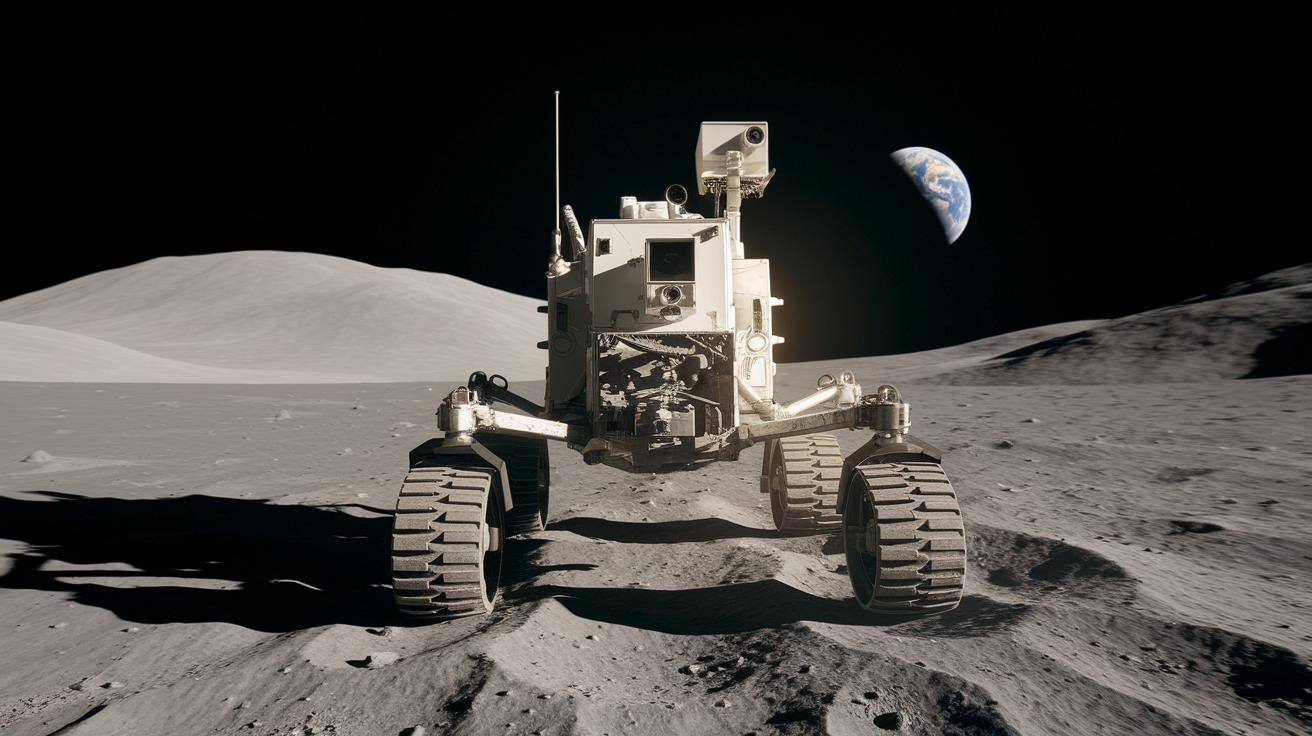
The Lunokhod program was one of the Soviet Union's bold moves in exploring space. Lunokhod-1 touched down on November 17, 1970, during the Luna-17 mission, and it quickly became a pioneer in moving around the moon's surface. This clever rover boasted two cameras, each capturing detailed 360° views (imagine a panoramic snapshot of the lunar landscape) that recorded its every move. It even carried a star-tracker sky camera to help guide its journey, and a simple level indicator (nicknamed the "dixie cup") that let controllers keep a close eye on its tilt.
Picture this: ground teams, located as far as 16,000 km away, directing the rover through more than 10.5 km of rugged moon terrain. It almost seems like you’re remotely driving a car on the moon! Plans for a follow-up, Lunokhod-3, never moved past the drawing board, yet those early designs clearly showed how dedicated the Soviets were to robotic exploration. These early experiments not only pushed the boundaries of technology but also paved the way for the future of remote-controlled missions on other worlds.
Soviet Manned Lunar Landing Program and N1 Rocket Trials
On February 4, 1967, Soviet leaders announced that sending a crew around the Moon was now the top goal. This news kicked off a hectic period as engineers raced to build and test new hardware that matched those big political ambitions. By March 1967, test flights using L1 vehicles with UR-500K/Block D rockets took off, laying the groundwork for a manned mission. These early flights were all about proving docking methods and getting the craft into the right orbit. Fun fact: during the UR-500K/Block D tests, even a tiny guidance error could have been the difference between a smooth orbit and a dangerous descent.
The journey hit some rough patches with the N1 rocket. Its first attempt on February 21, 1969, failed to lift off properly, showing just how hard it was to push 75 tons into low Earth orbit. Then on July 3, 1969, another launch ended in disaster when the rocket destroyed the launch pad just seconds after liftoff, clearly revealing its weak points. A third test in 1971 also missed the mark, and a final flight on November 23, 1972, collapsed after just 107 seconds. With these repeated failures, plans for a crewed lunar landing eventually got canceled.
Meanwhile, engineers were also working on a modular lunar module known as the LK. In November 1970, tests of the T2K prototype showed that its descent engines worked well and had the features needed for a soft landing. Archived blueprints of the LK design (check them out here: https://fairlygreat.com?p=1162) show a smart blend of a tough landing stage with precise guidance systems. Even though the LK module balanced raw power and careful control, ongoing technical problems and shifting political priorities ultimately prevented the overall program from taking off.
Legacy and Impact of Soviet Lunar Missions
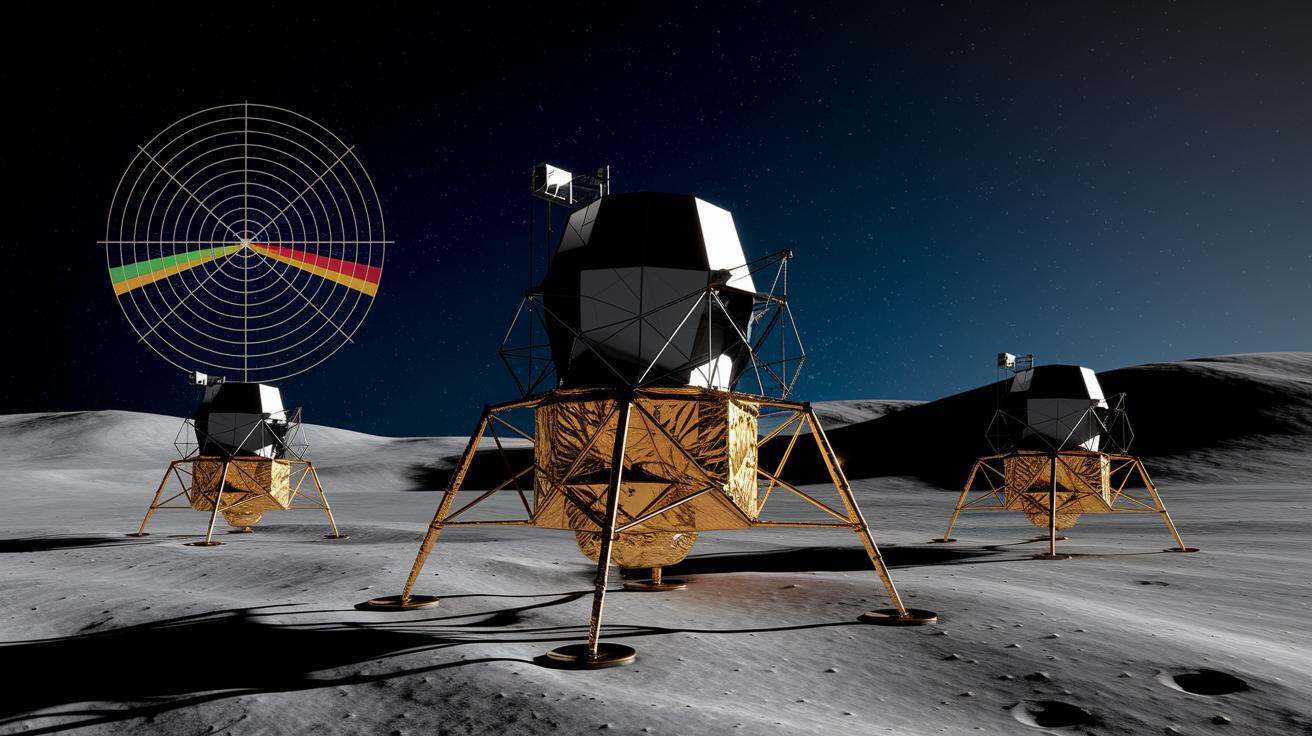
Soviet lunar missions have truly left their mark well beyond the Moon. The technology developed for the Luna and Lunokhod programs paved the way for deep-space navigation techniques that later helped steer Mars probes. Images from Luna-3, Zond-6, and Zond-8 were enhanced through a technique called inverse-halftoning (a method to reveal hidden details), while British recordings ensured that the sweeping panoramas of Luna-9 lived on in our memories. Beyond the tech, these achievements became cultural symbols during the Cold War, capturing the imagination and pride of an era.
At the 1967 International Astronautical Congress, Soviet representatives showcased their lunar triumphs like an art curator unveiling a masterpiece. They projected crisp, newly enhanced lunar images that amazed an international audience, serving as powerful evidence of national ingenuity and fueling the global space race.
This influence is still felt today. Even into the mid-2000s, new missions like Luna-Glob and Luna-25 echoed design ideas from those early ventures. Despite later changes in budgets and political direction after 2014 and 2022, the creative spirit of those first missions continues to shape how modern probes are built and how we approach space exploration. In essence, Soviet lunar missions blend technological breakthrough with cultural impact, sparking ambitious dreams about our future in the cosmos.
Final Words
In the action, we covered the unfolding saga of Soviet rocket science through early unmanned probes, soft lunar touchdowns, rover milestones, and daring manned lunar attempts. The post revisited challenges like the N1 tests while highlighting technical breakthroughs that still spark awe today.
These achievements remind us that trial and persistence often fuel progress, pushing humanity steadily forward. The legacy of soviet lunar missions continues to inspire and guide future space innovators.
FAQ
What were the Soviet Union lunar missions?
The Soviet Union lunar missions embraced unmanned probes, soft landings, and rover explorations. Their campaigns, including Luna and Lunokhod series, advanced Moon exploration and even tested crewed landing concepts, shaping early space achievements.
What is the Soviet lunar missions timeline?
The Soviet lunar missions timeline stretches from the late 1950s with early unmanned probes through successful soft landings and rover operations in the 1970s, marking significant milestones in lunar research.
What was the Soviet reaction to the moon landing?
The Soviet reaction to the moon landing reflected competitive pride. They promoted their own lunar achievements and milestones, using each success to demonstrate their alternative approach amid global space competition.
Did the Soviets ever try to go to the Moon and land on it?
The Soviets did try to go to the Moon. They achieved notable soft landings, such as Luna-9 in 1966, and developed hardware for crewed missions, though no human lunar landing was ever realized.
What does the Soviet lunar lander interior look like?
The Soviet lunar lander interior featured a compact, functional design filled with essential instruments and automated systems built for precise robotic sampling and safe soft landing operations.
What is known about the Soviet lunar rover?
The Soviet lunar rover, known as Lunokhod, was a remotely controlled vehicle equipped with cameras and sensors. It navigated the lunar surface, covering several kilometers and providing invaluable terrain data.
What is notable about the Luna-25 mission?
The Luna-25 mission continues the Soviet lunar legacy by aiming to perform a soft landing and conduct scientific research. It represents a modern step inspired by decades of earlier lunar exploration.
What did China find on the backside of the Moon?
China’s exploration on the Moon’s far side revealed detailed geological features and surface compositions. Their robotic missions gathered new data, offering fresh insights into the Moon’s terrain and formation processes.
What is Mission Luna?
Mission Luna refers to the collective Soviet lunar campaign. It encapsulated a series of unmanned probes, soft landings, and rover missions that together contributed rich scientific knowledge about the Moon.