


Have you ever wondered if computers might work in a way that's completely new and unexpected? Quantum computers do just that. Instead of using ordinary bits that are either a 0 or a 1, they use qubits (tiny bits that can act like a spinning coin, showing elements of both heads and tails all at once). This clever approach opens doors to solving puzzles that regular computers just can’t handle. Hang tight, and I'll walk you through what makes these machines so special and how they might soon change the way we handle information.
Quantum Computing Fundamentals: Mechanisms Behind Quantum Computers
Classical computers work with bits that are either off (0) or on (1). Quantum computers, on the other hand, use qubits, tiny particles like atoms, electrons, or photons (little bits of light). This clever twist lets quantum systems explore a much bigger world of possibilities. For a deeper dive, check out what is quantum computing. The UK's National Quantum Computing Centre shows just how much research is fueling this exciting change.
Quantum processors owe a lot of their power to the special traits of qubits. One of these traits is called superposition, which means a qubit can be both 0 and 1 at the same time, think of it like a coin spinning in the air, not landing as heads or tails until it slows down. Early experiments with compounds like alanine and trans-crotonic acid helped pave the way for the quantum systems we’re exploring today. This ability to juggle multiple states at once enables the tackling of very complex problems that regular computers simply can’t handle.
But there’s even more to the magic. Qubits also link together in a process known as entanglement (a special connection where particles influence each other no matter the distance). When qubits become entangled, they work together, checking a vast number of possibilities all at once. Imagine a delivery service trying to plan the best route through 150 stops, entangled qubits can quickly sift through countless options to find the smartest path. Shor’s algorithm, which can break down large numbers really fast, is a perfect example of how these ideas push computing power well beyond the old limits.
Qubit Function and Superposition Properties in Quantum Computers
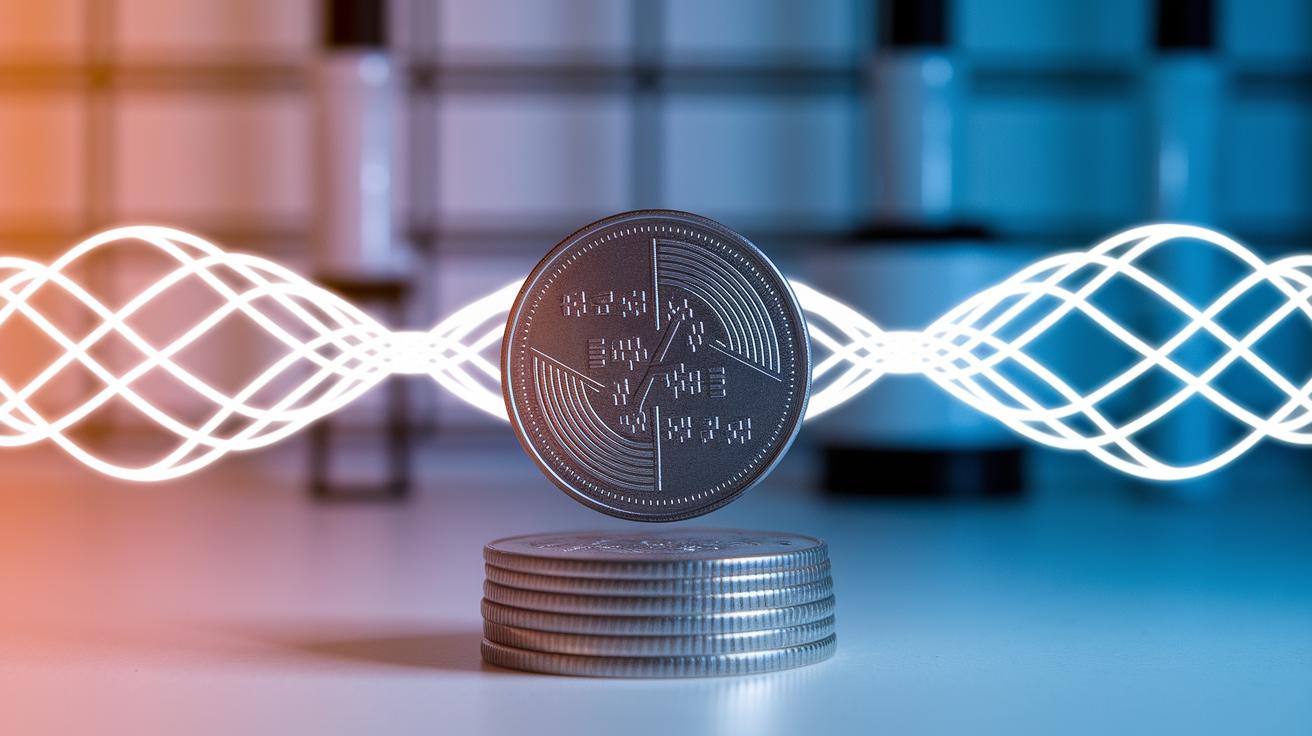
Early experiments in 1998 using molecules like alanine and trichloroethylene, and then a 7-qubit system with trans-crotonic acid in 2000, gave us a firsthand look at qubits acting in two ways at once. Imagine a spinning coin that’s neither heads nor tails until you catch it; that’s superposition in action. This neat trick allows quantum computers to explore multiple solutions at the same time, sort of like trying several keys on a lock all at once.
But keeping qubits in this balanced state, called coherence (a steady, reliable condition), isn’t easy. Even a tiny shift in temperature or a small vibration can throw things off. That’s why scientists work hard to isolate qubits and cool them to extremely low temperatures, reducing any interference and making sure the balance holds.
Here are some key points about qubits:
| Property | Detail |
|---|---|
| Physical Media | Atoms, electrons, photons |
| Unique Trait | They can be in two states at once (superposition) |
| Sensitivity | Highly vulnerable to environmental noise |
Qubit Interconnection in Quantum Computers: The Quantum Linking Phenomenon
Definition of Quantum Linking
Quantum linking happens when qubits (the smallest bits in a quantum computer) share a state that makes any change in one immediately show up in the other, no matter how far apart they are. Different setups make this happen in various ways. For example, ion-trap systems use electromagnetic fields (invisible forces from electricity and magnets) to keep ions in place, while superconducting circuits use tiny, super-fast electric currents. Imagine two clocks perfectly in sync – if one changes, the other does too.
Impact of Quantum Linking on Algorithms
When qubits link up, they let quantum computers check out lots of possibilities at the same time. Take Shor’s algorithm (a smart method for factoring big numbers): it works even better when it taps into the shared power of connected qubits. Recent experiments comparing ion-trap and superconducting systems found that making qubit states more reliable directly boosts tasks like breaking down large numbers into factors. For instance, in one breakthrough, researchers improved qubit linking in superconducting circuits so much that error rates dropped below 0.1%.
Quantum Gate Operations and Error Correction in Quantum Computers
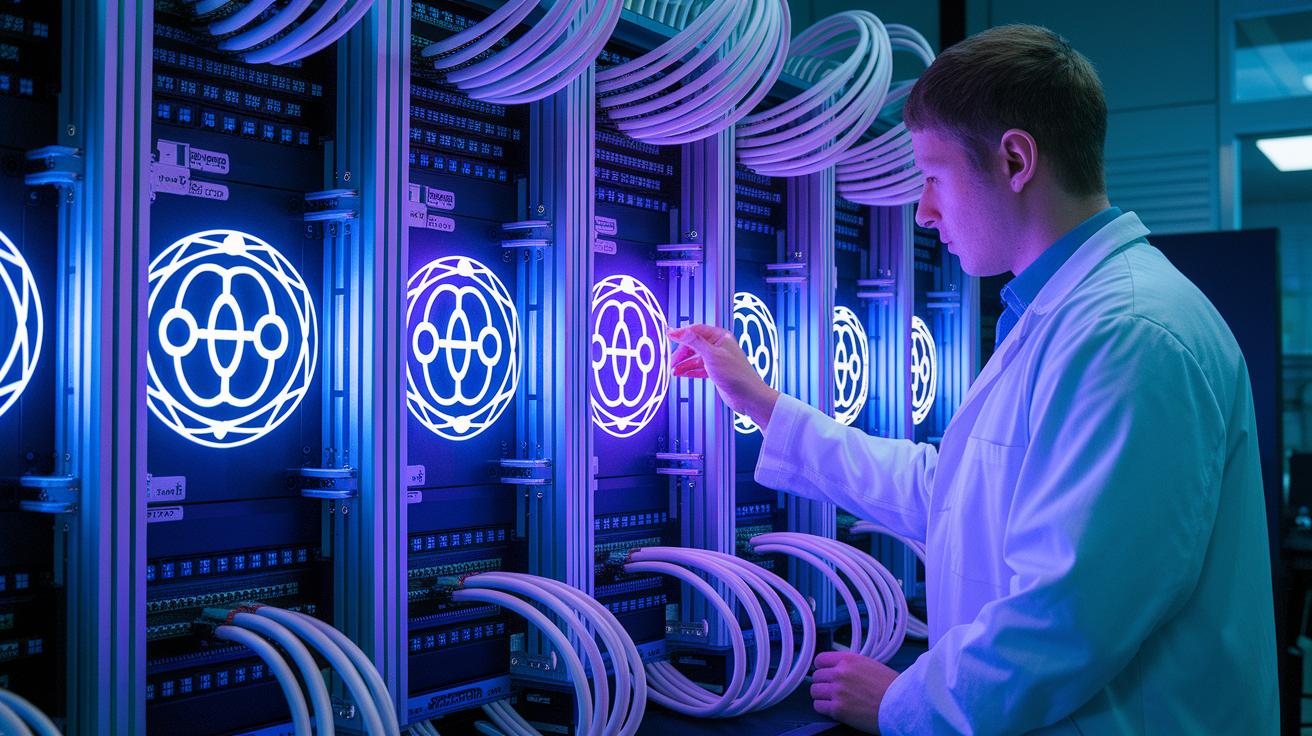
In a quantum computer, single-qubit gates work like tiny switches. They use precise bursts of electromagnetic energy (pulses) to rotate the state of a qubit, moving it from one setting to the next. Imagine turning a dial just a little bit until it clicks perfectly into place. Back in 2001, a 7-qubit machine ran Shor’s algorithm (a method for breaking numbers into prime factors), showing just how powerful careful gate control can be.
Next, two-qubit gates join pairs of qubits by linking their states. They send out pulses that make the state of one qubit depend on the other’s. This connection is key for quantum algorithms, which tackle problems much faster than traditional methods. Think of it as two dancers moving in perfect sync, when one shifts, the other follows naturally.
There’s a big challenge, though: decoherence. This happens when qubits interact with their surroundings and start losing their stored information. Even small disturbances or tiny temperature changes can jumble a qubit’s state. To combat this, researchers isolate qubits and keep them at temperatures near absolute zero, which helps keep unwanted disturbances at bay.
Quantum error correction uses several physical qubits to build one stable logical qubit. It works by adding extra copies and constantly checking and adjusting the qubits, making sure that if one part slips, the whole system stays on track. This ongoing process keeps quantum computers running smoothly, even with the inherent challenges of maintaining delicate quantum states.
Implementing and Scaling Quantum Computers: Hardware Insights and Challenges
There are two main ways engineers are building quantum computers with hardware. One method uses superconducting circuits, which are tiny metal loops that carry electric current without any resistance when cooled to extremely low temperatures. The other method relies on ion-trap platforms, where charged particles are held in place using electromagnetic fields. Superconducting devices let operations happen quickly and are easier to stitch onto chips, while ion traps provide very precise control over individual particles. Each design has its own set of strengths and challenges for next-gen computing.
Keeping qubits in top shape means they need to be really, really cold. Engineers use dilution refrigerators to drop processor temperatures down close to absolute zero, which helps keep thermal noise from messing with the delicate quantum states. Although cooling at these cryogenic levels is both tricky and expensive, it’s essential for protecting qubits and ensuring accurate data measurements. With the processors chilled down to these near-zero temperatures, quantum systems can work free from external disturbances and handle complex calculations with better reliability.
Building bigger quantum computers introduces extra hurdles. Every new qubit added makes the system more prone to instability and environmental interference. Early experiments, like a 16-qubit setup that even tackled puzzles such as Sudoku, have raised questions about whether larger systems can stay dependable. As the number of qubits grows, keeping them all coherent becomes a tougher challenge. Researchers are now focusing on better isolation techniques and error correction methods to manage the increased complexity and keep the system steady.
The industry’s outlook is changing rapidly. With more investment flowing into quantum hardware innovation, many believe that quantum processors will soon shift from experimental models to practical IT solutions. In the near future, companies might be able to tap into these powerful quantum systems through cloud-based access, without having to invest in expensive, specialized hardware.
Final Words
In the action, we explored the basics of quantum computing, from how qubits differ from bits to their fascinating abilities like superposition and linking. We touched on physical implementations, early breakthroughs, and the real-world challenges of hardware and error correction.
This piece offered a friendly snapshot of the vital concepts behind today’s quantum puzzles and what comes next. It’s amazing to see the strides we’re making in how quantum computers work, sparking curiosity and optimism for tomorrow.
FAQ
How quantum computers work reddit
The way quantum computers work involves using qubits, which can be both 0 and 1 at once through superposition. Reddit discussions often break down these advanced ideas into informal, everyday language.
How quantum computers work physics
Quantum computers work by applying principles of quantum physics. They rely on qubits and superposition to perform many calculations simultaneously, setting them apart from traditional computers.
How quantum computers work for beginners
For beginners, quantum computers operate by using qubits that can be 0 and 1 at the same time. This property, called superposition, allows for multiple calculations to happen all at once.
What is quantum computing with example
Quantum computing uses qubits and their ability to be in multiple states simultaneously. For example, Shor’s algorithm shows how a quantum computer can factor large numbers much faster than traditional methods.
How many quantum computers are there
There are only a few quantum computers in existence, mostly found in research labs and specialized institutions. They remain experimental and are not widely available for everyday tasks.
What are quantum computers used for
Quantum computers are used for solving complex math problems, simulating physical systems, optimizing routes, and improving cryptographic methods by leveraging the unique abilities of qubits.
How are quantum computers made
Quantum computers are made using materials like superconducting circuits or ion traps that keep qubits isolated at very low temperatures. This careful construction preserves the delicate quantum states.
Do quantum computers exist
Quantum computers do exist and are operational in various research labs and companies. However, they remain largely experimental and are not yet common in mainstream computing.
How many bits is 1 qubit?
One qubit isn’t simply one bit; it can represent both 0 and 1 simultaneously through superposition, giving it a broader capacity for processing information than a single classical bit.
What is a real life example of quantum computing?
A real-life example of quantum computing is using algorithms like Shor’s to quickly factor large numbers, which can optimize complex processes such as route planning or enhancing data security.
How much does a 1000 qubit quantum computer cost?
A 1000 qubit quantum computer is still experimental and not sold on the market. Its cost is high due to advanced technology, specialized materials, and the need for extreme cooling and isolation.
How is a quantum computer different from a normal computer?
A quantum computer differs from a normal computer by using qubits that allow multiple processing states through superposition, unlike normal computers that use bits restricted to either 0 or 1.