


Have you ever thought about how technology might mix up our everyday life in ways you’d never expect? Smart assistants, faster cars, and clever tools are already starting to change how we work and move about.
In this post, we explore some exciting predictions that might spark new ideas and open up fresh chances for everyone. We break down thoughts that could turn today’s problems into tomorrow’s solutions.
So, are you ready to peek into the future and see how it might change things for us all?
Key Future Tech Predictions Overview
The future of tech is shaping up to change our lives and the way businesses run. By 2030, smart tools powered by AI (think of them as digital assistants for business) will be everywhere, making it important to know a few programming languages like Python, PyTorch, and TensorFlow. Meanwhile, super-fast networks like 6G, newer Wi-Fi standards, and satellites in low-Earth orbit will let us chat and share information almost instantly.
Self-driving, connected, electric, and shared vehicles are set to change how we get around. At the same time, AI is stepping up in biotechnology, promising better healthcare, improved food production, and smarter farming practices. Climate-related innovations, like renewable energy, crops that can handle less water, and ways to pull carbon from the air, are already catching on, with almost 45% of companies planning to use these green tools soon. And there's more: advancements in quantum computing (ultra-powerful computers), edge computing (processing data closer to the source), immersive AR/VR/MR experiences, improved AI cybersecurity, and even low or no-code tools are clear signs of major tech breakthroughs on the horizon.
Looking further ahead to 2050, the picture gets even more exciting. Imagine AI avatars that can not only speak to you but also show you visuals. Picture systems that can predict needs in everything from supply chains to energy management, all thanks to smart, adaptive AI. Lab-grown food might slash emissions by 96%, while DNA-based data storage aims to write and recall information at record speeds. Concepts like brain-computer interfaces, cutting-edge batteries, AI that forecasts earthquakes with about 70% accuracy, and predictive medical systems are also part of this bold vision. Real-time translation and smart tools to protect personal data add even more layers to a future that’s as innovative as it is dynamic.
2030 Tech Predictions: Definite Innovations

By 2030, businesses will lean on applied AI as a go-to tool. Managers might run a simple script (a short set of instructions) to tweak production schedules on the fly, turning raw data into smart moves using everyday tools like Python, PyTorch, and TensorFlow.
We’re also set to see super-fast internet become the norm. With tech like 6G, Wi-Fi 6 and 7, along with low-Earth orbit satellites, video calls and data streams will be nearly instant, almost like magic happening right before your eyes.
Transportation will get a smart upgrade too. Autonomous, connected, electric, and shared vehicles will change the way we travel. Imagine a self-driving car that chats with city systems so traffic becomes a breeze.
In healthcare, food, and farming, AI is set to make big waves. New biotech tools might catch health issues even before you notice symptoms, and farming could become more sustainable, working like a well-tuned machine.
Climate technology is on track to see about 45% adoption in just five years. This includes everything from renewable energy and drought-resistant crops to electric vehicles and carbon cleanup systems. It’s tech that really makes a difference for our green planet.
Quantum computing is about to step into the commercial spotlight. Industries like aerospace, automotive, finance, and medicine might soon solve in seconds what used to drag on for days.
Edge computing will get a boost as well. Large data centers will process information right near where it’s generated, making decision-making faster and smoother.
Handling remote work and training will get a cool twist with immersive reality experiences, think augmented, virtual, and mixed realities. Soon, remote meetings will feel like everyone is together in the same room.
Cybersecurity will also evolve with AI at its core. Using zero-trust methods (which assume no one is automatically trustworthy), new systems will guard our digital identities with improved privacy protocols.
And creating software won’t just be for programmers anymore. With low or no-code tools boosted by generative AI, even those without a deep technical background can build apps using simple, visual platforms.
Key Future Tech Predictions Overview
Over the next ten years, experts predict some exciting breakthroughs that will blend our daily routines with new tech. Imagine AI built using tools like Python, PyTorch, and TensorFlow (fancy names for programming tools that help build smart systems) boosting everything from business operations to healthcare. We’re also looking at super-fast digital networks, thanks to 6G, Wi-Fi 6 and 7, and satellites in low-Earth orbit. These improvements will make our digital world snappy and responsive. And think about our commutes: ACES vehicles (autonomous, connected, electric, and shared) are set to completely change how we get around. Meanwhile, AI is teaming up with biotechnology and climate solutions, quantum computers are stepping into the commercial market, and edge computing is drawing data processing closer to where events happen in real life.
Looking even further into the future, 2050 might bring even more imaginative tech. Picture AI avatars that can see and speak back to you, brain-computer links that let you interact in new ways, and lab-grown food that reduces emissions. There are also plans for breakthrough battery designs, DNA-based data storage that can transfer information at 18 Mbps (that’s megabits per second), and AI that can forecast earthquakes with better precision. Other ideas include predictive healthcare that can warn us before issues arise, real-time language translation that breaks down language barriers, and tools that keep personal information safe. For instance, imagine asking your car, "What’s the weather like ahead?" and getting an instant, custom update from its built-in AI.
| 2030 Forecasts | 2050 Projections |
|---|---|
| Applied AI powered by Python, PyTorch, and TensorFlow | Multimodal AI avatars with visual and auditory responses |
| Ultra-low latency with 6G, Wi-Fi 6/7, and low-Earth orbit satellites | Adaptive Predictive AI for enhanced automation |
| Autonomous, connected, electric, and shared (ACES) vehicles | Lab-grown food cutting down on emissions |
| Biotech-AI in healthcare and agriculture | DNA data storage with transfer speeds of 18 Mbps |
| Climate technologies reaching nearly 45% adoption in five years | Brain-computer interfaces for direct communication |
| Commercial launch of quantum computing | Next-generation battery innovations |
| Edge computing boosting data processing | AI-driven earthquake forecasting with 70% accuracy |
| New immersive AR/VR/MR experiences | Preventive AI in healthcare |
| AI-enhanced cybersecurity systems | Real-time language translation services |
| Low/no-code AI tools for better accessibility | Adaptive PII detection to protect data privacy |
2030 Tech Predictions: Definite Innovations
Imagine a world where smart systems boost business operations by blending human ingenuity with applied AI. Experts believe that knowing tools like Python, PyTorch, and TensorFlow (coding tools that help computers learn) will soon be in hot demand. Did you know that a sudden automation script once sliced 30 minutes off a production line's downtime in just one day?
Next, picture internet speeds so fast that even rural spots can stream live high-definition content without a hiccup. With tech like 6G, Wi-Fi 6 and 7, and low-Earth orbit satellites joining forces, the digital divide might soon feel a lot smaller. It’s pretty amazing to think that remote communities may not have to miss out on the same quality connection as urban areas.
Now, consider a future where cars drive themselves, seamlessly connect to city systems, and run entirely on electricity. These ACES vehicles, mixing autonomous driving with high-tech connectivity, could help cut down your daily commute significantly. Imagine self-driving cars that work with traffic systems to reduce rush hour jams by as much as 40%!
Then there’s AI in biotech, which is changing the game in healthcare, food production, and farming. By harnessing vast amounts of data, AI breakthroughs mean faster tests and smarter ways to grow our food. In fact, AI-assisted lab tests have already started shortening diagnostic times, letting patients get treated quicker.
Green technology is on the rise too. Expect a surge in renewable energy projects, drought-tolerant crops, electric vehicles, and carbon removal tech. With nearly half of companies set to adopt these eco-friendly solutions, new government policies are really pushing for a cleaner, greener future.
Quantum computing is also stepping into the spotlight. Industries ranging from aerospace to finance are beginning to look at using this powerful tech (think super-fast problem-solving machines) to tackle challenges that were once unsolvable.
Meanwhile, edge computing is working hand-in-hand with giant data centers, letting decisions be made almost instantly right where the data is gathered. This means faster, real-time insights without waiting for information to travel far.
Virtual workspaces are getting a major upgrade with immersive reality using AR, VR, and MR. This blend of virtual and real worlds is set to make remote teamwork feel more natural and interactive, deepening collaboration among teams no matter where they are.
Cybersecurity is also set to get smarter. With AI-powered zero-trust systems that keep an eye on every access attempt, those advanced algorithms might soon be stopping potential threats even before they happen.
Lastly, as the tech landscape evolves, low and no-code development tools, boosted by generative AI, will make it easier for more people to create software prototypes quickly. This approach opens up opportunities for creative minds beyond just traditional coders, expanding the pool of innovative talent.
2050 Conceptual Projections: Future Tech Predictions
We've gathered fresh ideas paired with clear timelines and thoughtful notes that build on previous insights without rehashing old details. This section gives you a straightforward glimpse into upcoming innovations that can reshape our world.
| Technology | Description | Projected Timeline |
|---|---|---|
| Instant Multimodal AI Avatars | Digital figures that sync both visuals and sounds for more engaging interactions | 2050 |
| Adaptive Predictive AI | Smart systems that tweak supply chains, energy grids, farms, and healthcare on their own | Late 2040s–2050 |
| Lab-Grown Meat | Eco-friendly food production methods that drastically reduce emissions and water use | 2050 |
| Commercial DNA Storage | New data storage methods using DNA, offering custom speeds up to 18 Mbps | 2050+ |
| AI-Driven Brain-Computer Interfaces | Interfaces that let you communicate directly with devices through your thoughts, sparking ethical debates along the way | 2050 |
| Next-Gen Battery Technologies | Improved energy systems designed to power the next generation of electric vehicles | Late 2040s |
| AI-Enhanced Weather Forecasting | Systems that predict seismic events a week in advance with about 70% accuracy | 2050 |
| Preventive AI Medicine | Smart diagnostic tools that spot health issues early, so treatment can happen right away | 2050 |
| Real-Time Multilingual Translation | Systems that can convert languages in both speech and visuals as you interact | 2050 |
| Adaptive PII Detection | Automated tools that catch and block sensitive data the moment it’s entered | Mid 2050 |
Imagine using a device that senses your emotions and instantly tailors its responses, it’s like watching a futuristic movie come to life in your everyday routine!
AI Tech Predictions and Future Outlook

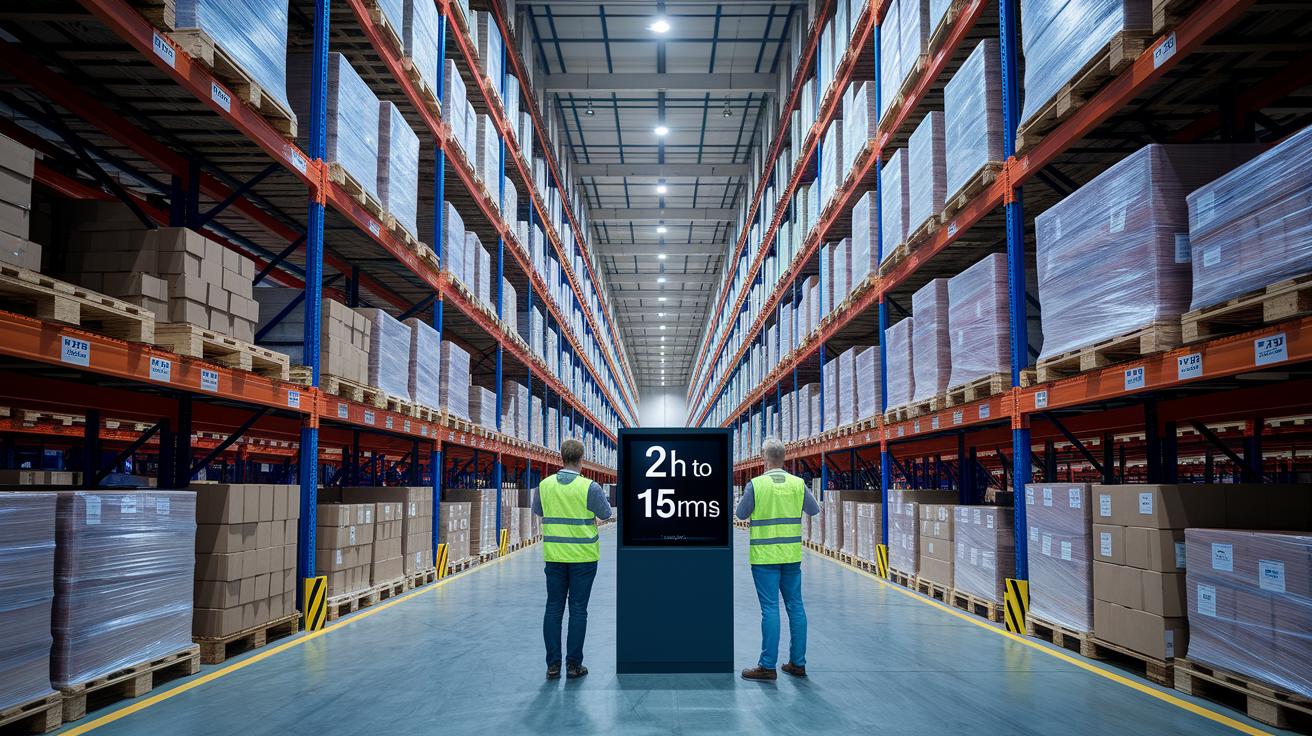
Let's start with an interesting fact: a small logistics company used to face delays of up to two hours. But after they added adaptive AI with real-time optimization, those delays dropped to just 15 minutes.
Recent real-world examples show some cool changes. One manufacturing firm cut its energy use by 12% using an adaptive AI system that quickly adjusts energy levels. And in healthcare, AI-driven security using zero-trust strategies has stopped more than 30 breach attempts in a single quarter by tightening digital identity checks.
New discoveries also tell us that AI automation is now reaching beyond standard coding. Emerging pair programming tools let folks without coding expertise build custom apps that make work more efficient, opening up fresh opportunities for innovation.
| Sector | Outcome |
|---|---|
| Manufacturing | Energy use reduced by 12% with adaptive AI systems |
| Healthcare | More than 30 breach attempts blocked using zero-trust models |
These examples offer a clear look at how businesses can use smart systems to not only streamline everyday activities but also protect their data, leading to real, measurable improvements in how they run their operations.
Quantum Computing Predictions: Future Tech Outlook
Quantum computing is about to change how we solve really tough problems. This tech is set to outperform old-school computers in areas like finding the best solution quickly, keeping our data safe (cryptography), and creating new materials. Imagine being able to test millions of ideas in way less time than a traditional computer, it’s not a sci-fi dream but a real future where smart simulations improve secure communications and speed up drug discoveries.
Next, experts see big changes coming in industries like aerospace, car design, finance, and medicine. In aerospace, quantum computers could help plan optimal flight paths and design lighter, more efficient airplanes. In finance, they might speed up tough risk calculations and help with managing investments. These examples show how quantum tech can steer important sectors toward more efficient and innovative methods.
Looking to milestones by 2030, researchers are hard at work on challenges like qubit scaling (growing the number of quantum bits) and error correction (making sure results are accurate). As hardware improves and software gets smarter, quantum computing will open up a world of new possibilities for those who jump in early. It’s clear that this fast-evolving field is ready to reshape how we innovate in science and industry.
Eco-Innovation and Sustainability Tech Predictions
Creative projects are stepping up to tackle climate change in fresh, new ways. For instance, teams are harnessing AI to sort and recycle waste, which turns discarded plastics into strong, eco-friendly building materials. One Texas startup even slashed local plastic waste by 60% with smart AI sorting, sparking community-led construction efforts.
Meanwhile, urban farms are getting a boost from smart sensors that help them water plants just right by tracking real-time data. And in another exciting twist, scientists are using specially designed algae to change excess CO2 into edible biomass, transforming a big climate challenge into a renewable resource.
Cities aren’t left behind either. They’re testing smart energy grids that combine live air quality readings with energy use data. This lets urban managers quickly identify and fix areas that need an environmental boost, making every small change count.
| Emerging Trend | Example |
|---|---|
| AI-Powered Waste Recycling | Texas startup converts plastic into construction materials |
| Precision Conservation Tech | Urban farms using real-time sensors to optimize irrigation |
| Bioengineered Carbon Capture | Algae systems turning CO2 into edible biomass |
- AI-driven recycling that turns waste into new materials
- Sensor-based watering systems for urban farms
- Special algae that transform CO2 into renewable resources
Connectivity and Edge Computing Tech Predictions
New connectivity tools like 6G, Wi-Fi 6/7, and LEO satellites are slashing delays to almost zero. When these systems work together with edge computing (processing data nearby instead of sending it far away), they create both exciting opportunities and new challenges. One big challenge is keeping all these devices secure while handling data locally. Interestingly, one tech startup saw a 40% drop in delays by processing data on site, proving that local operations can react faster than central systems.
Edge computing is also teaming up with massive remote data centers to support immersive AR/VR and IoT (gadgets that connect and share data) services. In one smart factory, distributed sensors and strong analytics cut machine error times dramatically. At one facility, local computing nearly halved decision times, letting operators fix issues before they grew bigger.
A trial in urban traffic control showed that local processing paired with central analytics can adjust traffic signals on the fly, easing congestion without sending all the data to one central hub.
| Application | Integration Strategy |
|---|---|
| Smart Urban Services | Local processing for fast AR data handling |
| Industrial Automation | Combining edge sensors with big data centers for real-time decisions |
Final Words
In the action, we explored how upcoming advances could reshape everyday life. We looked at near-term tech moves, AI tools, ultra-low latency networks, immersive digital experiences, and long-term visions like brain-computer interfaces and adaptive AI care. Each section broke down hard-to-wrap concepts into clear, concrete examples. The post offered insightful overviews to help guide our understanding, keeping future tech predictions at the forefront. It’s an exciting reminder that smart solutions and bold ideas are fueling a bright road ahead.
FAQ
What do future tech predictions for 2030 suggest?
The future tech predictions for 2030 suggest innovations like AI as a business standard, ultra-low latency networks, advanced autonomous electric vehicles, and early quantum computing that will reshape many industries.
What are some amazing and widely listed future predictions?
Amazing future predictions combine concrete ideas such as AI-driven biotech, immersive AR/VR experiences, and low/no-code development with speculative visions like brain-computer interfaces and lab-grown food technologies.
How do online communities like Reddit discuss future tech predictions?
Online communities share views that range from practical innovations like 6G connectivity and AI-driven cybersecurity to out-there ideas like predictive adaptive AI systems and DNA data storage, sparking lively debates.
What technology is predicted for the next 5 years?
Predictions for the next five years focus on immediate upgrades like enhanced AI integration, more reliable connectivity with Wi-Fi 7 and 6G, and a boost in edge computing to support remote work and smart cities.
What is the next future technology forecast?
The next future technology forecast highlights a mix of advanced applied AI, immersive reality tools, and smarter cybersecurity measures aimed at protecting digital identities, paving the way for a more connected world.