


Have you ever wondered if your screen can really pick up on your mood? New technology is blending smart features with a human-friendly feel so that your device almost seems to understand you. Imagine a voice helper that notices how you feel or a quick gesture that instantly sets your room's light and warmth just right. These breakthroughs are changing the way we connect with our gadgets, making every command feel natural and personal. By mixing clever tech with thoughtful design, everyday tasks turn into moments that work with you.
Overview of Innovative Interfaces in Modern UI/UX
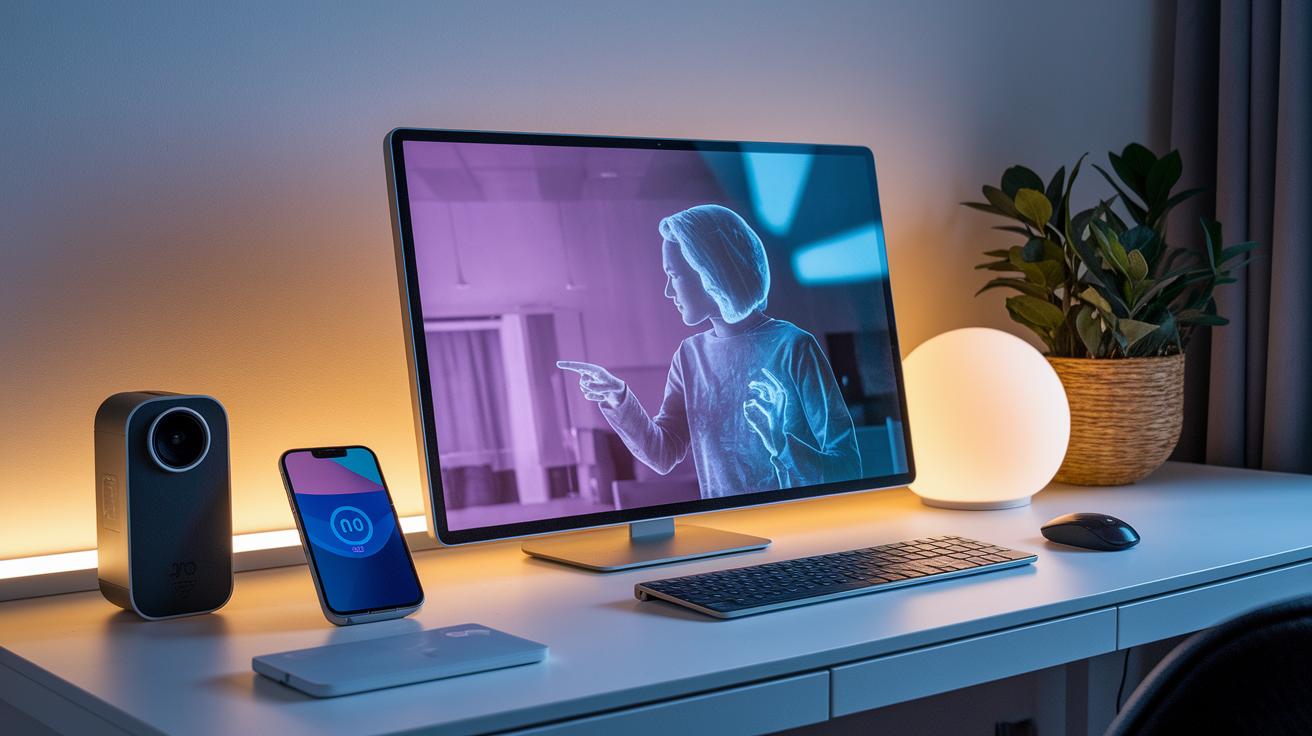
Modern interfaces blend smart AI tools with human ingenuity to bring exciting product ideas to life, fast. Imagine a digital helper that not only listens to you but also reads your mood and gives back fitting answers. For instance, a simple voice command might brighten your living room, adjust the heat, or even order groceries, all without you even lifting a finger. This mix of clever tech and thoughtful design really shows how digital interfaces are evolving.
Teams focused on product strategy and experience design are teaming up with engineers in intelligence and software to create smooth experiences across different platforms. Whether you’re in financial services, healthcare, or anywhere else, the goal is always the same: make interfaces smart, simple, and aware of the context. Think of interactions that work with your gestures or use augmented and virtual reality to bring screens to life. Even in fields like retail or energy, experts blend sensor tech and the Internet of Things (devices that communicate over the internet) to make apps more responsive.
At its core, innovation in user experience comes from engineers and designers working side by side to fix real problems with modern software. They mix eye-catching visual design with robust code so that these interfaces not only look good but work seamlessly. This approach has a big impact on everything, from communications and networking to media and entertainment, ensuring that every design meets industry needs while keeping tech accessible and powerful.
Key Technologies Behind Innovative Interfaces

Embedded engineering and IT/OT transformation are the building blocks for today’s touch, voice, and sensor interfaces. These smart systems let you control devices with gestures, almost like magic. Imagine walking into a room and waving your hand to instantly change the lighting and set the perfect mood.
Voice-activated interfaces are just as cool. They let you give commands without even touching a button. By mixing natural language processing (which helps computers understand our words) with smart sensors, these systems turn what you say into quick actions. For example, you can tell your thermostat to warm up the house without fiddling with any dials.
Then there are autonomous AI agents that bring a whole new level of flexibility. They learn from how you use them and tweak their responses to fit your needs better. Picture a smart display that slowly figures out the types of news you like and then shows you more of it, it makes everything feel more personal and natural.
IoT integration takes things even further by linking different devices to create environments that know what’s happening around you. Think about a wearable device that picks up on a change in your body temperature and prompts nearby systems to adjust the room conditions accordingly. This kind of setup blurs the line between digital and physical spaces, bringing a whole new layer of interactivity.
Finally, augmented digital experiences and virtual reality design add extra depth to how we interact with tech. They turn everyday tasks into fun, immersive events. For instance, imagine stepping into a virtual lab where your gestures control real-time experiments, making science both hands-on and engaging.
Innovative Interfaces Spark Captivating User Experiences

Today’s tech isn’t just about showing data; it creates spaces that almost seem to breathe. Take predictive modeling (you know, where computers make smart guesses) as an example. At Dreamforce 2025, a white paper on auto AI trends showed off how a car’s dashboard might adjust settings on the fly instead of simply showing your current speed. Back in the day, drivers had to tweak every little setting by hand. Now, dashboards almost seem to know what you need before you even notice it.
In fields like healthcare and retail, AI learns from the way you interact with systems, tailoring choices that really feel personal, almost like a friendly assistant who picks up on the smallest hints to offer help when you need it most.
At Kansas State Libraries, early experiments in mobile labs are building toward this future. Imagine browsing a catalog that responds not only to touch but even your voice or nearby sensor inputs. A visitor’s search might light up a playful, interactive map showing the whole library at just the right moment.
| Key Trend | Description |
|---|---|
| Predictive Modeling | Systems that anticipate your next move |
| Hyper-Personalization | Interfaces that adjust in real-time to your needs |
| Mobile-First Prototyping | Quick, interactive designs tailored for mobile use |
These developments are changing how we interact with technology. Instead of static screens, we have dynamic platforms that combine smart processing with eye-catching design. It’s a fresh take that makes everyday digital tasks not only simpler but also a bit more delightful.
Case Studies of Innovative Interfaces in Action

Innovative Interfaces teamed up with Bibliotheca to blend the Sierra Services Platform with RFID and barcode technology. Imagine being able to scan a book’s barcode and see all its details immediately – research becomes much quicker and more fun! This new system not only updates old cataloging methods but also makes everyday tasks smoother for library staff and visitors alike.
Kansas State Libraries have rolled out mobile labs with catalogs you can control by touch or voice. Picture a digital catalog lighting up with an interactive resource map as you approach, or scrolling through book titles with just a tap. This interactive approach has really boosted how quickly users get on board with digital collections, proving that a design focused on people can make a big difference.
In Vancouver, an exciting project is underway to digitize over 750,000 items connected to the LGBTQ community for the city archives. This interface bridges the gap between preserving history and managing digital records, giving community members easy online access to treasures once locked away. And think about wearable tech: imagine a device that gently buzzes and displays cues to keep your daily wellness routine on track. These real examples show how fresh interfaces tackle access and discovery challenges, making our experiences more efficient and engaging.
Best Practices and Methodologies for Developing Innovative Interfaces

When you're designing interfaces that really click with people, it all starts with a focus on the user. Imagine asking a friend, “Have you ever wondered why some apps just feel so natural to use?” By gathering real feedback early on, you can dig into what users truly need and spark creative, practical solutions.
Using simple data analysis alongside smart design tweaks is a great way to polish every part of your interface. Think about it: you launch a rough version and quickly get thoughts from a small group of users. This rapid feedback loop helps catch any rough edges before you dive into full-scale development.
It also helps to build your design step-by-step. Rapid prototyping lets you turn ideas into working models that you can test and tweak in real time. A handy tip is to “test early and test often”, which basically means using quick sketches and small trials to see that every feature does what it should. This approach cuts down on risks and keeps everything grounded in real user input rather than guesswork.
Finally, choose solid development tools that make your design look and work great on all devices. Think of it as putting together your favorite gadget: every piece is checked and tested before it becomes part of a fully responsive interface. By picking the right tools for prototyping, you'll make sure your interface is ready to shine, no matter the screen or platform.
Challenges and Future Directions for Innovative Interfaces

Legacy system compatibility and secure access are still big challenges when it comes to fresh interfaces. Many companies rely on older software they can’t swap out overnight, so they take slow, careful steps. For example, letting only a few devices log in at once helps keep user data safe while still getting the job done. This approach meets required rules and makes the shift from old to new smoother.
Trends in the industry mean providers now need to support both older and newer solutions at the same time. Scalable user interfaces let businesses update gradually without throwing off day-to-day tasks. Designers are busy figuring out ways to make things work well for different users across various devices. And as new rules come into play, developers are finding clever ways to mix strong security with easy-to-use designs. Soon, tech will need flexible, secure setups that change along with user needs.
Research on smart, hands-off AI agents is set to change our everyday tech experiences. These agents watch your actions in real time, guess what you might need, and even take action on their own. This hands-off approach cuts down on the work you have to do and can boost how much you get done. In short, these new systems will feel more like a personal helper than a basic program.
New guidelines are also helping shape what’s next. Developers are focused on creating interfaces that not only stick to privacy rules but also grow with your needs. By adding voice commands and gesture controls, designers are opening the door to more interactive and safe platforms. All these improvements point to a future where interfaces keep evolving, balancing top performance with designs that everyone finds easy to use. In the end, tomorrow’s smart solutions will bridge today’s challenges with innovative, connected tech.
Final Words
In the action, this piece took us through the world of innovative interfaces, outlining how AI, gesture, voice, and AR/VR bring digital experiences to life. It highlighted practical case studies and the best practices that guide effective design while addressing challenges faced by modern UI/UX. The article shows the natural evolution of digital workspaces and hints at more exciting, user-friendly solutions on the horizon. It's clear that innovative interfaces continue to shape more engaging and intuitive experiences across various sectors.
FAQ
What is Innovative Interfaces?
The Innovative Interfaces company offers integrated library systems and digital interface solutions. Their products, like the Sierra platform, are designed to streamline library operations and enhance user discovery services.
Where is Innovative Interfaces headquarters?
The Innovative Interfaces headquarters is located in Emeryville, California. This central location helps coordinate their global operations and technical support services.
What is the difference between ILS and LMS?
The difference lies in purpose: an ILS (integrated library system) supports library tasks like cataloging and circulation, while an LMS (learning management system) focuses on course delivery and educational tracking.
Is Polaris an ILS?
Polaris functions as an integrated library system by providing tools that manage library operations. It offers features similar to other ILS solutions, improving efficiency in handling library resources.
What is the best online library management system?
The best online library management system varies by need. Providers like Innovative Interfaces, SirsiDynix, and OCLC offer effective platforms with user-friendly designs and rich discovery features.
How do I get support or find job opportunities with Innovative Interfaces?
For support or career opportunities, check Innovative Interfaces’ official website. They list accurate contact details and job postings that connect you with roles in library technology.
How can I contact Innovative Interfaces by phone?
To contact Innovative Interfaces by phone, refer to the contact section on their official website for the latest phone number and direct support connections.